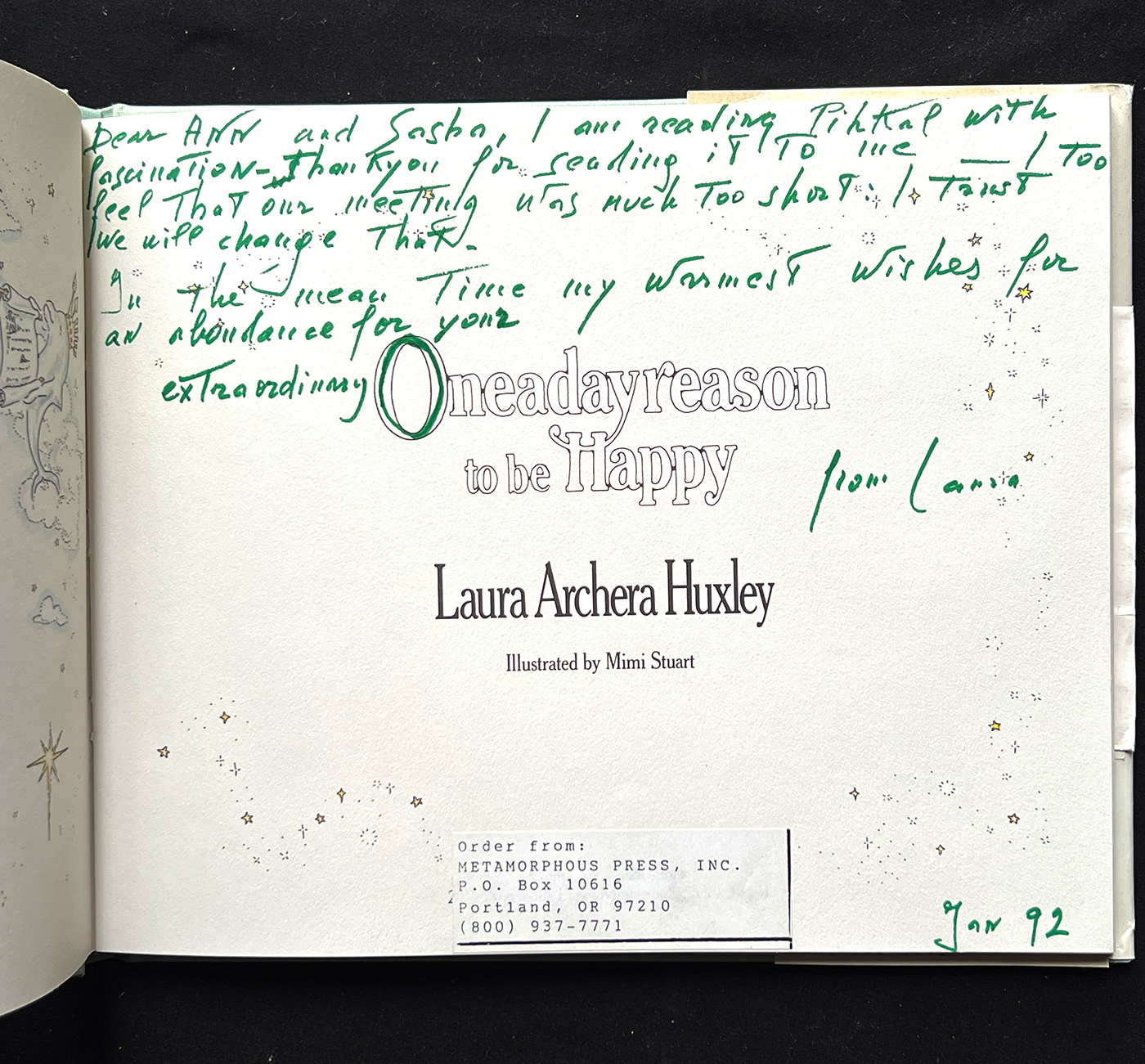
Ann and Sasha Shulgin corresponded with many people.As described recently in an overview of the Erowid crew’s Shulgin library archiving activities, when we found notes and letters, they were set aside to be scanned by Keeper Trout, the co-lead on this project. In some cases, we also photographed items in their original location for context. Here we share some examples.
“Dear Sweethearts” (1989)
When the Shulgins filed a letter they received, whether typewritten or composed on a word processor, they would often keep it with a copy of the letter that they had written to the same person. As we’ve focused on Sasha’s office, most of the correspondence we’ve found in books has been to and from Sasha. A few letters have been from Ann, such as this one we think was written to Darrell and Betty Lemaire, in the wake of the 1989 Loma Prieta earthquake. It was folded with a handwritten letter signed “Darrell & Betty”:
November 27, 1989 letter from Ann Shulgin to (presumably) Darrell and Betty Lemaire.
Both letters were tucked inside a bound copy of galleys of Drug Testing at Work: A Guide to Employers & Employees by Sebastian Orfali and Beverly Potter…
“Dear Sasha / Dear Sebastian” (1989)
Also tucked into Drug Testing at Work: A Guide to Employers & Employees were a letter to Sasha requesting comments on the book from its author, and Sasha’s two-page response:
Nov 22, 1998 two-page letter from Sasha Shulgin responding to a request for comment on a galleys of a book.
“Dear Mr. Stewart” (1974)
Here, Sasha apologizes to an editor at Macmillan (a publisher) about having to drop a co-authored book project called Drugs and Life, but proposing a new book on the subject of peyote:
Jan 5, 1974 letter from Sasha to an editor at The Macmillan Company (book publisher)
“Dear Sir / Dear Mr. Shulgin” (1973)
Sasha contacts the Department of Justice Office of National Narcotics Intelligence (ONNI) to inquire about “the structure and the goals of [their] office”:
May 26, 1973 letter from Sasha Shulgin to the Office of National Narcotics Intelligence
…and receives a response within two weeks:
Jun 7, 1973 letter from the Office of National Narcotics Intelligence to Sasha Shulgin
My overnight visits to the Farm were after Sasha’s death. I helped manage Sasha’s office and worked on Shulgin Archiving and scanning. I’d often stay for 2-4 days in a row, since I lived around 130 miles away in the coastal Redwood canopied mountains north of the SF Bay Area.
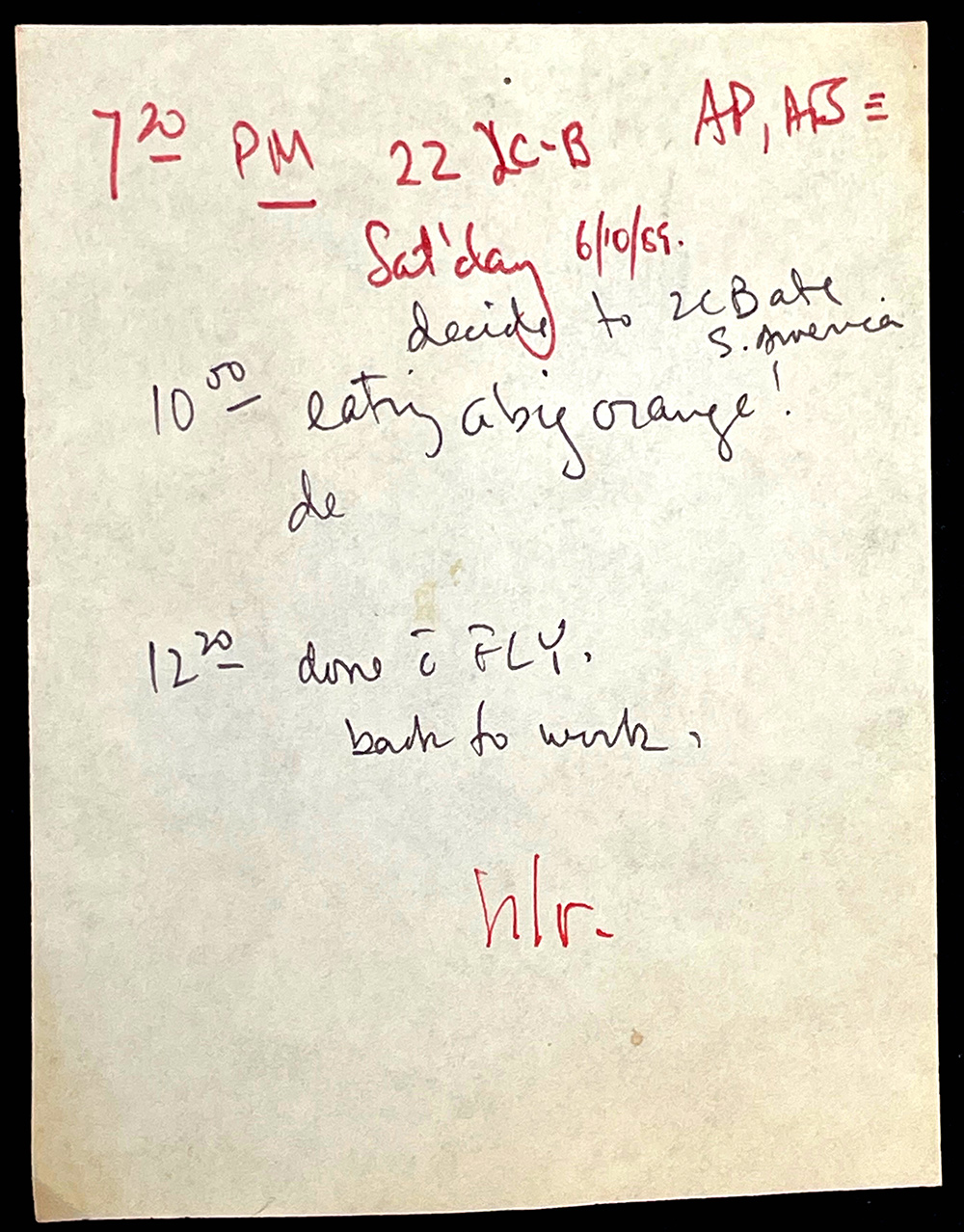
Whenever I was at the Farm while Ann was alive, each day would begin with me finding a note from Ann accompanying a coffee cup with a spoon, a jar of instant coffee, and a small pitcher with half and half. I was always touched by that act, as it really made me feel not just welcomed but like I was at home-away-from-home in a real heartfelt sense. I saved at least the majority of the notes. When Ann’s health declined, she stopped including a drawing. Only on my last couple of visits at the end when she was in very poor health did she not leave me a note. These still give me a sense of joy to see so I keep them at my work station.
September 2025 – This article features an assortment of covers from books, periodicals, reports, and dissertations in Sasha and Ann Shulgin’s library, almost all from Sasha’s office. Inscriptions, stickie notes, and enclosures (such as letters and notes tucked inside books) are also included. Read about the Erowid Center crew’s cataloging efforts from the past year, and please consider contributing financially to our efforts to finish scanning, compile metadata on the thousands of documents, and get this collection online.
“Required Reading”: Mount Analogue
Two English-language editions of Mount Analogue by René Daumal sit on different shelves in Sasha’s office, each with a note on the cover referencing it as required reading for Leo Zeff’s clients. The original edition, Le Mont Analogue, was published in French by Éditions Gallimard in 1952.
“Leo Zeff had everyone read this book before they worked with Leo”, stickie note on cover of the 1983 edition“Leo Zeff had this book as required reading”, stickie note on cover of the 2000 edition
The 1990s
Binder of printouts from Usenet alt.drugs, Psychedelic Drugs release 1.0 1992Clandestine Laboratory Investigating Chemists Vol 2: Syntheses, presented at the 4th Annual Technical Training Seminar, Vancouver BC, Sep 7-10, 1994(Thesis, 1996, California School of Professional Psychology at Alameda) Listening for the Logos: A Study of Reports of Voices at High Doses of Psilocybin by Horace BeachOne Foot in the Future: A Woman’s Spiritual Journey, by Nina Graboi (1991), enclosed, a postcard to Ann from the author, “Dear Anne, Thank you for the order of my book, should be ready for shipment by the end of April. Warm regards to you and Sasha, Nina Graboi”.Psychiatric Annals Journal of Continuing Psychiatric Education (March 1994), Vol 24 No 3, issue theme: The New Psychedelic Subculture.ЗабрискИ Rider 5 [Zabriski Rider 5], Igor Tarasov, Editor (1997), One of the weirder magazines the Erowid crew has seen, written in English and other languages, almost entirely on a black background. An archive of the publication website accessed through Archive.org’s Wayback Machine declares the short-lived project a “stronghold of hippy culture”. Rivals Mondo2000 in its graphic design choices (we love you, Mondo2000!).
The 1980s
“Blue Book” cover and spine: MDMA – A Multidisciplinary Investigation – Reports From the Medical, Scientific, and Regulatory Communities Compiled by Earth Metabolic Design Laboratories, Inc. (Revised April 18, 1985).(thesis, 1989, Purdue University) Stereochemical Aspects of Hallucinogenic Drug Action and Drug Discrimination Studies of Entactogens by Robert Oberlender Special Edition for A.T. Shulgin. This was accompanied by correspondence between Oberlender and Sasha.Inscription to Sasha by a Russian chemist in pharmacology book in the early 1990s. Part of a trove of 1980s (and a few 1970s) Russian books shared with Sasha by Russian scientists in the early 90s. Topics include pharmacology, drugs used to treat organophosphate and nerve gas poisoning, and anticholinergics.Letter by a person who gifted Sasha the book Лекарственные средства Часть 1 [Medicines Part 1: Pharmacotherapy Guide for Doctors 11th Edition]Наркоманией – Tоксикомании [Drug Addiction – Toxicomania], by И.С. Болотовский [I. S. Bolotovsky] (1989)Albert Hofmann inscription in 1983 edition of LSD: My Problem Child (“For Ann and Sasha with cordial wishes”)
The 1950s through 1970s
Do It Now Foundation’s Catalog of Educational Materials to Promote Chemical Awareness, 1st Edition (“Now celebrating our 10th anniversary”)(Fall 1974), periodical produced by DEA, depicting vials of heroin arranged by color.STASH Capsules – Vol 1 No 1 – Periodic bulletin of The Student Association for the Study of Hallucinogens, Inc. (Jun 1969)First U.S. edition of Heaven and Hell (1956), bookmarked at pages 52/53, 54/55, 56/57, 58, and 98/99. Includes pencil notes. This volume is in the secretary in the Shulgins’ living room that holds Huxley books and first editions.
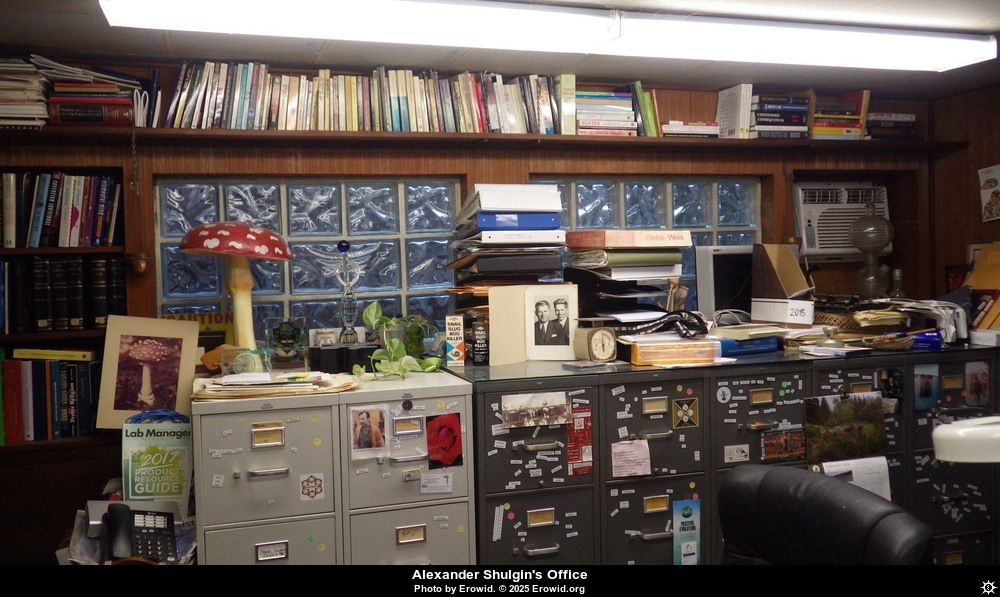
September 2025 – The small but mighty Erowid archiving crew (staff and volunteers) who are cataloging books and documents at the Shulgins’ Farm finished going through another motherlode: Sasha’s office bookshelves. Besides books and lab notes, Sasha’s shelves hold unpublished manuscripts, collections of writings, and periodicals; coursework, student theses, and manuals; novelties, obscure forensic publications, a nearly comprehensive set of older articles on cannabis research (including the work by Shell done for Edgewood Arsenal), and clippings and photocopies dating back to the 1940s. In the last year, the Erowid crew has inventoried over 4,100 additional items, almost all from Sasha’s office. We documented enclosures (letters, postcards, and notes tucked into books) and unique items for scanning, as well as photographing book covers.
The majority of Erowid’s Shulgin Archiving Collection scanning was completed by the end of 2024, part of a ten-year triage and cataloging phase, when project co-lead Keeper Trout finished scanning all the contents of Sasha’s filing cabinetsand boxes of files stored in the Barn. Trout is in the home stretch of scanning select items from the office bookcases, and re-photographing a small number of book covers. Fragile film, video, audio tapes, reel-to-reel recordings, slides and CDs are being professionally digitized in Albany, California. Many of the archive’s photos are securely stored at Erowid Center’s library, as we work to raise the funds to have them professionally scanned. We’ve sent a couple thousand out to test scanning companies, but won’t be able to get the majority digitized until additional funding is found.
As we sort photos and compile metadata about books and documents, we’ll be sharing highlights. Meanwhile, some of Erowid’s Shulgin Archiving crew have shared their thoughts on the Archive and the experience of working with the collection.
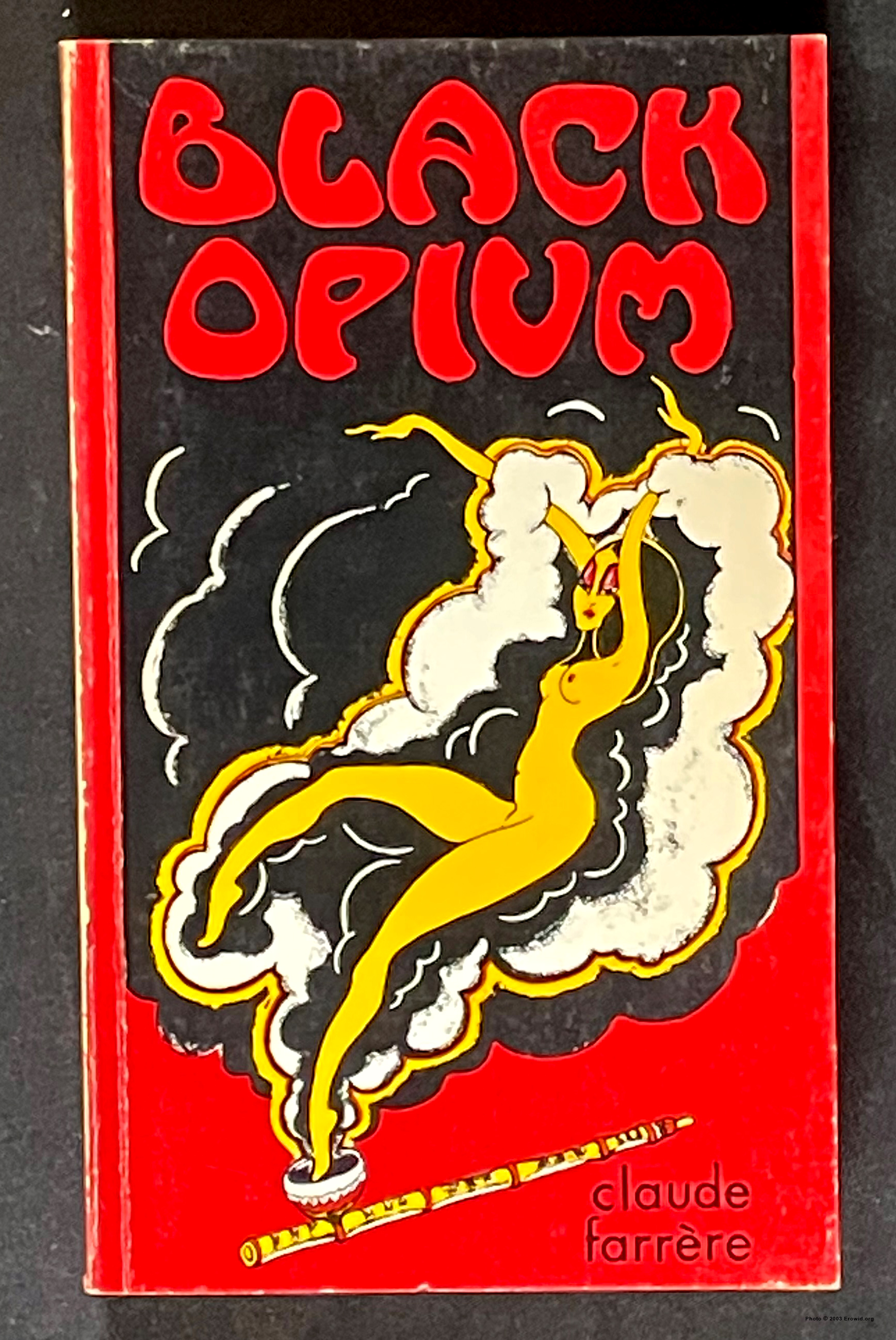
“Volunteering on book cataloging for Erowid’s Shulgin Archiving project has been a great opportunity to create a full accounting of Ann and Sasha’s library. A dusty fun time that lead to some great additions to my own library, as I was able to find some of the interesting titles online to purchase, including a copy of the handwritten and illustrated Alice’sAdventures Under Ground, which was the original title of Alice in Wonderland; the old novels Black Opium by Claude Farrère and Cocaine by Pitigrilli, both with some great illustrations inside; and The Haight-Ashbury: A History, by Charles Perry. And working together with a great group of dedicated people was wonderful!” — Oliver, volunteer since 2019
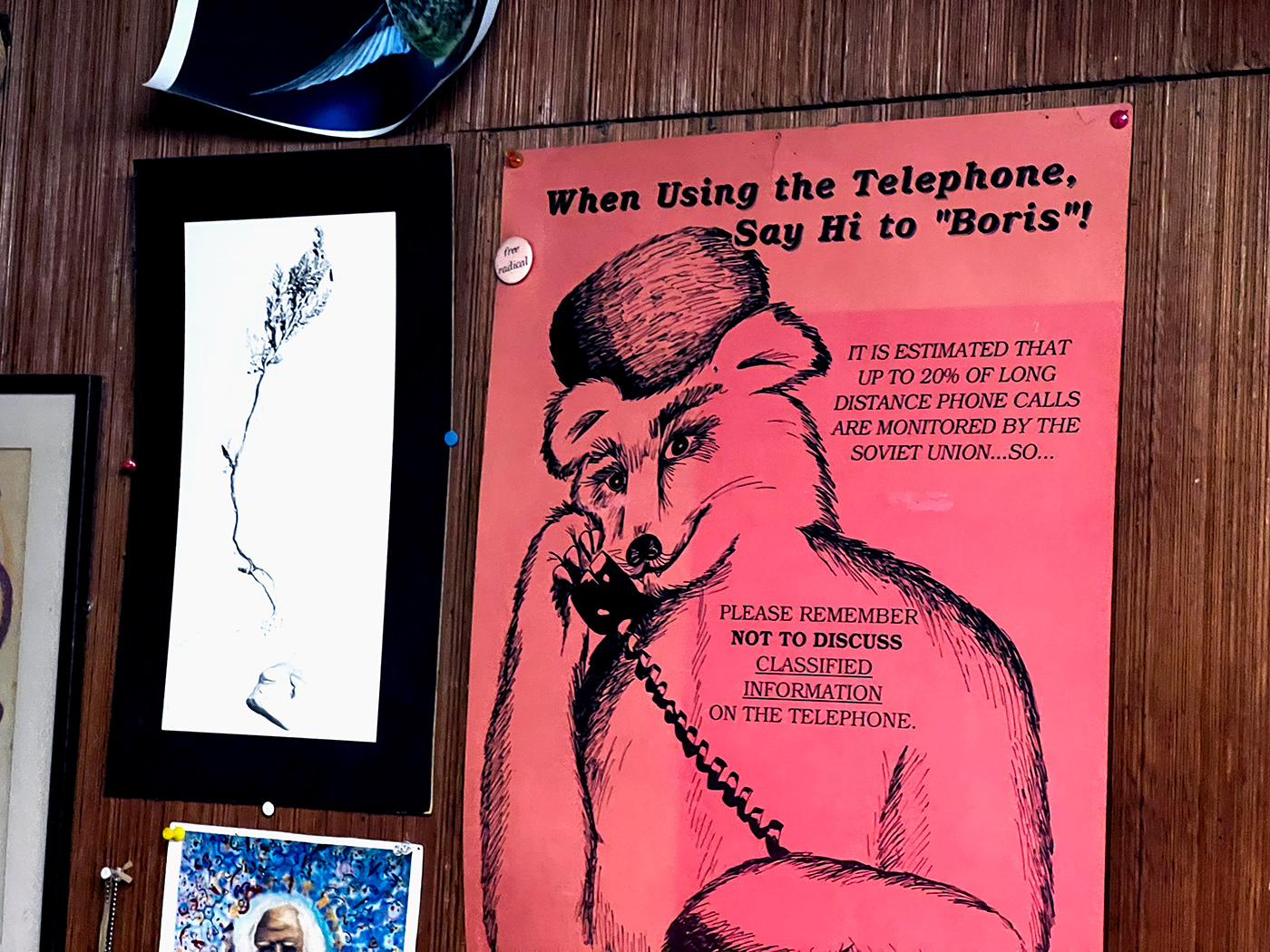
“Sorting through the contents of Sasha’s office was a particular joy. Not only for the incredible contents of his library, but also for the dazzling array of fun and witty posters and memorabilia covering the walls. Two items in particular stand out, both reflecting Sasha’s Russian heritage: a hilarious 60s era cartoon bear wearing an ushanka-hat with a caption admonishing the viewer not to discuss classified material over the phone; and my personal favorite, a handsome photo of doomed Tsar Nicholas II and his son the Tsarevitch Alexi (poor little guy).” — David B, volunteer since 2014
“There isn’t much that can get a group excited about getting up early on dreary winter days, but the mood at the Farm was always high. Though our work was dusty and drafty, it was never dull. Keyboards clicked and clacked at fever pitch, preserving every pertinent detail from the endless torrent of the Shulgin archives. Every so often, there would be a cry: “Inclusion!” A page would be bookmarked, or better still, a passage underlined. These were the moments that most interested me. The Archives are any psychedelic nerd’s dream collection. There are countless beautiful and strange first editions, many of which have handwritten notes for Ann and Sasha from the authors. It becomes very obvious after looking at the Archives how central Ann and Sasha were in the psychedelic underground. They seem to be everyone’s grandparents, with the endless collections of thank-you’s, happy birthdays, and happy anniversary notes to prove it. Even though I couldn’t talk to Ann or Sasha, they were still great at giving book recommendations.” — Alysiana, volunteer since 2025
“In anticipation of volunteering on Erowid’s Shulgin Archiving project, I expected to become familiar with Sasha’s library in a data-oriented way, but what ended up happening was that I got to learn about him as a human being with many interests and a soul beloved by the wonderful community he created.” — Fiona, volunteer since 2025
“Being a part of this project felt like I was getting a glimpse into history. Getting to sift through endless pages of molecular formulas in Sasha’s handwriting nearly brought a tear to my eye despite barely understanding them. I remember finding a book that was noted as required reading by legendary underground guide Leo Zeff, and feeling like I had found a true treasure. However, my favorite part was being amongst a group of dedicated individuals who were always willing to share some knowledge or a funny story. The range of material catalogued was truly impressive and I hope that there are continued efforts to preserve and eventually share what the Shulgins collected over their lifetimes.” — Veronica L., volunteer since 2024
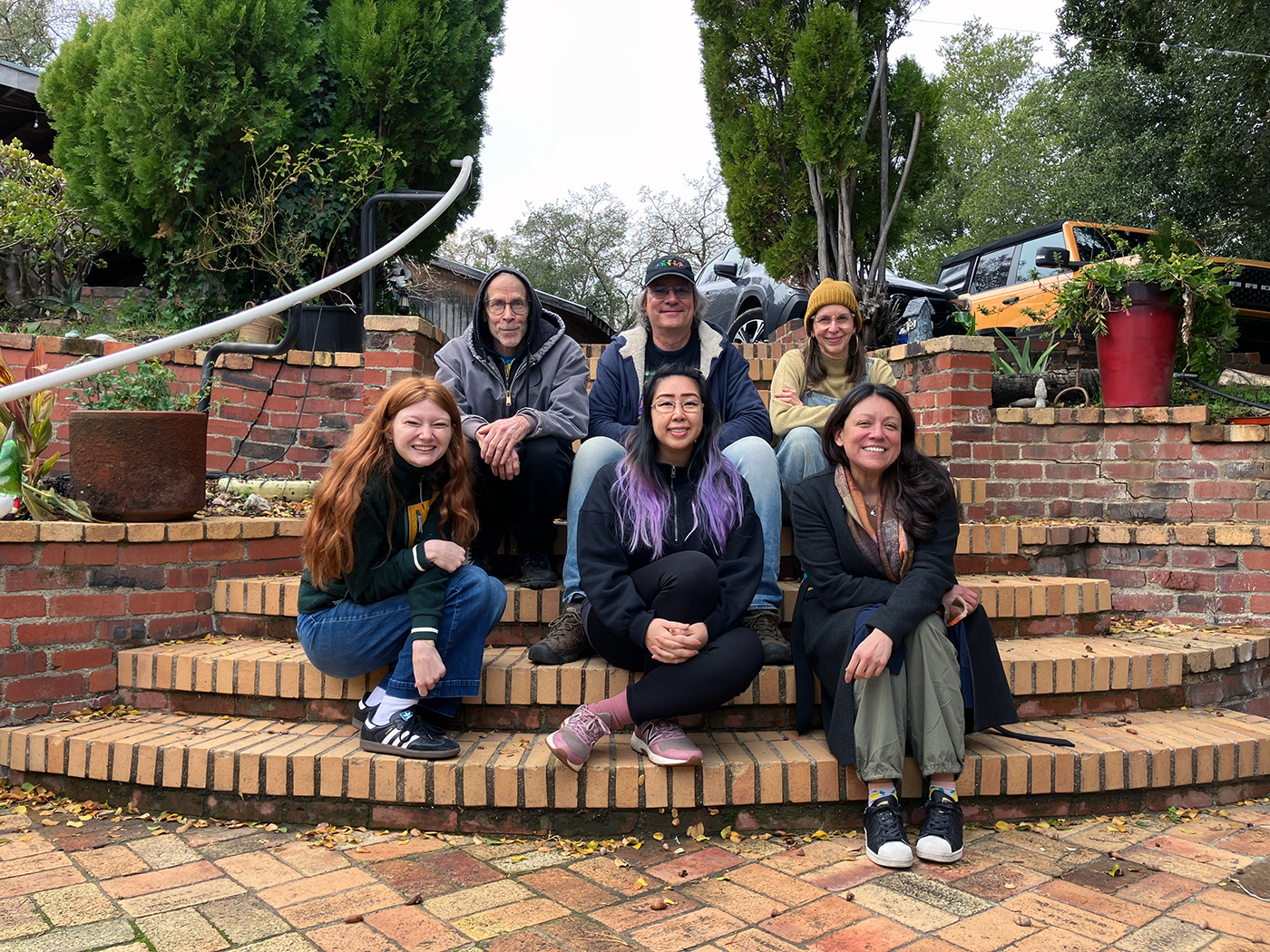
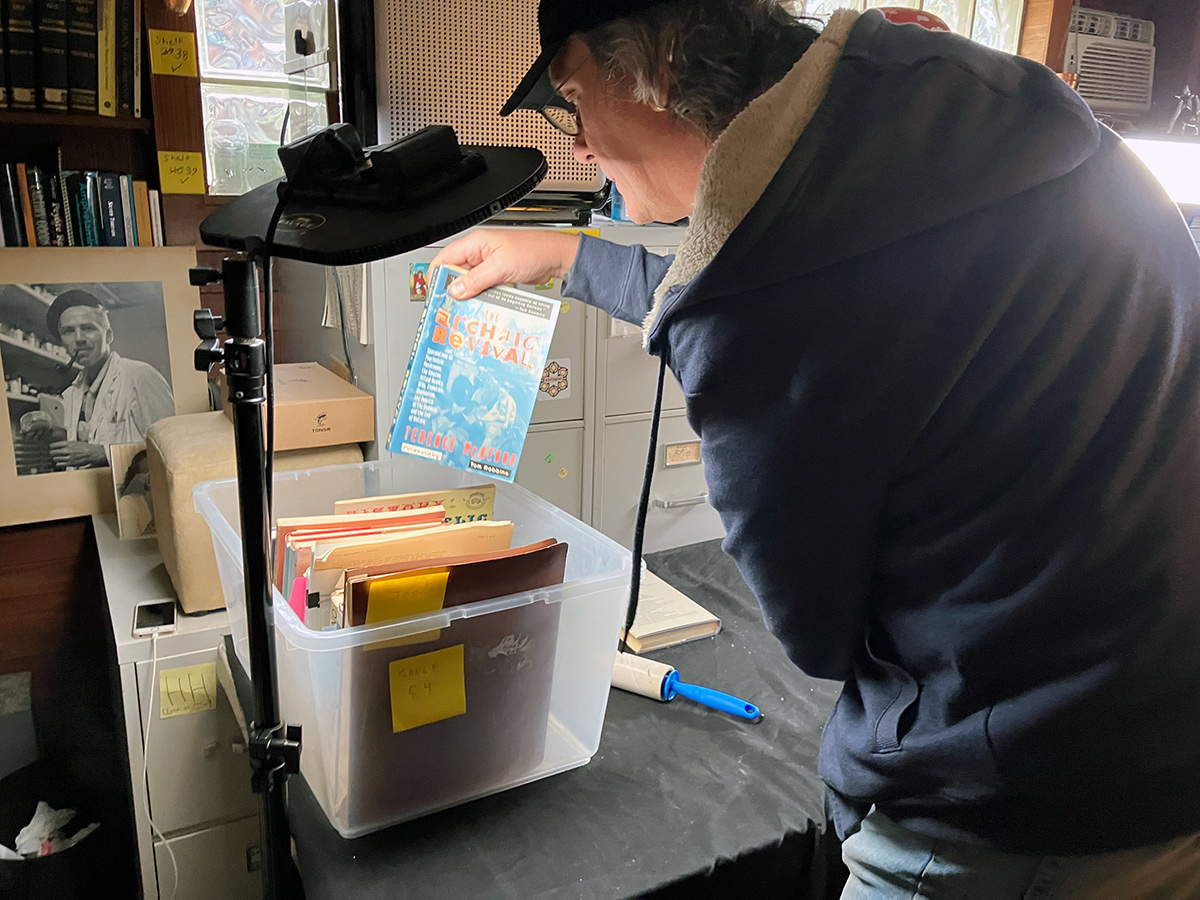
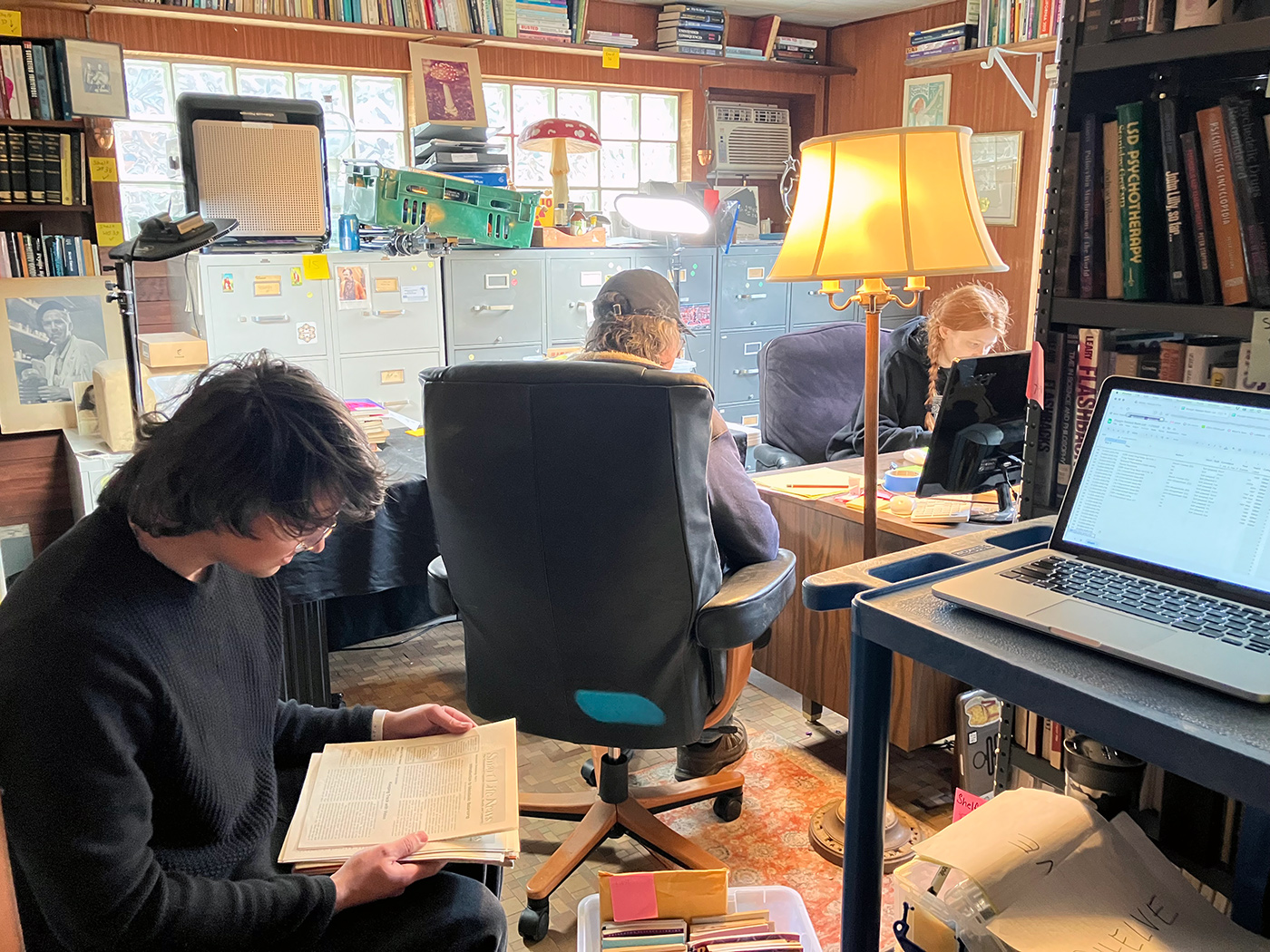
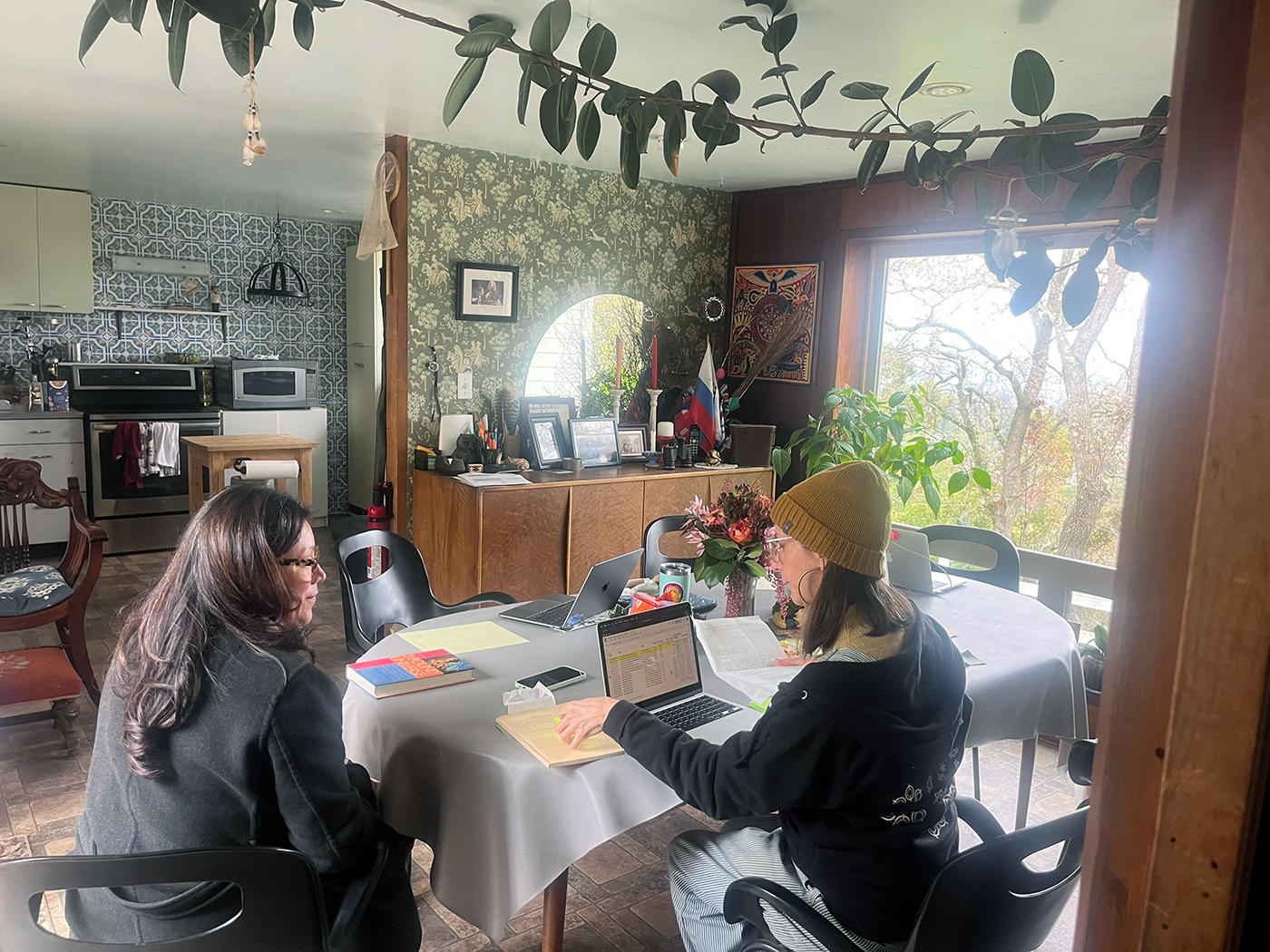
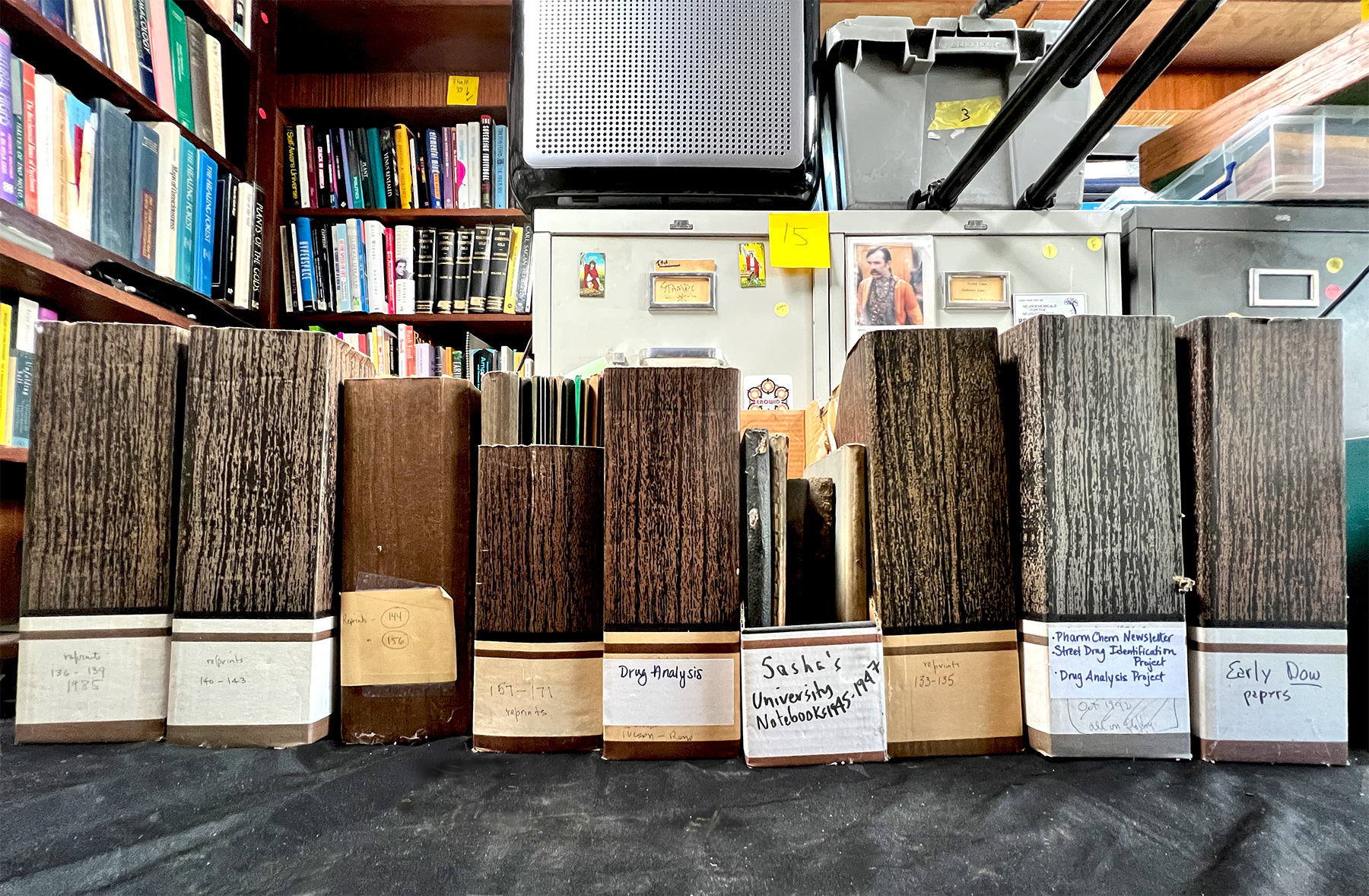
Some of Erowid’s Shulgin Archiving Crew – Trout, Oliver, Sylvia, Alysiana, Fiona, and Veronica (photo by Dudleya)Oliver at the photographing station (photo by Erowid Crew)Flamingo, Oliver, and Alysiana in the Office (photo by Sylvia)Veronica and Sylvia cataloging in the Kitchen (photo by Alysiana)Shelf organizers from Sasha’s office (photo by Erowid Crew)
Erowid is in the final stretch of digitizing and cataloging the documents, books and other media that are part of the Shulgin Collection. So close!
The most recent multi-day volunteer gathering held at the Farm to catalog books, scan anything tucked into books, and go through everything with fine tooth combs was held on September 12-14.
We’re still finding stray bits and pieces here and there: an overlooked box in a closet, an envelope that had slipped behind a desk, a photo in an unexpected place, but the part that involves scanning Sasha and Ann’s papers is 99% finished.
Two of the last steps in the archiving plan of action were started this month: 1) Cataloging Sasha’s psychoactive drug-related books and anything else on the shelves of his office, and 2) Inventorying and digitizing audiovisual and other media, which one volunteer has dubbed “anachronistic media” — the glass slides, VHS tapes, undeveloped film in odd formats, and out-of-date digital storage media of various sorts (remember Zip disks?). We’ve already catalogued all the off-topic books and some of the industry periodicals and scientific journals, a process that took hundreds of people-hours.
Compiling metadata about each item is crucial, and this process is parallel and ongoing. This involves sorting through a scan and figuring out what the thing is, keywording, summarizing, marking what needs to be redacted for privacy prior to making available to the public, etc. We’ve categorized and added metadata for 75,000 out of 200,000+ scanned Shulgin documents so far!
The most exciting part has been uncovering gems as we go through every piece of material. We loved one photo that Keeper Trout found, of a neuroscience meeting from 1968 at MIT about “psychotomimetics”. How times have changed. But what an amazing cast of characters, for the history buffs.
1968 Neuroscience Meeting at MIT
Much more to come, with the help of contributors and volunteers. We also are stalled on a couple of fronts due to budget constraints, notably the photo digitizing, which must be outsourced.
Thanks to everyone and, of course, to Sasha, Ann, Wendy, and the rest of the family for making it possible to get to this point.
The Erowid Crew had a good pace going in 2018 and 2019 with the archiving of Alexander and Ann Shulgin’s collection of documents, but efforts slowed to a near stop as the global pandemic took hold in early 2020. More than 150,000 documents have been scanned (mostly scanned by K Trout). This number is expected to climb to well over 250,000 before we’re done.
The step we’re working on currently is recording first-pass metadata for scanned documents. It’s a privacy-sensitive process; each PDF is examined and coded for things like document type (published paper, personal letter, chemistry analysis, etc.), author name, date, and title.
Many articles from Sasha’s filing cabinets have previously been published elsewhere need to be tagged so they can be fast-tracked to the next step. While others have privacy issues that make them inappropriate for public view as they are now, either because they need redaction of names or email addresses, or because they contain other types of private information that shouldn’t be published at this time.
Three people currently work on Erowid archiving projects, made possible by the move towards remote work during the pandemic. Flamingo Jones is an Erowid intern whose primary responsibilities have involved the Stolaroff and Shulgin collections. We asked Flamingo to share some thoughts about the archiving process.
Now into my second archiving project at Erowid, I began work on archiving about a year ago (October 2020), starting with writing summary abstracts for documents in the Stolaroff Collection. I’m now creating metadata for the literal barn-full of documents in the Shulgin Collection.
I’ve really enjoyed working with these collections. It has been fascinating to say the least. One of the more interesting things for me is the interconnectedness of the world of psychedelic research: I get to observe the changes as I travel through the decades of records that have been collected.
From the months I spent on the Stolaroff Collection, I felt like I got a sense of the people and communities that Myron and Jean immersed themselves in. In writing abstracts I collected keywords, the names, places, events, and materials used, and wrote a summary for what was in each document that I reviewed. These included letters, stories, reports, articles, and news about the world they lived in. From professional work to business ventures, from otherworldly psychedelic reports and stories to friendships forged, the collection provides an unexpectedly strong sense of the way Myron saw and paid attention to the world around him.
The archiving work has ups and downs; one day it’s tax forms and dull details about the road next to the Stolaroffs’ Lone Pine property, another day, I’m reading a brilliant psychedelic experience report or a meaningful letter. Content varies greatly through the decades, following the focus of what was on the minds of researchers and those who collected and generated these records. The friendship between the Stolaroffs and the Shulgins highlights how the two archiving projects complement each other, each bringing the other more alive than it would be alone.
My work on the Shulgin archiving project so far has been quite different, as I’m covering a different step in the process. I’m creating first-pass metadata, which is much less intimate. I don’t read every article or letter fully, but instead try to quickly identify what each one is, and what level of privacy it requires. I’ve gone through around 10,000 files as of September 2021. The amount of research materials that Sasha collected is truly immense and his work has touched so many: I find myself smiling when I come across an article reprint sent to Sasha, with a note of gratitude from the authors for the work that Sasha has done.
The size of the project (likely over 250K unique documents) is vast, and there are ways that the work can be a slog, but there are some gems and treasures throughout. It is truly a wonder what I will stumble across on any day. Making this work accessible to others and digitizing this library is noble work, and I am happy to be a small part of it.
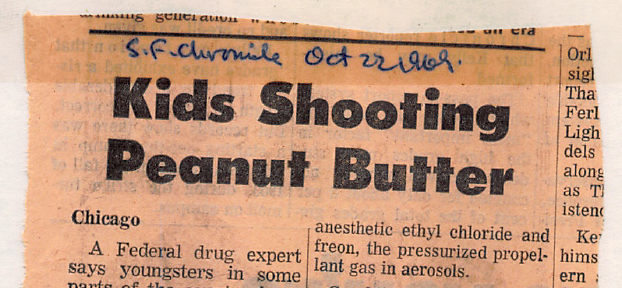
An absurd news piece that Sasha collected and studiously filed in the wall of filing cabinets behind his desk. Scanned and pointed out as ludicrous by Trout:
Authored by the Associated Press and published in the San Francisco Chronicle in 1969, the “Kids Shooting Peanut Butter” article claims that IV use of peanut butter and mayonnaise is a new trend. It reports that there are “several documented cases” of deaths, though no documentation is provided.
Similar articles were published in other newspapers and the story has been repeated for decades in books and online. Although we were able to find the transcribed text of this article on various websites, we did not find any scans or other direct documentation of the fact that something this stupidly wrong was published as factual news by major publications. Amusingly, the meme is repeated in Richard Nixon’s public papers in October 1969: “In certain regions, they [kids] are so crazy and insane as to inject into their bloodstream peanut butter, because somebody said that peanut butter gives you a high, and they die from that. Mayonnaise they are inserting into their bodies”. [Public Papers of the Presidents of the United States: Richard M. Nixon, 1969, pg 851.]
The short AP article makes several errors indicating that the authors and editors had little or no expertise in the area they wrote about. It cites the information to Ernest A. Carabillo Jr. from the Federal Bureau of Narcotics. Unfortunately, it is not uncommon for members of law enforcement agencies to be as confused as the news people who repeat the errors they make. Or perhaps the unnamed reporter misunderstood Mr. Carabillo. Who knows!
We’ve been unable to find any scientific papers or real documentation that this was a trend, or led to any deaths, or was in fact ever tried by anyone. There are zero references in PubMed about this topic between 1960 and 1975. One guess as to the source of this rumor is that “peanut butter” and “mayonnaise” might have been used as slang terms for other drugs. We speculate that ‘peanut butter’ might have been used as slang somewhere to mean tar-type heroin. An Erowid team member says he personally heard “peanut butter” being used to refer to brown colored methamphetamine in the early 1980s. Some drug slang dictionaries list “mayo” as a slang term for heroin or cocaine. An Erowid
The story is a good example of false and essentially baseless Drug War hysteria. Sadly, this type of egregious error continues to plague drug news, for example the well-loved Face-Eating Zombie Drug meme from 2012-2018.
Shulgin Geek Note: The news article was clipped, then taped to paper either by Sasha or Nina to make it more stable when filing. In the upper corner of the paper, “Newspaper – drugs” is written in long-hand pen in Sasha’s handwriting.
Kids Shooting Peanut Butter
A Federal drug expert says youngsters in some parts of the country have taken to injecting peanut butter and mayonnaise into their veins as a substitute for narcotics.
In several documented cases the result has been death, Ernest A. Carabillo Jr., a lawyer-pharmacist in the Federal Bureau of Narcotics, told newsmen Monday.
Carabillo said the information that peanut butter and mayonnaise would send users “on a little trip” was contained in an underground recipe book purporting to outline “culinary escapes from reality.”
Other recent fads, he said, include the use of paragoric (sic) cleaning fluid, the local anesthetic ethyl chloride and freon, the pressurized propellant gas in aerosols.
Carabillo said users of narcotic substances confused the bizarre and toxic reactions with the so-called “high” provided by such drugs as heroin or marijuana. He cited the smoking of dried banana skins, a fad of a couple of years ago, as an example.
Frank Gulich, a narcotics bureau official stationed in Chicago, said the underground “cook books” usually sell for about $1 and often give the formulas for preparing drugs such as LSD.
Drug users, Gulich said, are “always looking for new drugs that won’t be a violation of the law.”
[Associated Press]
Revision History:
1.0 Published Sep 28, 2018
1.1 Added note that Erowid staff member personally knew people who used term ‘peanut butter’ to refer to brown methamphetamine: He wrote “I’ve never heard heroin called peanut butter but it has been fairly commonly used as slang for crude impure meth that has not yet been recrystallized — or at least I’ve heard that name being used by tweakers since sometime in the early 1980s. Even the people who commented on using it believed it was bad to be using. Go figure.”
Background: In late 2017, Erowid Center again began sponsoring the Shulgin Archiving project. We’ve made a lot of progress in the last twelve months. Keeper Trout has been doing most of the scanning and indexing work. The materials in the archive are primarily focused on research and data collection about the chemistry, pharmacology, and use of psychoactive plants and chemicals.
But Sasha had a penchant for collecting absurd, silly, disturbing, and bizarre published materials, including Drug War nonsense, weird drug-related advertisements, and other oddities.
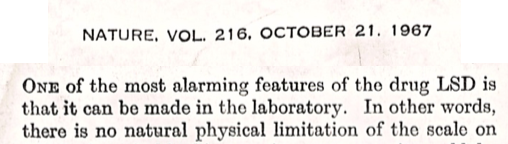
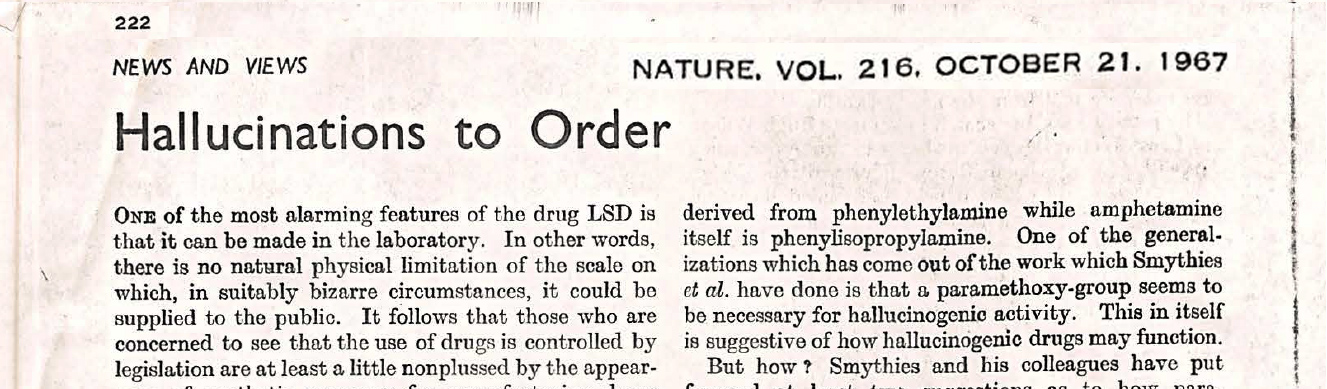
One such item that was recently uncovered is an editorial from the October 21, 1967 issue of the highly-respected peer-reviewed “scientific” journal, Nature. The editorial is titled “Hallucinations to Order”.
The unnamed author, which implicitly makes this authored by the editorial staff of the journal, is responding to an article published a few months earlier, “Some New Behaviour-disrupting Amphetamines and their Significance” by Smythies et al, which explores the topic of substituted amphetamines and their relative hallucinogenic potential.
The editorial opens with a frightened, inaccurate, anachronistic, and telling rant:
One of the most alarming features of the drug LSD is that it can be made in the laboratory. In other words, there is no natural physical limitation of the scale on which, in suitably bizarre circumstances, it could be supplied to the public. It follows that those who are concerned to see that the use of drugs is controlled by legislation are at least a little nonplussed by the appearance of synthetic processes for manufacturing drugs which were originally derived from natural sources and, more especially, by the application of synthetic processes to the design of new drugs. Although it will be a long time before the flower children and their like would be able to synthesize their own psychomimetic agents, it is entirely proper that there should now be considerable anxiety about problems of control.
This bizarre little hysterical opinion piece includes the strange gem: “Although it will be a long time before the flower children and their like would be able to synthesize their own psychomimetic agents […]”. As of the date of publication of this issue of Nature (October 1967), the so-called “flower children” were not only “synthesizing their own psychotomimetic agents”, but were doing so at a scale and efficiency that could be described as “awe-inspiring”.
By October 1967, Nick Sand, Tim Scully, Owsley Stanley, and others had already set up, broken down, and moved their high-volume LSD production labs several times. This is documented not only in biographies and books, but also in contemporaneous testimony from law enforcement agents in criminal investigations and prosecutions. The complex issues related to the potency of LSD and its control were not only widely discussed, but were part of the reasoning for criminalizing these “dangerous drugs” in 1967.
It is worth pointing out that the journal Nature was at the time (and for many years after) a key part of the machinery generating anti-drug hysteria and “scientific” public fears, such as the completely false claim that LSD caused chromosome damage.
As the Shulgin Archiving project continues to progress, we will be providing access to an indexed collection, but will also point out individual curiosities with commentary. We hope that reminding people of the absurd history of the Drug War and the persistent presence of confused stories supporting it and presented as “scientific” or “news” might help society limit its repetition of the worst type of errors.

 Ann and Sasha Shulgin corresponded with many people. As described recently in an overview of the Erowid crew’s Shulgin library archiving activities, when we found notes and letters, they were set aside to be scanned by Keeper Trout, the co-lead on this project. In some cases, we also photographed items in their original location for context. Here we share some examples.


 Ann’s Notes