Shulgin Archive : Dear Sweethearts, Dear Sir

Ann and Sasha Shulgin corresponded with many people. As described recently in an overview of the Erowid crew’s Shulgin library archiving activities, when we found notes and letters, they were set aside to be scanned by Keeper Trout, the co-lead on this project. In some cases, we also photographed items in their original location for context. Here we share some examples.

“Dear Sweethearts” (1989)

When the Shulgins filed a letter they received, whether typewritten or composed on a word processor, they would often keep it with a copy of the letter that they had written to the same person. As we’ve focused on Sasha’s office, most of the correspondence we’ve found in books has been to and from Sasha. A few letters have been from Ann, such as this one we think was written to Darrell and Betty Lemaire, in the wake of the 1989 Loma Prieta earthquake. It was folded with a handwritten letter signed “Darrell & Betty”:

letter to Lemaires
November 27, 1989 letter from Ann Shulgin to (presumably) Darrell and Betty Lemaire.

Both letters were tucked inside a bound copy of galleys of Drug Testing at Work: A Guide to Employers & Employees by Sebastian Orfali and Beverly Potter…

“Dear Sasha / Dear Sebastian” (1989)

Also tucked into Drug Testing at Work: A Guide to Employers & Employees were a letter to Sasha requesting comments on the book from its author, and Sasha’s two-page response:

Photo of letter
Photo of letter
Nov 22, 1998 two-page letter from Sasha Shulgin responding to a request for comment on a galleys of a book.

“Dear Mr. Stewart” (1974)

Here, Sasha apologizes to an editor at Macmillan (a publisher) about having to drop a co-authored book project called Drugs and Life, but proposing a new book on the subject of peyote:

Letter from Sasha Shulgin to a publisher
Jan 5, 1974 letter from Sasha to an editor at The Macmillan Company (book publisher)

“Dear Sir / Dear Mr. Shulgin” (1973)

Sasha contacts the Department of Justice Office of National Narcotics Intelligence (ONNI) to inquire about “the structure and the goals of [their] office”:

Letter from Sasha Shulgin
May 26, 1973 letter from Sasha Shulgin to the Office of National Narcotics Intelligence

…and receives a response within two weeks:

Image of letter
Jun 7, 1973 letter from the Office of National Narcotics Intelligence to Sasha Shulgin

Shulgin Archive : Selections from the Library

September 2025 – This article features an assortment of covers from books, periodicals, reports, and dissertations in Sasha and Ann Shulgin’s library, almost all from Sasha’s office.  Inscriptions, stickie notes, and enclosures (such as letters and notes tucked inside books) are also included. Read about the Erowid Center crew’s cataloging efforts from the past year, and please consider contributing financially to our efforts to finish scanning, compile metadata on the thousands of documents, and get this collection online.

“Required Reading”: Mount Analogue

Two English-language editions of Mount Analogue by René Daumal sit on different shelves in Sasha’s office, each with a note on the cover referencing it as required reading for Leo Zeff’s clients. The original edition, Le Mont Analogue, was published in French by Éditions Gallimard in 1952.

“Leo Zeff had everyone read this book before they worked with Leo”, stickie note on cover of the 1983 edition
“Leo Zeff had this book as required reading”, stickie note on cover of the 2000 edition

The 1990s

Binder of Usenet printouts
Binder of printouts from Usenet alt.drugs, Psychedelic Drugs release 1.0 1992
Conference Proceedings cover
Clandestine Laboratory Investigating Chemists Vol 2: Syntheses, presented at the 4th Annual Technical Training Seminar, Vancouver BC, Sep 7-10, 1994
Thesis cover image
(Thesis, 1996, California School of Professional Psychology at Alameda) Listening for the Logos: A Study of Reports of Voices at High Doses of Psilocybin by Horace Beach
One Foot in the Future: A Woman’s Spiritual Journey, by Nina Graboi (1991), enclosed, a postcard to Ann from the author, “Dear Anne, Thank you for the order of my book, should be ready for shipment by the end of April. Warm regards to you and Sasha, Nina Graboi”.
Psychiatric Annals Journal of Continuing Psychiatric Education (March 1994), Vol 24 No 3, issue theme: The New Psychedelic Subculture.
ЗабрискИ Rider 5 [Zabriski Rider 5], Igor Tarasov, Editor (1997), One of the weirder magazines the Erowid crew has seen, written in English and other languages, almost entirely on a black background. An archive of the publication website accessed through Archive.org’s Wayback Machine declares the short-lived project a “stronghold of hippy culture”. Rivals Mondo2000 in its graphic design choices (we love you, Mondo2000!).

The 1980s

bound MDMA papers
“Blue Book” cover and spine: MDMA – A Multidisciplinary Investigation – Reports From the Medical, Scientific, and Regulatory Communities Compiled by Earth Metabolic Design Laboratories, Inc. (Revised April 18, 1985).
Thesis cover
(thesis, 1989, Purdue University) Stereochemical Aspects of Hallucinogenic Drug Action and Drug Discrimination Studies of Entactogens by Robert Oberlender Special Edition for A.T. Shulgin. This was accompanied by correspondence between Oberlender and Sasha.
Inscription to Sasha by a Russian chemist in pharmacology book in the early 1990s. Part of a trove of 1980s (and a few 1970s) Russian books shared with Sasha by Russian scientists in the early 90s. Topics include pharmacology, drugs used to treat organophosphate and nerve gas poisoning, and anticholinergics.
Letter by a person who gifted Sasha the book Лекарственные средства Часть 1 [Medicines Part 1: Pharmacotherapy Guide for Doctors 11th Edition]
Наркоманией – Tоксикомании [Drug Addiction – Toxicomania], by И.С. Болотовский [I. S. Bolotovsky] (1989)
Albert Hofmann inscription
Albert Hofmann inscription in 1983 edition of LSD: My Problem Child (“For Ann and Sasha with cordial wishes”)

The 1950s through 1970s

Image of 1977 catalog
Do It Now Foundation’s Catalog of Educational Materials to Promote Chemical Awareness, 1st Edition (“Now celebrating our 10th anniversary”)
(Fall 1974), periodical produced by DEA, depicting vials of heroin arranged by color.
1960s newsletter cover
STASH Capsules – Vol 1 No 1 – Periodic bulletin of The Student Association for the Study of Hallucinogens, Inc. (Jun 1969)
Heaven and Hell cover
First U.S. edition of Heaven and Hell (1956), bookmarked at pages 52/53, 54/55, 56/57, 58, and 98/99. Includes pencil notes. This volume is in the secretary in the Shulgins’ living room that holds Huxley books and first editions.

Secretary with books

Shulgin Archive : Past Year of Cataloging and Scanning

September 2025 – The small but mighty Erowid archiving crew (staff and volunteers) who are cataloging books and documents at the Shulgins’ Farm finished going through another motherlode: Sasha’s office bookshelves. Besides books and lab notes, Sasha’s shelves hold unpublished manuscripts, collections of writings, and periodicals; coursework, student theses, and manuals; novelties, obscure forensic publications, a nearly comprehensive set of older articles on cannabis research (including the work by Shell done for Edgewood Arsenal), and clippings and photocopies dating back to the 1940s. In the last year, the Erowid crew has inventoried over 4,100 additional items, almost all from Sasha’s office. We documented enclosures (letters, postcards, and notes tucked into books) and unique items for scanning, as well as photographing book covers.

The majority of Erowid’s Shulgin Archiving Collection scanning was completed by the end of 2024, part of a ten-year triage and cataloging phase, when project co-lead Keeper Trout finished scanning all the contents of Sasha’s filing cabinets and boxes of files stored in the Barn. Trout is in the home stretch of scanning select items from the office bookcases, and re-photographing a small number of book covers. Fragile film, video, audio tapes, reel-to-reel recordings, slides and CDs are being professionally digitized in Albany, California. Many of the archive’s photos are securely stored at Erowid Center’s library, as we work to raise the funds to have them professionally scanned. We’ve sent a couple thousand out to test scanning companies, but won’t be able to get the majority digitized until additional funding is found.

As we sort photos and compile metadata about books and documents, we’ll be sharing highlights. Meanwhile, some of Erowid’s Shulgin Archiving crew have shared their thoughts on
the Archive and the experience  of working with the collection.

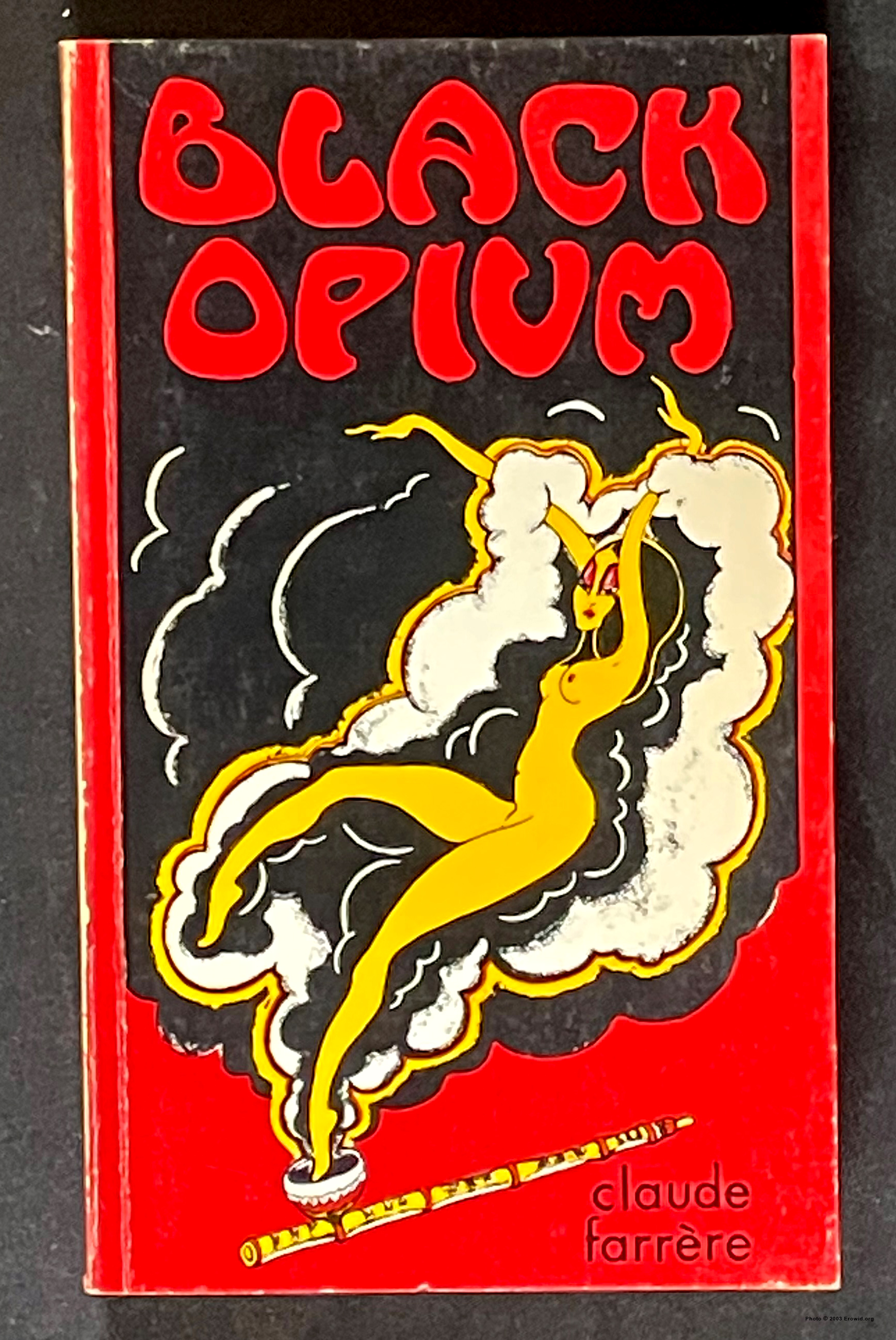
“Volunteering on book cataloging for Erowid’s Shulgin Archiving project has been a great opportunity to create a full accounting of Ann and Sasha’s library. A dusty fun time that lead to some great additions to my own library, as I was able to find some of the interesting titles online to purchase, including a copy of the handwritten and illustrated Alice’s Adventures Under Ground, which was the original title of Alice in Wonderland; the old novels Black Opium by Claude Farrère and Cocaine by Pitigrilli, both with some great illustrations inside; and The Haight-Ashbury: A History, by Charles Perry. And working together with a great group of dedicated people was wonderful!”
— Oliver, volunteer since 2019

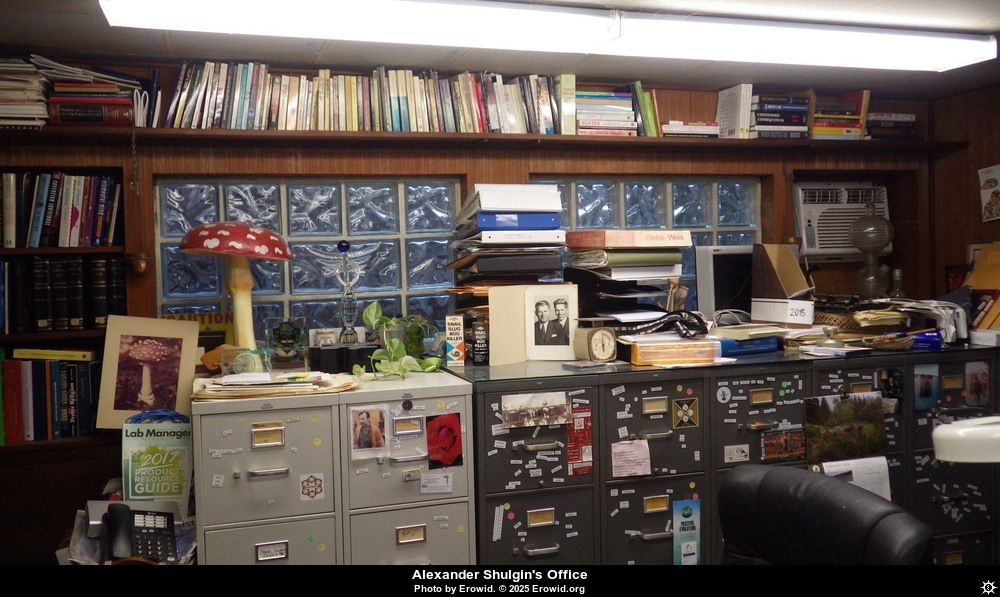
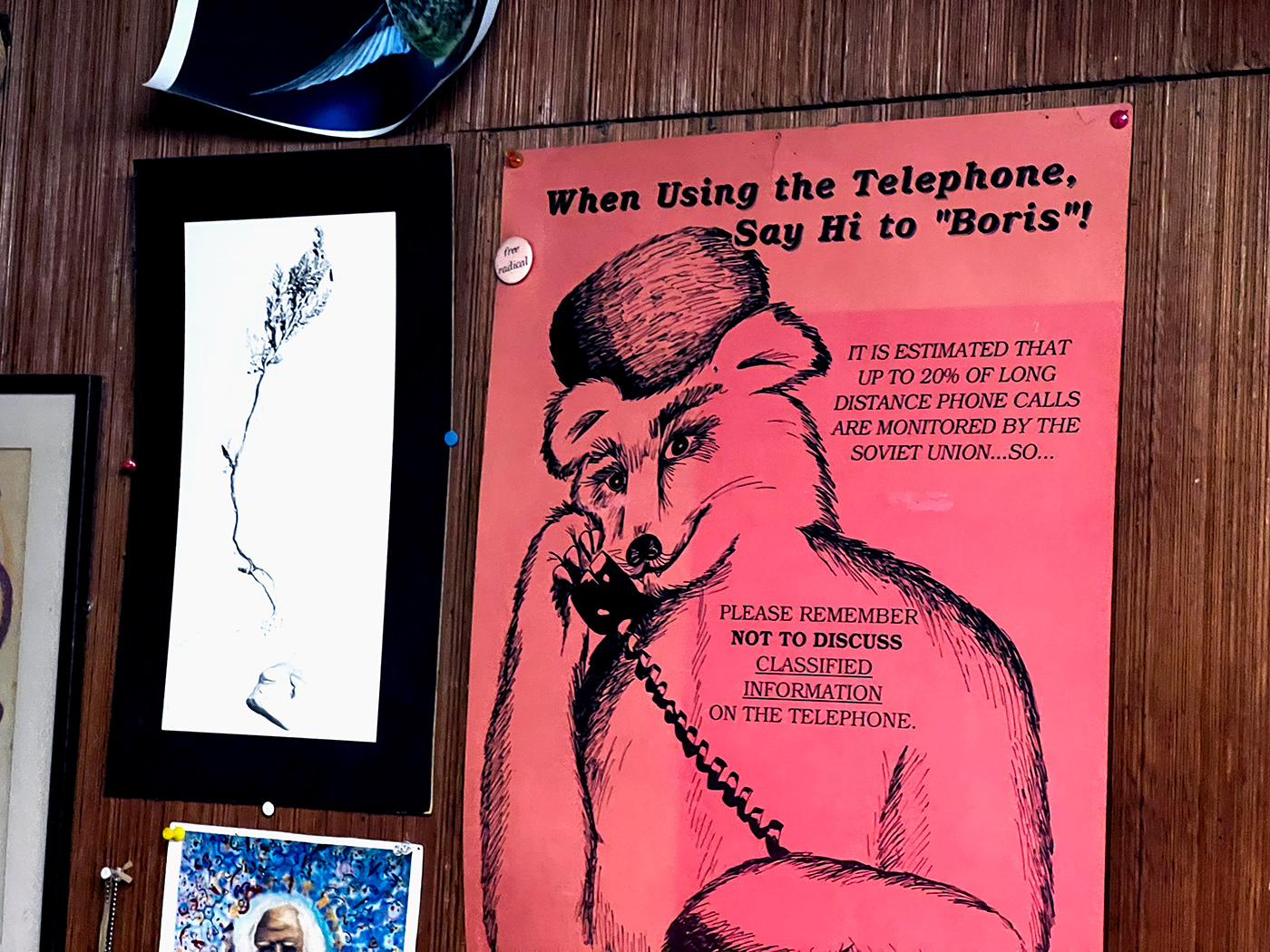
“Sorting through the contents of Sasha’s office was a particular joy. Not only for the incredible contents of his library, but also for the dazzling array of fun and witty posters and memorabilia covering the walls. Two items in particular stand out, both reflecting Sasha’s Russian heritage: a hilarious 60s era cartoon bear wearing an ushanka-hat with a caption admonishing the viewer not to discuss classified material over the phone; and my personal favorite, a handsome photo of doomed Tsar Nicholas II and his son the Tsarevitch Alexi (poor little guy).” — David B, volunteer since 2014

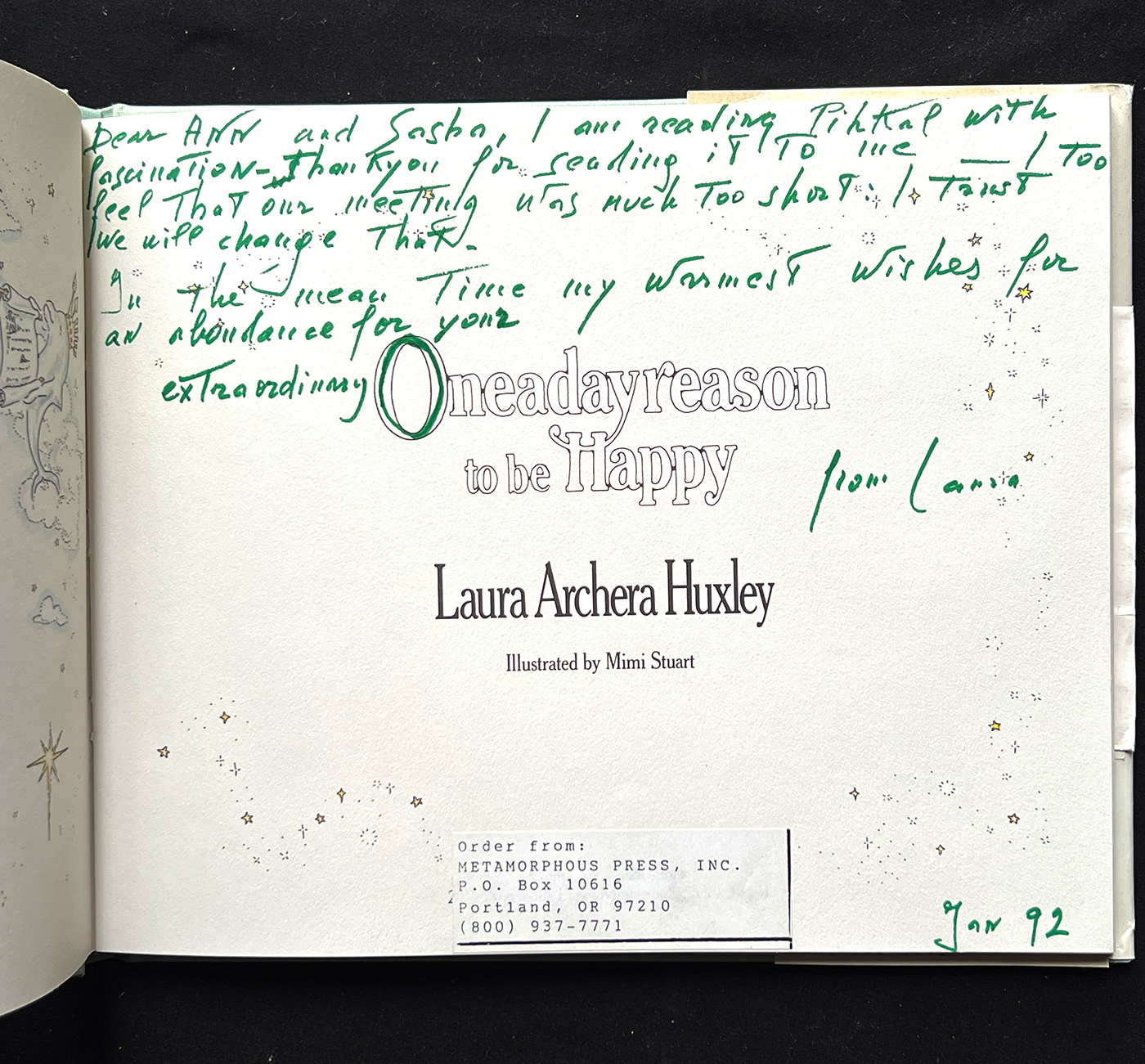
“There isn’t much that can get a group excited about getting up early on dreary winter days, but the mood at the Farm was always high. Though our work was dusty and drafty, it was never dull. Keyboards clicked and clacked at fever pitch, preserving every pertinent detail from the endless torrent of the Shulgin archives. Every so often, there would be a cry: “Inclusion!” A page would be bookmarked, or better still, a passage underlined. These were the moments that most interested me. The Archives are any psychedelic nerd’s dream collection. There are countless beautiful and strange first editions, many of which have handwritten notes for Ann and Sasha from the authors. It becomes very obvious after looking at the Archives how central Ann and Sasha were in the psychedelic underground. They seem to be everyone’s grandparents, with the endless collections of thank-you’s, happy birthdays, and happy anniversary notes to prove it. Even though I couldn’t talk to Ann or Sasha, they were still great at giving book recommendations.” — Alysiana, volunteer since 2025

“In anticipation of volunteering on Erowid’s Shulgin Archiving project, I expected to become familiar with Sasha’s library in a data-oriented way, but what ended up happening was that I got to learn about him as a human being with many interests and a soul beloved by the wonderful community he created.”
— Fiona, volunteer since 2025

“Being a part of this project felt like I was getting a glimpse into history. Getting to sift through endless pages of molecular formulas in Sasha’s handwriting nearly brought a tear to my eye despite barely understanding them. I remember finding a book that was noted as required reading by legendary underground guide Leo Zeff, and feeling like I had found a true treasure. However, my favorite part was being amongst a group of dedicated individuals who were always willing to share some knowledge or a funny story. The range of material catalogued was truly impressive and I hope that there are continued efforts to preserve and eventually share what the Shulgins collected over their lifetimes.” — Veronica L., volunteer since 2024

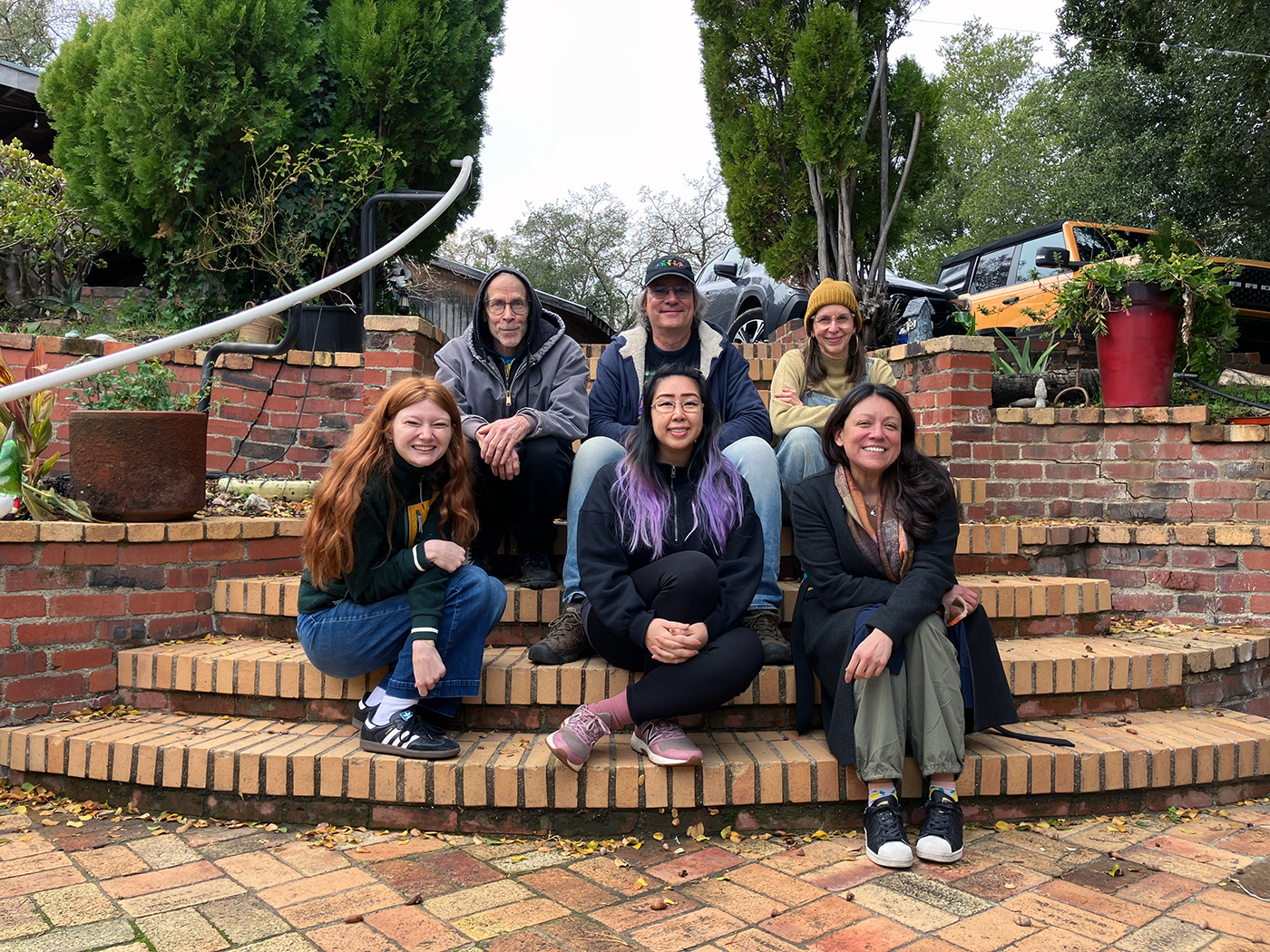
Some of Erowid’s Shulgin Archiving Crew – Trout, Oliver, Sylvia, Alysiana, Fiona, and Veronica (photo by Dudleya)
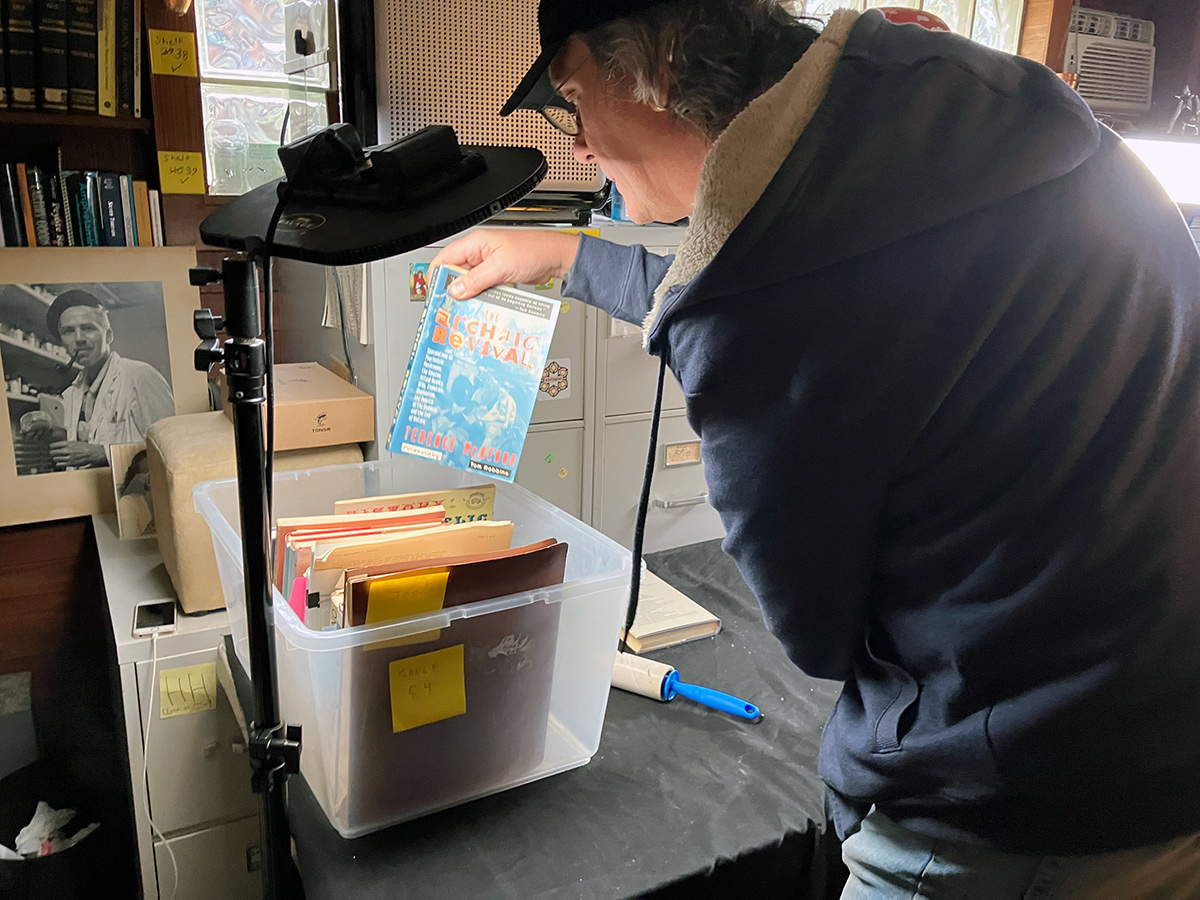
Oliver at the photographing station (photo by Erowid Crew)
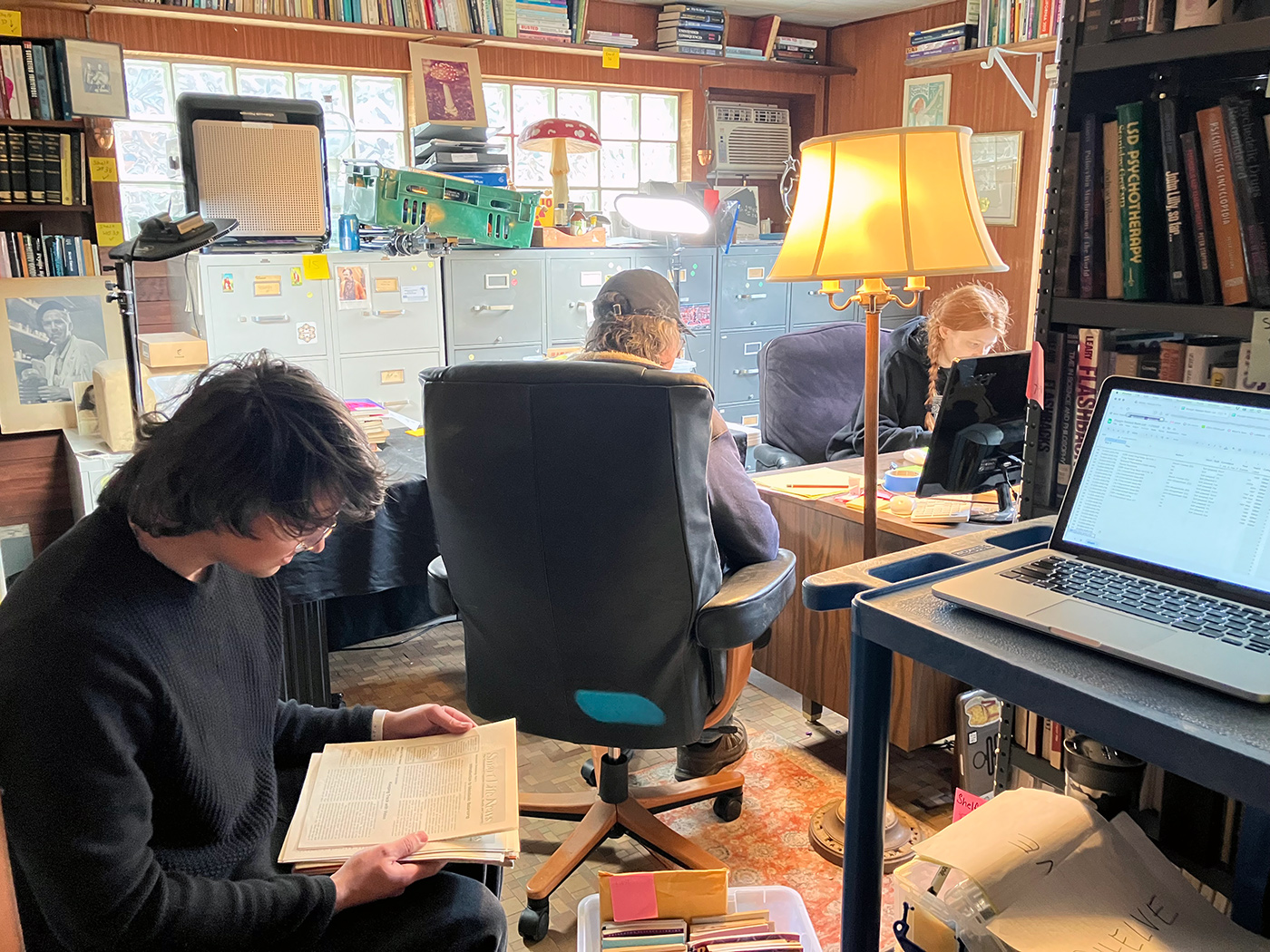
Flamingo, Oliver, and Alysiana in the Office (photo by Sylvia)
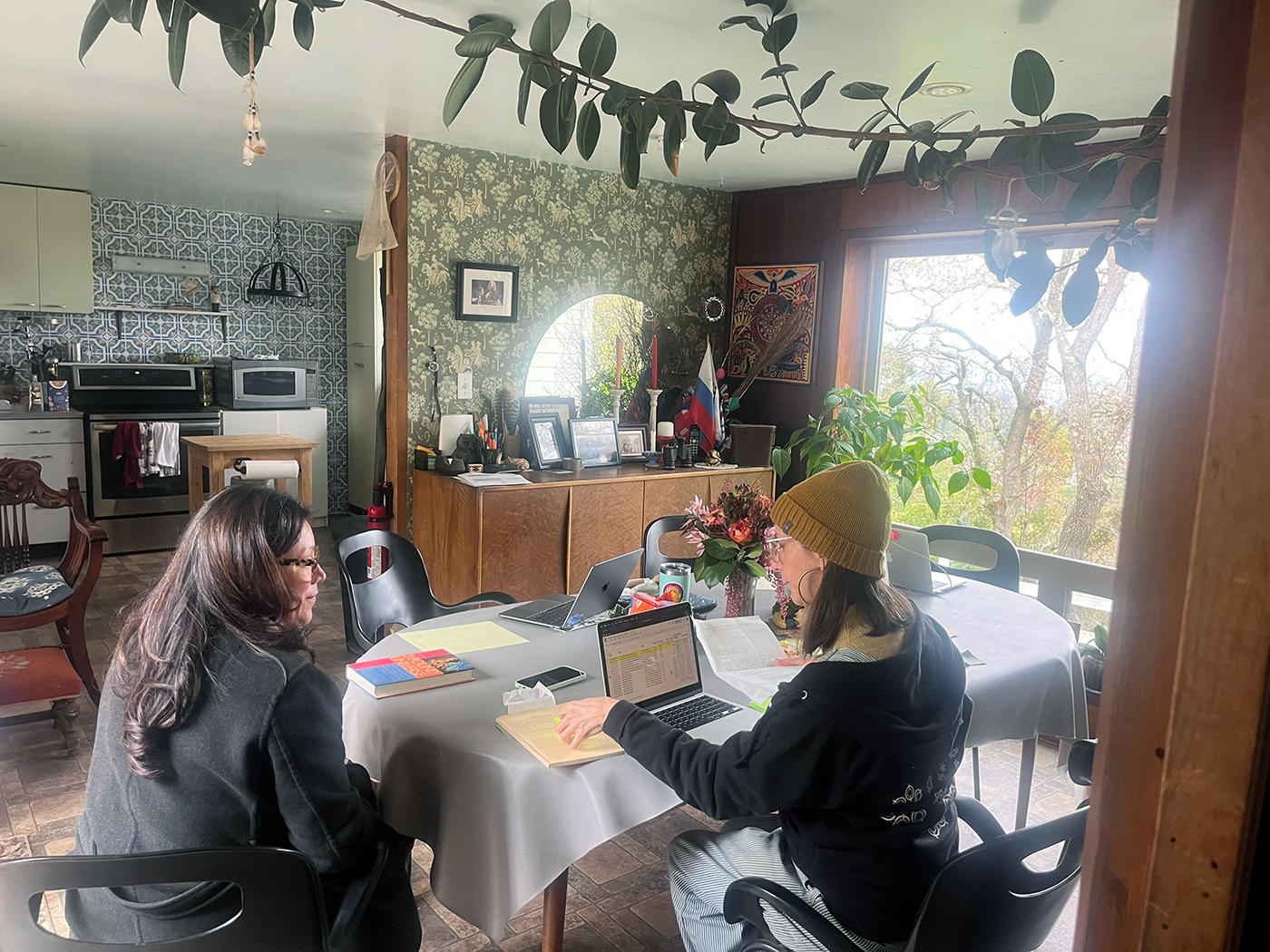
Veronica and Sylvia cataloging in the Kitchen (photo by Alysiana)
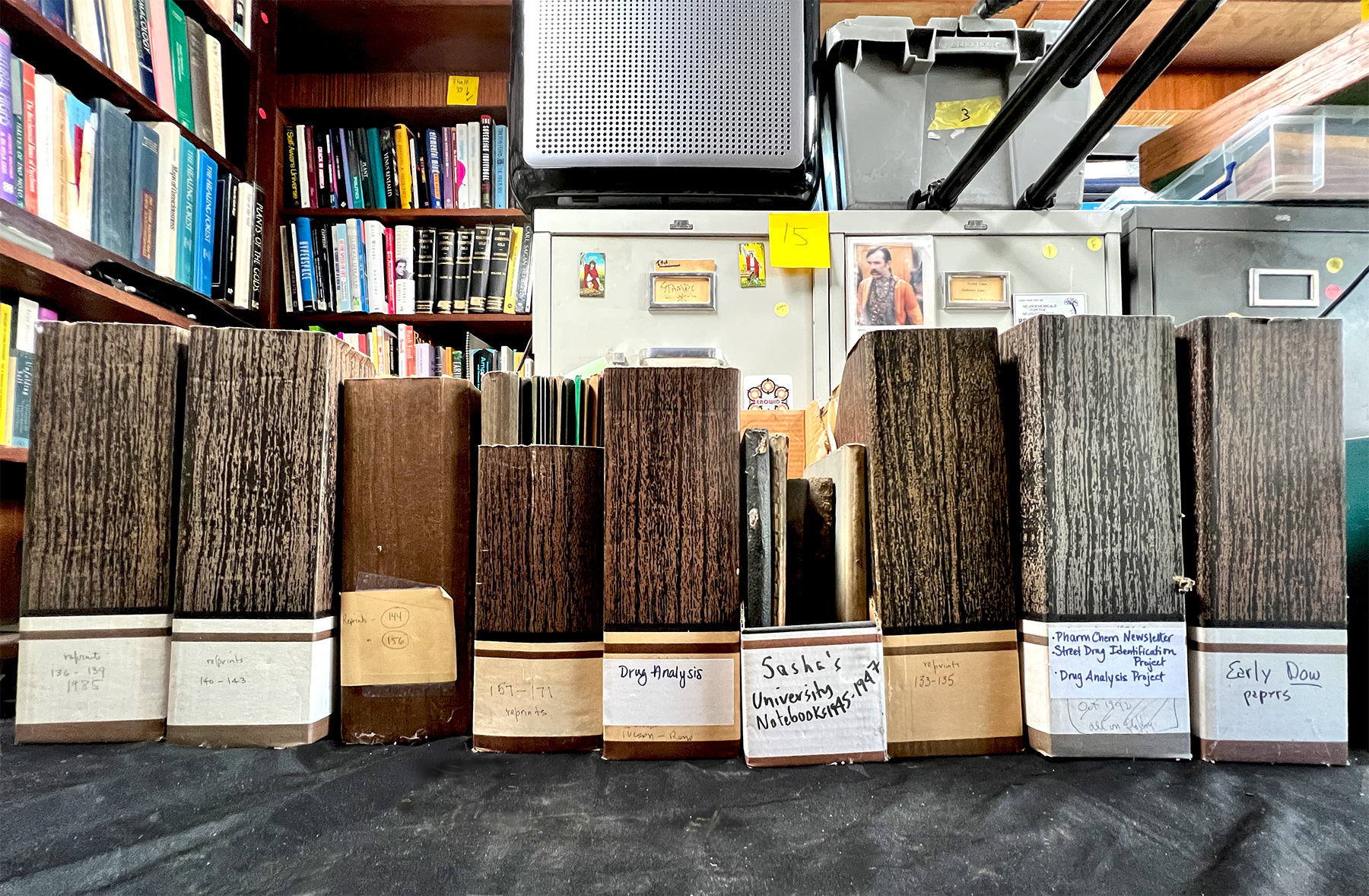
Shelf organizers from Sasha’s office (photo by Erowid Crew)

DrugsData News – Administrative Pause Explained

April 7, 2025 — One year has passed since our lab was ordered by the DEA to halt analysis of DrugsData samples and re-apply for exemption. We have no updates to report, and all details below still apply. Timelines on DEA decision-making are long; our hope remains that this new application is still under review.

September 25, 2024 — On April 10, 2024, after 23 years of continuous service as the only program offering anonymous mail-in lab testing of controlled substances in the United States, DrugsData went on pause. Our lab was ordered by the DEA to halt analysis of DrugsData samples and re-apply for our exception to the rules that disallow anonymous testing and the shipping of samples of possible controlled substances through the mail without a DEA license and specialized government forms.

lab pipette

As of September 24, 2024 we don’t yet know what caused this situation or have any real understanding about when or whether Erowid Center’s DrugsData project will be able to re-start. We’re disappointed in how long the process is taking, but we continue to be hopeful!

It is our express long-term goal for DrugsData to catalyze a shift toward allowing more labs across the United States to anonymously analyze samples from the public. The DEA is notoriously private about their internal processes, more so than many other federal agencies. They did tell us that they are trying to create a process for re-approving our project that they have not previously had, which adds to our hope.

One complication is that it is is our partner lab that has the DEA license, approval, and waiver of 21 CFR 1305.03(c), not Erowid Center. So Erowid isn’t in the ideal position to complain or press for answers. We made the decision to remain hopeful and not say anything publicly that would prompt public pressure that might annoy DEA officials. We are aware that our response to this situation could endanger our lab’s long-term relationship with the DEA, which we don’t want. A good-faith relationship is required for any controlled-substance testing lab to exist. If we do this wrong, we endanger the lab (our long-time partner), not Erowid Center.

Since early April, we’ve told the public that the project is going through “administrative red tape”, which summarizes the situation without going into too many details. But now that our annual September Drive is underway, we can no longer simply demur. Many Erowid supporters obviously have questions about what’s going on with our DrugsData project. So this is the first time we’re describing in more detail what has been going on.

We don’t think the program was stopped because of any suspicion of criminal activity or investigation into DrugsData. The implicit rules are that we do not violate the spirit or letter of the 1973-1974 regulation covering this topic. You can find the full entry (assembled into a PDF with the first page being the scanned pages of the Federal Register, and then the rest being an easier-to-read version of the same text) here:
https://www.erowid.org/freedom/law/federal_register/federal_register_anonymous_testing_rule_1974.pdf

The rule became binding in 1974. It’s a little long, but here is a particularly relevant section:

(f) “The delivery of such substances to a registered analytical laboratory, or its agent approved by DEA, from an anonymous source for the analysis of the drug sample: Provided, The laboratory has obtained a written waiver of the order form requirement from the Regional Director of the Region in which the laboratory is located, which waiver may be granted upon agreement of the laboratory to conduct its activities in accordance with Administration guidelines.”

The waiver mentioned in that paragraph is the waiver that our lab has received three times over the past 30+ years. The first was in 1988, the second was when we started EcstasyData in 2001, and the third was when the lab changed ownership in 2016. During the previous two re-approvals, the process took about six weeks, during which anonymous testing was not halted.

In contrast, over five months have passed since the latest application for re-approval was submitted.

Our hope is that DEA will see that we’re involved in important research projects designed to monitor street drugs and offer health agencies more insight into street drugs and the opioid crisis. At least one state Department of Public Health believes that our work, as part of a large team, has provided on-the-ground benefit to health care providers and end users. County officials continue to value the lab validation of on-site testing technologies, as well as the direct access their staff has to the results from their area, and from around the United States.

The pause on DrugsData testing is hurting research. It is actually causing harm to real people who are less able to learn about the contaminants in the drugs they consume. Stopping our project also hurts medical professionals and city-, county-, and state-level efforts to reduce harm through drug supply monitoring.

Other groups in the United States are doing lab drug checking as part of research projects and street drug harm reduction, many of which we collaborate with. Sadly, none accept samples from the public by mail. We like these groups a lot and would like to promote them, but in the context of describing our DEA issues, we’d prefer to not mention their names. We’ll save that for another update. The progress towards ubiquitous local drug checking in the United States over the last five years has been absolutely amazing, and we’re glad to continue to play a role in it, even while our own project is in limbo.

Thanks to everyone for their support of DrugsData and Erowid Center, and your patience during this long process.

What is Ketamine Precursor A?

It’s been noticeable that most (nine out of ten) ketamine samples analyzed by DrugsData since March 2019 have contained 1-[(2-Chlorophenyl)(methylimino)methyl]cyclopentanol (CAS #6740-87-0), or “Ketamine Precursor A”. Synonyms of this substance in the literature include “Ketamine Related Compound A” and “Ketamine Impurity A”.

Since 2019, only 37 ketamine samples have been analyzed by DrugsData that contain only ketamine (zero in 2022). An additional 297 sample contained Ketamine + Ketamine Precursor A, and 19% of these 297 samples also contained MSM.

Ketamine Precursor A has been notably present in black market ketamine, but should not be present in commercial, pharmaceutical ketamine inside the United States or Europe.

Ketamine Precursor A is not considered harmful, just a waste of mass and chemical. We do not know of any good research on its toxicity, but unfortunately, most drug research that shows “no effect” doesn’t get published. If it were super toxic, we’d probably know about it.

A subreddit has covered this topic: https://www.reddit.com/r/AskDrugNerds/comments/e6iz5r/any_info_on_ketamine_impurity_a_and_whether_or/

We don’t know anyone who has tried it on its own, but it’s unlikely to be active within 10x the dose of ketamine. Just a boring contaminant.

If you have any insights to contribute about Ketamine Precursor A, please let us know, info(at)drugsdata(dot)org.

Tryptamine Turns Purple with Ehrlich Reagent

— by: earth, Sylvia, Fire, Jurek, and anonymous experts

Here’s a peek into how Erowid works with a network of drug-checking experts around the world work. Just another day at DrugsData. :]

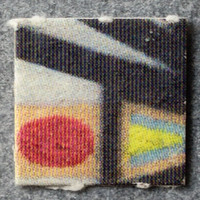
On June 30, we published the test results for a sample of 1P-LSD blotter (dd10683), confirming the presence of 1P-LSD.

On July 12, Jurek from protestkit.eu, a Polish harm reduction and field reagent specialist, inquired about this sample, noting that the Ehrlich reagent photo showed an unexpected purple reaction. Jurek pointed out that 1P-LSD isn’t known to result in a purple color in the presence of Ehrlich reagent, helping to differentiate it from LSD-25, which does cause a purple color change with Ehrlich reagent.

We discussed this with our lab and learned that there was a small GC peak they had not initially reported in the results: inactive salts and inks on blotter do not always get reported due to DEA-imposed limitations.

Given the unexpected Ehrlich reaction, we published the spectrum for the unidentified chemical and added it to the results as a second chemical present in the sample.

A chemist in the Erowid Expert Network identified the unknown chemical as tryptamine, so we ordered a lab standard for tryptamine and found that it was a perfect match via GC/MS.

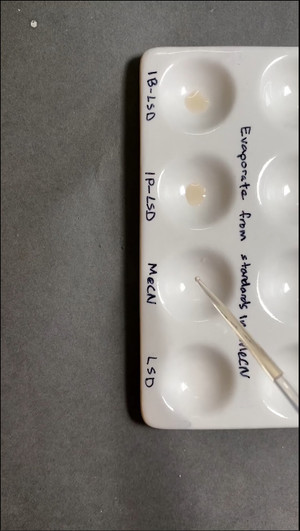
Further, DrugsData’s lab did side-by-side comparison in a ceramic well plate of lab standards for 1B-LSD, 1P-LSD, and LSD-25. The third of four wells is the ‘blank’ labeled MeCN (acetonitrile) which was the solvent used to dissolve each of the ergoloid standards (1B-LSD, 1P-LSD, LSD-25). Ehrlich reagent was applied to each, demonstrating that neither 1B-LSD nor 1P-LSD turn purple with Ehrlich, where LSD-25 does.

So the mystery of the the unexpected Ehlrich reaction for this 1P-LSD blotter is resolved, but the reason why someone added tryptamine to 1P-LSD blotter is still open. We all guess the goal was to be able to sell the 1P-LSD blotter as LSD-25, and that adding tryptamine to the 1P-LSD will result in reagent reactions consistent with LSD-25.

This is the first time Erowid has seen this type of adulteration of non-LSD ergoloids with the chemical tryptamine.

The image below is a link to a video of the reagent test:

Then, a photo of lab-grade tryptamine reacted with Ehrlich. A strong purple color:

Evolving the Approach to Reagents and LSD Gel Tabs

Drug checking is a complex and evolving area of research. In EcstasyData’s effort to show accurate findings to the public, we’re working with the unique conditions of each sample. Most recently, the lab has innovated in its handling of LSD gel tabs.

There’s LSD, and then there’s gel tab LSD

Since 2014, the year EcstasyData’s lab developed its procedure for a practical and time-efficient way to identify LSD using GC/MS, gel tabs have been infrequently submitted for analysis. The majority of LSD samples submitted to our lab use blotter paper as the carrier (the lab requires that all samples be dry, no liquid samples are accepted without prior arrangement), though it is Erowid Center’s opinion that most of the LSD currently in distribution is in liquid/solution form.

Prior to 2017, the rare gel tab sample would get refused by the lab’s main chemist, who at the time did not feel confident that these samples could be adequately analyzed for the presence of LSD.

Besides analyzing each sample using GC/MS, which is the analytical method EcstasyData uses to detect the presence of chemicals, the lab also tests samples with reagents. Reagent testing adds descriptive data that adds to the collective knowledge base for drug checking. (Reagent testing can’t positively identify chemicals.)

It turns out that gelatin as a medium makes reagent testing more complicated; the pH conditions required to dissolve the gel affect the reagent even when dried. For this reason, gel tabs do not react normally to field reagents such as Marquis or Ehrlich.

De-weirding reagent colors

Between 2017 and November 2018, five gel tab samples were analyzed by EcstasyData, with GC/MS showing that four of them were LSD. The Ehrlich reagent reactions for these four samples were atypical. LSD normally reacts to Ehrlich reagent by turning purple, but when Ehrlich was applied directly to the dry (or even wet) gelatin in these cases, the results were mixed, turning brown or brown-purple, or other atypical reactions.

The lab began working with the special needs of these samples, and in November 2018, they developed a sample-preparation procedure that allows Ehrlich reagent to show a typical positive (rule-in) response to LSD in gel tabs.

New process for gelatin

We are publishing Erowid Center / DDL’s new procedure that is being used to process dry-gelatin-tab dose units, for the historical record, and so that others can duplicate it and critique it.

The following is the procedure that was used to produce the photo shown for Sample 6813, the first sample treated in this way:

  1. Gel medium placed in small amount of water.
  2. Basify gel-water mixture with NaOH.
  3. Gel medium fully dissolves.
  4. Solvent (ethyl acetate) added to gel-water mixture.
  5. Solvent separated off and dropped onto ceramic well plate.
  6. Unheated evaporation of solvent until dry.
  7. Drop field reagents into wells, photograph.

This is the process that the lab will use to prep future gel tab samples for reagents. It will be interesting to see how other samples respond to it, and whether further tinkering with the process will be required.

Fentanyl or Not? Re-analysis of Samples #5776 and #5779

As covered last week in Fentanyl Test Strips, Hot Spots, and Unhomogenized Samples, two samples reported in the November 6, 2017 batch of EcstasyData results were submitted to the lab with notes by the senders saying they had used fentanyl field tests on their sample before sending it.

The original GC/MS results for these samples (#5776 and #5779) did not reveal fentanyl. After writing about the problems associated with non-homogeneous samples and “hot spots”, we decided to use this as an opportunity to re-test both of these samples. This time, we used up 100% of what was sent by dissolving all of the sample (and not just a small portion), to make sure not to miss any potential “hot spots” in the original. That is a different method than our normal sampling protocol, meant to verify the no-fentanyl results.
On November 12, the lab reported back that the re-analysis of one of the samples returned a different result than the original analysis. The other sample’s result did not change.

Re-tested Using Modified Sample Prep Method

With most EcstasyData samples, there is material left over after an analysis. Whatever is not destroyed in the GC/MS process is stored for secure disposal after one year. This permits the lab to re-test a sample, potentially several times, if circumstances call for a re-test.

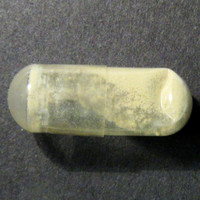
A modified method was used to re-test samples #5776 and #5779: For each of the re-tests, all the material, including the capsule, that was left over after the original analysis was placed in solvent to produce a consistent liquid sample, which was then run through the normal GC/MS process. This eliminated the “sub-sample of a sub-sample” condition that we described in the previous article.

Heroin Sample 5779: Positive fentanyl test-strip confirmed by GC/MS

The sample whose result did change after re-analysis was a powder represented as heroin.

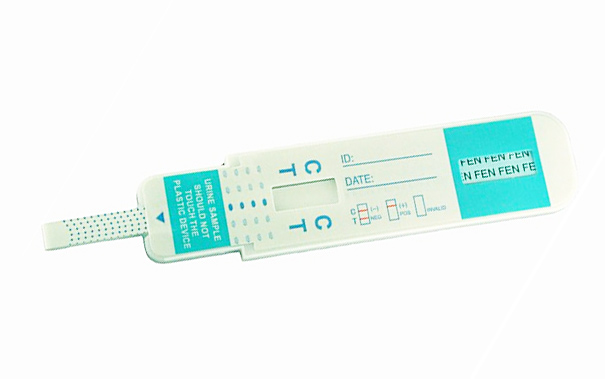
The person who submitted the sample had noted the ‘Sample tested positive on both ‘DanceSafe’ and another brand of Fentanyl test strips (or cassette / dip card). Would like to know if these immunoassay fentanyl tests actually work.’ While the first GC/MS analysis did not detect fentanyl (even though a lot of the material was prepped for testing and the sample appeared homogenous), the second analysis that followed the method above did detect fentanyl.

This discrepancy in results can most likely be attributed to a hot spot or spots in the powder.

The lab also identified several other substances that they did not report in the first analysis: trace amounts of codeine, 4-ANPP, papaverine, and very small amounts of actylecodeine and 6-monoacetylmorphine. The additional very small findings are normal minor components of poorly-cleaned heroin produced from natural poppy resin. When we re-test a sample looking for very potent substances like fentanyl, we take a closer look at the trace and near-trace tiny “noise” bumps in the GC readouts.

Although we do report trace substances in most cases, street heroin is a good example of the type of material that often contains a lot of “noise” because it’s not pure, nor is it a combination of drugs; it’s a partially-synthesized natural product with lots of leftovers.

Because of the issue of fentanyl and fentanyl analogs showing up in heroin, EcstasyData has obtained a number of NPS-fentanyl analog standards and will be taking extra care to look for them in future heroin and opioid samples. Please include on your submission forms if you have concerns about fentanyl in your sample so the lab tech knows to look at what we normally consider “noise” in messy samples, and to set up the Gas Chromatograph run so that we make sure he can differentiate noise from signal at the time points where fentanyl and the known fentanyl analogs come out of the column.
MDMA Sample 5776: False-positive fentanyl test-strip

The sample whose result did not change with re-analysis was for a powder represented as MDMA. Only MDMA, with no traces of fentanyl or other compounds, was detected using the method described above. The person who submitted the sample had noted a ‘strip test tested positive for Fentanyl’ prior to sending their sample in. This strip-test result was not confirmed by GC/MS.

Evolving and Improving Procedures

Although we run one of the best analytical projects of its kind in the world, this is a great example of the many types of errors and misses that can occur, and we take steps like those described here, to verify our results and change our procedures to improve the accuracy over time.

— Sylvia and Earth

Fentanyl Test Strips, Hot Spots, and Unhomogenized Samples

With fentanyl and fentanyl analogs haunting the opioid crisis in North America, some harm reduction field workers and users have been experimenting with what cost-effective reagent-based field tests might have to offer. One method that has been explored is the repurposed fentanyl urinalysis test-strip, where rather than dipping the test-strip in urine, it is dipped in a solution of the drug itself. A panel presentation covering the topic of drug checking and the opioid crisis was held at Drug Policy Alliance’s 2017 Reform Conference.

Since two samples included in the November 6, 2017 batch of EcstasyData results came with notes saying the sender had used a fentanyl test-strip on their sample before sending it, we’re starting to look at what that means for how we report EcstasyData results in such cases.

The question was posed by one sender,  “Would like to know if these immunoassay fentanyl tests actually work.” Like many Yes/No questions that people have about drug analysis, the answer is a combination of “it depends” and “it’s complicated”.

Hot Spots
In answering the question, it helps to remember that not all powders will be completely evenly homogenized and may contain “hot spots” with uneven concentrations of a given chemical in sub-parts of the larger amount of powder or crushed crystalline material.

Powders and tablets that have more than one component to them aren’t always evenly mixed. Sometimes there’s a higher concentration of a drug in one or several areas. Think of a burrito that has hot salsa in one end of the burrito but not the other. If you bite into the burrito on one end, it’s spicy. On the other end, it’s not. Or a chocolate chip cookie — the chocolate chips might not be evenly distributed in the cookie. We’ve discussed homogenization in EcstasyData samples before when talking about traces of drugs in samples sent to the lab.

Hot spots are a bigger deal when it comes to fentanyl drugs or other similarly potent drugs, that are active at doses below a milligram but are sold in powders weighing hundreds of milligrams or grams.

Sub-samples of Sub-samples
When a powder sample is received by the EcstasyData lab, the lab tech preparing it for analysis first does a very simple partial homogenization by shaking the sample container or stirring it a little before extracting a sub-sample with a clean metal or plastic spoon. The sub-sample is then dissolved in a solvent and the technician confirms that the material dissolves completely or may take additional steps to get a fully dissolved, consistent liquid sample.

The dissolved sub-sample is then inserted into the testing equipment (the GC/MS). If fentanyl is present in that solution, then fentanyl will show up on the test, and we report it. If fentanyl is only present in a part of the sample that was not dissolved into solution, the fentanyl can not be detected.

So there are at least two steps of sub-sampling that occur before a tiny amount of material reaches the GC/MS:
1) The sender takes a sub-sample out of their stash/bag/jar at home and sends it to the lab.
2) The lab tech takes a sub-sample of that sub-sample to dissolve and inject into the GC/MS.

Someone using test-strips on powders or tablets at home is facing a similar issue of potential hot spots.

Can’t Be Sure
If a fentanyl test-strip is used to check a drug sample and the result is consistent with the presence of fentanyl (a so-called “positive”), there are several possible explanations, some including fentanyl being present, and some where there is not fentanyl present (“false positive”). A test-strip can also be difficult to read.

Some Positives are False Positives
A positive result with a test-strip can mean fentanyl is present in the sample, either deliberately, or by contamination. Tablets might have come into contact with the substance and have a tiny residue left that could trigger a positive field test.

An unknown and unknowable number of other conditions can cause false positives on urine drug screen strip-tests. Non-fentanyl drugs might trigger the field test to show positive. The problem of false positives is the reason urine strip-tests alone are insufficient to prove someone has taken a given drug in legal or employment contexts. Positives from urine screens are always double checked using an advanced technique such as GC/MS to confirm or exclude the simpler, cheaper strip test.

Test-Strip Outcome Can Be Hard to Interpret
Test-strips and other field tests often have a wide range of possible strengths of color changes. It is common to get results that are not 100% clear in what they mean.

EcstasyData can’t comment on whether fentanyl test-strips in general are useful in detecting fentanyl in drug samples. Each situation is unique.
We are keeping an eye on this topic.

— Sylvia and Earth

PS: In August 2017, Erowid confirmed that the DanceSafe fentanyl test strips give false positives for buprenorphine. When mixed at a concentration of .01mg per ml water. We have another draft post that hasn’t seen proper review yet that goes over this in detail.

Overdose Awareness Day

International Overdose Awareness Day (IOAD) is today. I became aware of this event when browsing the Harm Reduction Coalition site. Clicking through to overdoseday.com, I learned that IOAD was founded over a decade ago in Australia.*

Also over a decade ago, I lost my dear friend Carla to a drug-related accidental death that one might call an “overdose”, except that no single drug found in her system would, alone, have precipitated her falling asleep and not waking up. I’ve since come to call this type of death a death by “medi-mix”, a mixing and matching of drugs and alcohol to tackle unwanted symptoms, thoughts and feelings like pain, sadness, sleeplessness, tension or anxiety.

overdose death is preventable I’ve also found myself using her first name as a verb, as in “I don’t want to get a call and learn he Carla’d out!” or, sadly, more recently, “she Carla’d out”. Maybe dark humor helps me deal with the feelings of grief and helplessness. Details of how Carla died came to light because she died in a county where autopsy reports are a matter of public record. Ordering one cost less than $30. That was the price of learning details on how this healthy woman of 42 “died in her sleep”.
That the risky mixing and matching of sleep aids, anxiolytics, opioids, stimulants, and alcohol even has a name in my lexicon (“medi-mix”) is disturbing. It’s not that it happens often, it’s that it follows a recognizable pattern. Since Carla’s death, several friends and acquaintances have exhibited concerning patterns with various depressants, usually during times of great stress, but not always. Most have survived without dying, so far.

The Overdose Awareness Day site promotes wearing a silver ribbon pin; I’ve worn one this month to remember Carla and anyone else in my acquaintance, any public figure, and any other person who has died or suffered from a non-lethal overdose, whether it’s a result of taking too much of a single drug or a drug combination accident.

Please talk with family and friends about this topic, even if it feels awkward. It might make make a difference in someone’s life!


*IOAD is now managed by Penington Institute, a nonprofit group that “advances health and community safety by connecting substance use research to practical action”. Actions dedicated to overdose awareness on August 31 are organized outside Australia, too.