DrugsData | Meth and the N-Isopropylbenzylamine “N-Iso” Boogeyman

For over forty years, methamphetamine-using communities have been speculating why some batches of meth seem qualitatively different than others. When we started working in this field in the 1990s, the claim was that l-meth, solvents, and synthesis impurities were the culprits.

Since around 2010, the DEA’s policies have resulted in most methamphetamine inside the United States coming from large manufacturers outside the US. In the ensuing years, some have claimed that the unpleasant effects of street meth in the US are a result of meth containing N-Isopropylbenzylamine (isopropylbenzylamine; N-IPBA; “N-iso”) [PubChem]. It is a common enough claim that many skeptics have called N-iso the new meth boogeyman.

The most common claims about isopropylbenzylamine are that it is present in combination with meth, and causes more paranoia, psychotic ideation, and worse hangovers. It’s also blamed for effects atyptical for stimulants, such as lethargy and “brain fog”, 1-3 days into a meth-using session.

We’ve been asked about N-iso many times between 2019 and 2022. We purchased the certified reference lab standard for isopropylbenzylamine twice in the last two years in order to run experiments to check our methods. We have repeatedly confirmed that zero (0) meth samples analyzed by DrugsData to date have contained it:

https://drugsdata.org/results.php?substance1=94&substance2=2036

Erowid’s DrugsData reported those findings to the people submitting the samples in question, and on the corresponding entries on DrugsData.org. Up until now, we haven’t specifically pointed out publicly that multiple submitters have claimed that isopropylbenzylamine could be present in their methamphetamine and that our findings have not substantiated their claims.

Our results caused others to ask us more and more pointed questions about how sure we were that N-iso wasn’t in the meth we tested. So we dug deeper. After re-analyzing and examining the GC/MS data for more than a dozen samples submitted to DrugsData for which the submitter was certain their meth sample contained isopropylbenzylamine, we’ve still seen no results where this is the case.

Out of 271 samples containing methamphetamine analyzed between January 2019 and July 2022, none contained isopropylbenzylamine:

https://drugsdata.org/results.php?s=methamphetamine&search_field=substance&y1=2019&y2=2022

Re-examining Our Findings

In late 2020, we ran several samples of alleged meth + N-iso and they came back meth only. We bought the reference standard and tried slightly-modified procedures using this standard. It seemed to us that meth + isopropylbenzylamine resolved easily via GC/MS. That is to say, meth and N-iso were easily differentiated in our lab. They are close, but we deal with much harder problems all the time.

In May 2022, D.M. contacted us to point out a paper that said it is possible that mixed samples containing both meth and isopropylbenzylamine could cause analysis to fail to see one or the other. Essentially, they claimed our previous findings might be wrong because one of the two could hide inside the GC curve of the other and then elute (come out) at such a similar time into the Mass Spectrometer that our software would report only one of the two chemicals.

That paper is Luo Y, et al. (2021) “Simultaneous Determination of Methamphetamine and Its Isomer N-Isopropylbenzylamine in Forensic Samples by Using a Modified LC-ESI-MS/MS Method”. (ResearchGate Link) The authors write:

“However, the two compounds [methamphetamine (MA) N-isopropylbenzylamine ([N-IPBA]) ] were hard to be effectively discriminated by GC/MS when there was a large concentration difference between them. Because the retention times for MA and [N-IPBA] chromatographic separation were very close due to their high similar chemical structure, the compound with high concentration would interfere with another one with low concentration as the two compounds yield similar ion fragments for detection [25].”

Note the relevant claim in their paper is actually cited to someone else and is not something these authors themselves demonstrate in their article. The original citation (Xuan J et al 2015) is a paper in a Chinese journal that we’ve been unable to locate.

Given this new, reasonably specific claim from a 2021 paper, despite having done it before, we purchased a new isopropylbenzylamine reference standard, this time from a different chemical supplier. Unsurprisingly, it matched exactly the previous standard and also matched the GC/MS data in the main public/research/commercial/forensic libraries.

A Series of Experiments

We mixed pure d-meth with N-IPBA at 1:1, 1:10, 1:100, 10:1, and 100:1 ratios. In all of the conditions, our setup showed isopropylbenzylamine as clearly distinct from methamphetamine. They would not be mistaken for one another or lost, even way below 1:100. Our standard procedure involves methanol run through an Agilent GC/MS 5973 MSD with the GC column being an HP-5ms Ultra inert (5%-phenyl)-methylpolysiloxane. Unless you’re a lab tech, that won’t mean anything to you, but it’s a fairly normal setup for doing drug work like this and it’s well suited to analyzing chemicals of this type.
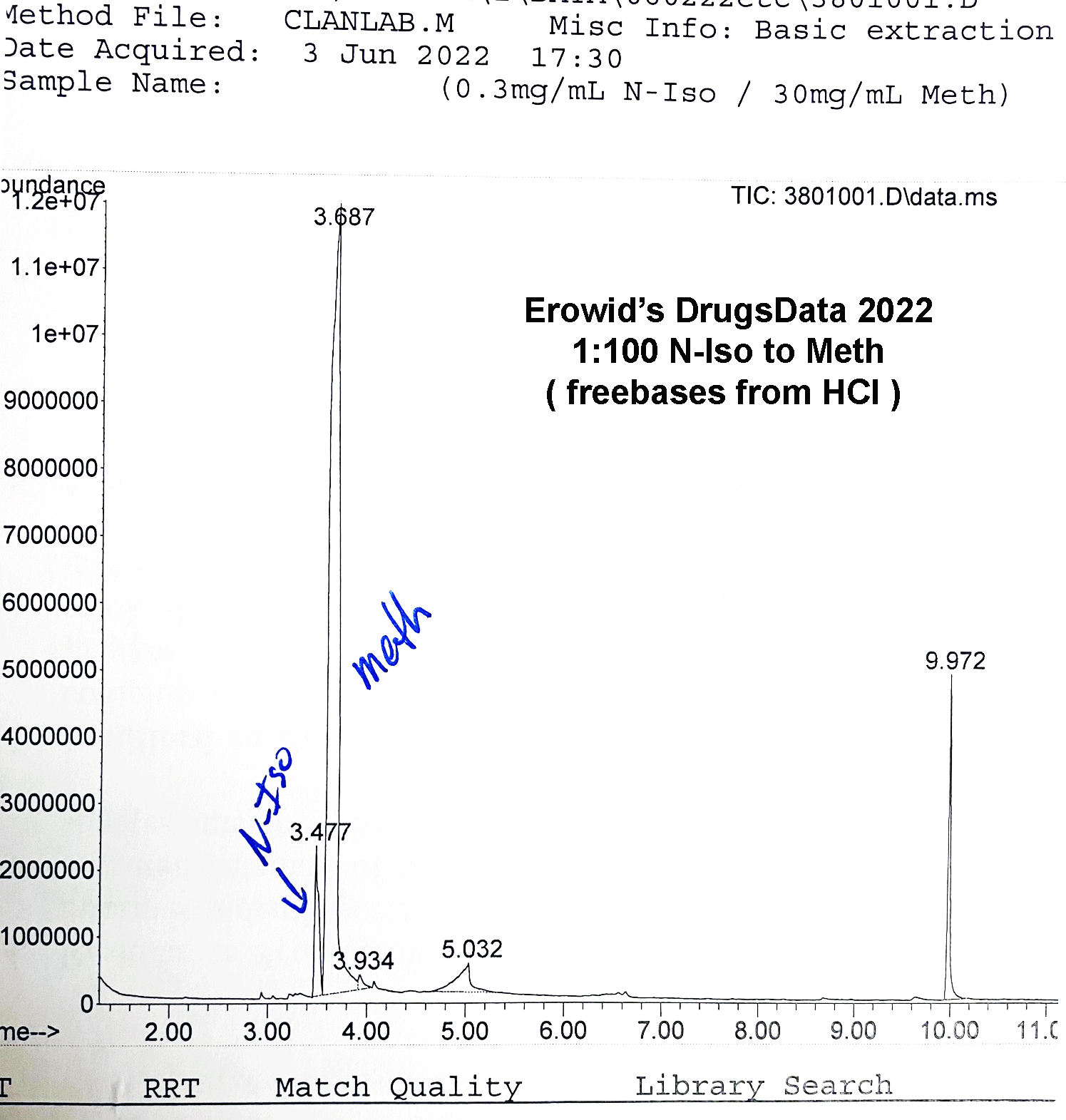
GC of N-Iso and Meth (1:100)

The GC output pictured above is from N-IPBA (“N-iso”) (1 part) mixed with meth (100 parts). The other main peak (9.972) is a calibration chemical. The slightly messy baseline to the right of the meth peak is related to the way that the salt versions (Meth HCl, for instance) of the two drugs differ in their elution times in the GC column. This example graph is after several tests in a row using different ratios of meth and isopropylbenzylamine. It is common when running methamphetamine salts to end up with a little right-side, baseline noise after the sharp freebase meth peak.

Methamphetamine and isopropylbenzylamine do elute at similar times, but using our procedure, they are clearly distinct. Note in the GC image the sharp valley between the N-iso and meth peaks: N-iso at 3.4777 minutes and meth at 3.687 minutes in this run.

And they always have clearly distinct Mass Spectra (MS), so they simply don’t get confused at our lab. If a lab were running a different column and procedure that isn’t targeted for doing work on methamphetamine and related drugs, it’s easy to imagine other procedures and rigs where an analytical chemist could confuse one with the other.

As of August 2022, DrugsData’s lab has found isopropylbenzylamine in eight samples total, ever, and two DEA-tested samples are republished in our database:

https://www.drugsdata.org/results.php?search_field=substance&s=Isopropylbenzylamine

It is Erowid’s view that most negative effects from meth use are a result of lack of sleep combined with irregular water and food consumption. People mistakenly attribute differences in experience from time to time to differences in impurities in the drugs, instead of other factors such as diet, mood, context, electrolyte levels, and physical rest.

It’s certainly possible that a sample analyzed in DrugsData’s lab in the future could contain both methamphetamine and isopropylbenzylamine. We feel certain that for such a sample, lab results would clearly show this to be the case.

—earth, Sylvia, Fire, Roi
DrugsData | Identifying the Unidentifieds: Ethyl-Despropionyl-Fentanyl (Ethyl-4-ANPP)

This is a description of how we identified the unidentified substance in a fentanyl sample (#12495) analyzed in March 2022.

The unidentified substance has mass spectrum major ions at 96; 217.1; 174.1 with an elute time at around 10.7 in our main setup.

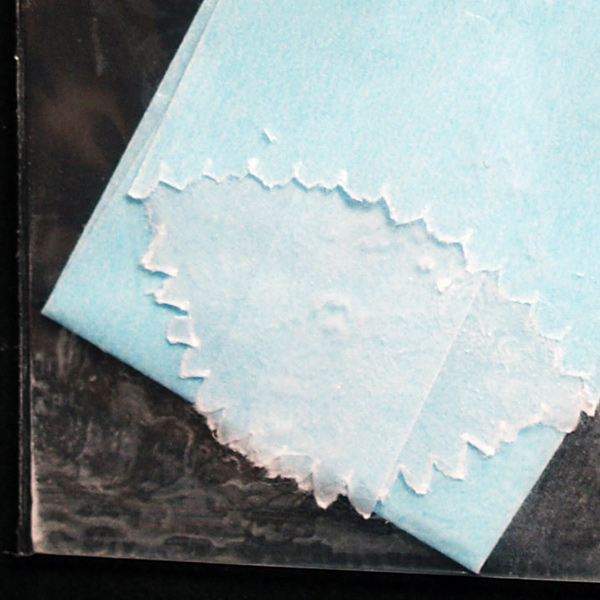
This small sample of white powder in a blue bindle was submitted to DrugsData via research partners we’re working with to do lab confirmatory testing. Besides Fentanyl and 4-ANPP, it contained a third chemical we were initially unable to identify.

We publish the Mass Spectrum (MS) images for substances we need help identifying. A colleague at UNC’s drug checking project examined this substance’s image and reached out with some clues, which put us on the path of figuring out what its structure is.

One of our top volunteer analytical chemistry experts, Eddee, found a close match in Wiley’s 2020 “Designer Drugs” library, a library that our DrugsData lab doesn’t have. The close (though not perfect) match is for ethyl-despropionyl-fentanyl (ethyl-4-ANPP). Our experts (thanks, Koby!) guess that this is likely to be much less potent than fentanyl and might not be very active, similar to despropionyl-fentanyl (4-ANPP).

There’s a PubChem page for it, but no CAS number yet:

https://pubchem.ncbi.nlm.nih.gov/compound/156346345

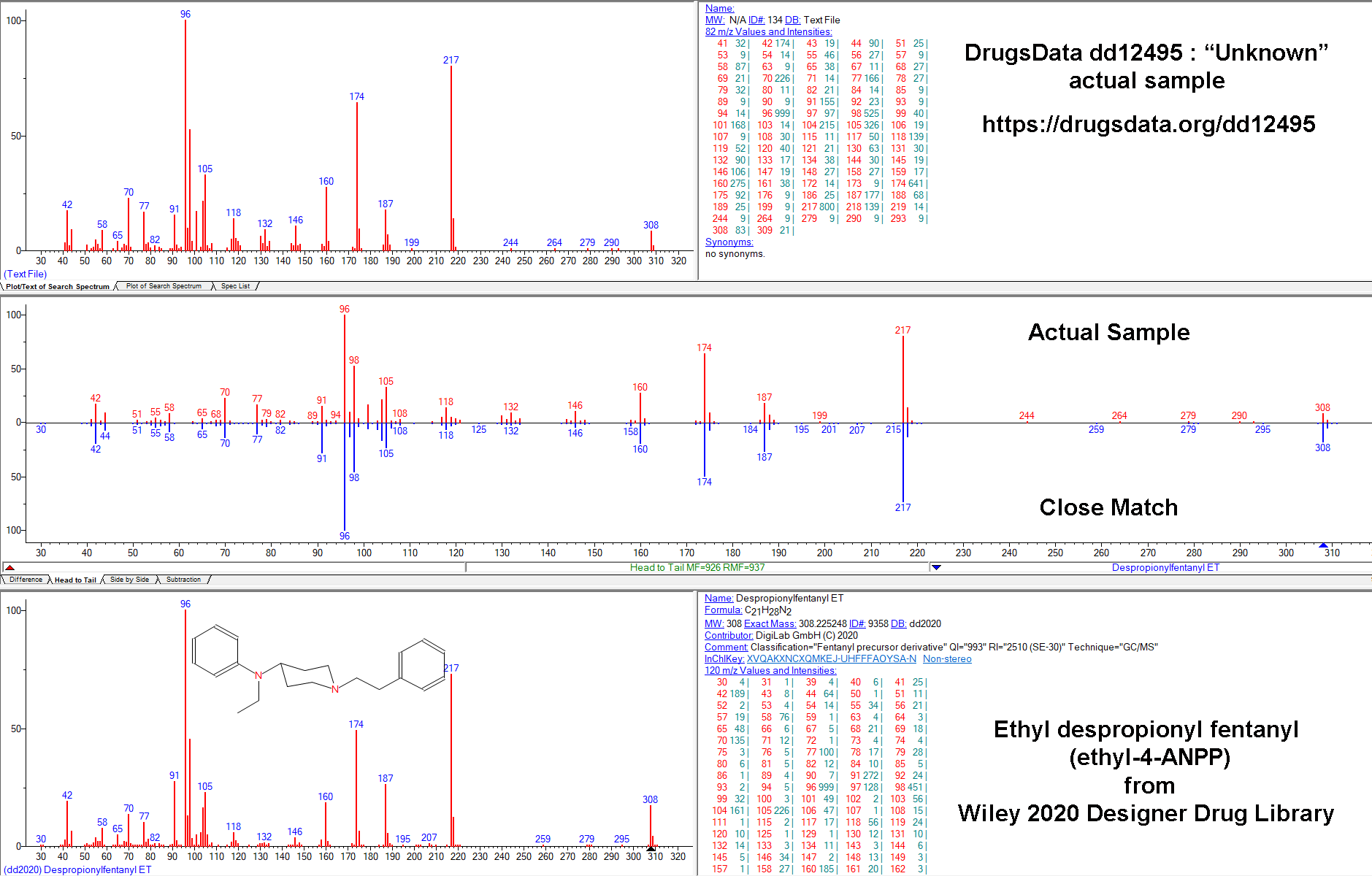
Eddee speculated that the difference between our sample and the Wiley library match might not be meaningful. In the following image, which is pretty complex to look at, the top chemical is our DrugsData sample’s unidentified substance. The lower chemical is the Mass Spectrum for the presumptive ethyl-despropionyl-fentanyl. The middle part of this image is a comparison of the two, with our sample on the top (lines going up) and the proposed match on the bottom (lines going down). You’ll need to open it in a new tab to see the detail, it’s dense stuff.

What you’re looking at are the relative heights of the largest peaks (vertical lines), aka the “ions”. Mass spectrometry (MS) relies on breaking up a chemical with a high energy stream of electrons; Erowid’s DrugsData lab uses an “electron spray” method. The resulting bits are highly charged ions that get spun through a magnetic whirlwind inside a specialized detector. The heights of the lines indicate how many of each ion was detected for this chemical using specific equipment and methods. Perfect matches usually require using the exact same equipment at the same settings, but there’s a lot of similarity when using equivalent machines.

Looking at the middle graph, where the two are compared against each other, you can see there’s a short line on our sample at 199 that doesn’t exist in the lower sample. And the relative heights of some of the key ions are different between the two. That doesn’t mean it’s not a match, but it isn’t a perfect match.


So Eddee checked and his lab did have a tiny bit of despropionyl-Fentanyl (aka 4-ANPP) left in their Fentanyl Analog Screening Kit (FAS Kit, sometimes referred to as a Traceable Opioid Material Kit, or TOM Kit).

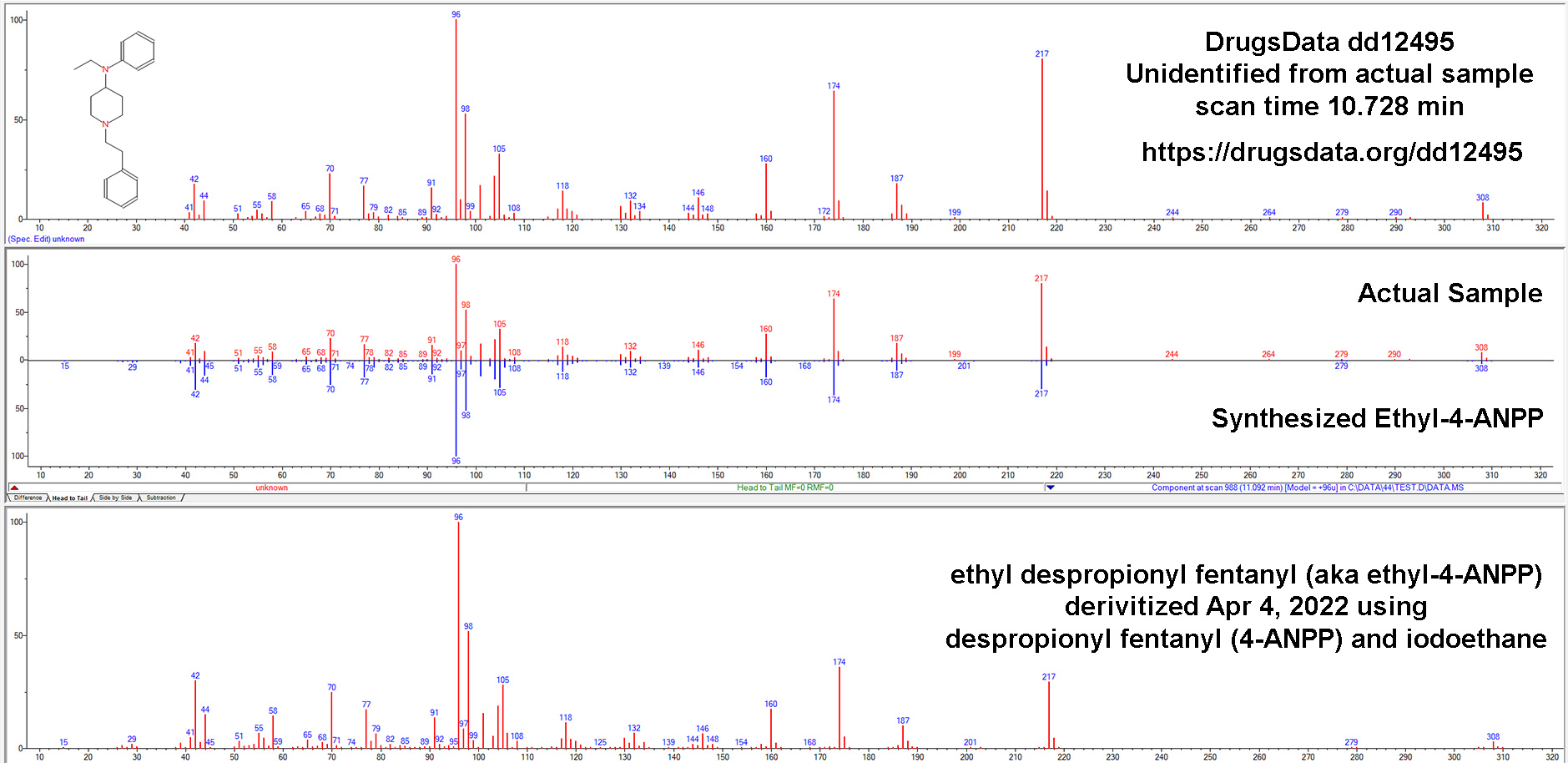
There wasn’t much left, but he decided to try wet chemistry “derivitization” (a simple synthesis) using iodoethane, and was able to get a tiny amount of product he believes to be ethyl-despropionyl-fentanyl. He then ran that new product through a GC/MS and got the following output.

As above, in this image our unidentified substance is on the top; Eddee’s new ethyl-despropionyl-fentanyl is on the bottom.

Again, if one looks closely, there are some important differences between our sample (in blue on the top of the middle graph) and the newly synthesized chemical. There are several complexities we can’t completely account for. First, Eddee had only a teeny tiny amount of his synthesized chemical and sometimes “very low signal” amounts of a drug can have different Mass Spectrum profiles. Usually this doesn’t make a difference in which ions show up (except at the shortest peaks), but it can cause the relative ratios to be slightly different. Second, Eddee isn’t using the exact same GC/MS brand, model, and components as we have.

We might be able to change our GC coil and run parameters to better match this, but it’s so close, we’re going to consider this matter closed.

If you’re interested, you can check out the unidentified substances detected by DrugsData in 2021-2022 that haven’t been solved yet. This list changes as we make identification breakthroughs, thanks to tips from the Erowid Expert Network and others.

In an amusing postscript, one day after Eddee finalized this identification (Apr 4, 2022), DEA Special Testing and Research Laboratory (SFL1) wrote that they had come to the same identification of the so-called “308-G impurity”.

Supporting Free and Accurate Information in Ukraine

The February 2022 Russian invasion of Ukraine and the Kremlin’s attacks on Ukrainian, Russian, and global information has reminded us at Erowid how fundamental free and accurate information is to our mission.

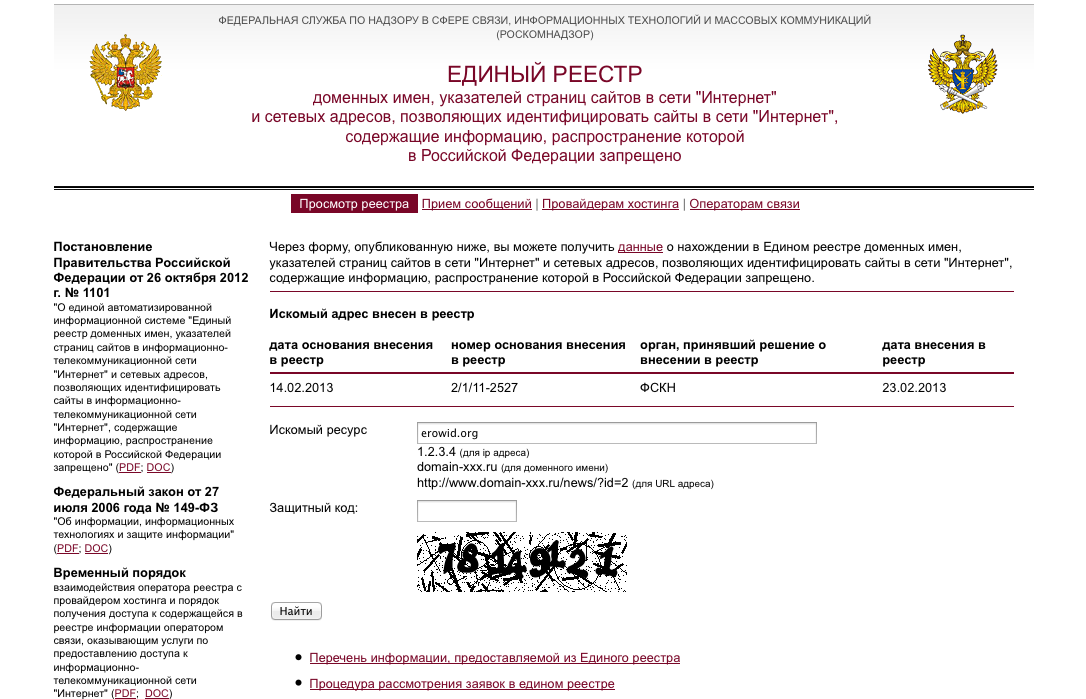
In late 2012, Putin’s Russian Federation formally created an internet ban list. Erowid was in the first list of sites Russia ordered to be completely blocked by all ISPs and information systems in Russia. It took a year for all the ISPs in Russia to comply with the ban and Erowid.org has not been available inside Russia since.

Erowid Center just donated ~$2,000 USD to a group supporting Ukrainian independent media/news. See GoFundMe: Keep Ukraine’s Media Going
. We chose this relief fund based on recommendations from Timothy Snyder and mentions in media sources such as The Guardian, and others.

Erowid Supports Free & Accurate Press

The text mirrors one of the early Ukrainian responses to the Russian invasion and attempt to decapitate the Ukrainian government (Russian warship, go fuck yourself). We’ve sent out this image via social media to mention our support of the free press in Ukraine.

Erowid Center is planning further financial support of Ukrainian free press and accurate information (as well as harm reduction and drug checking in Russia and the Ukraine, although those seem less possible in this moment). We invite suggestions for other Ukrainian or Russian organizations to support.

The GoFundMe we contributed to was set up by Jakub Parusinski, a senior executive at The Kyiv Independent, and is “aimed at helping media relocate, set-up back offices, and continue their operations from neighboring countries”.

From the GoFundMe: “This campaign is run by a consortium of The Fix, Are We Europe, Jnomics, and Media Development Foundation, as well as multiple media partners from across Europe. We are working with a growing list of Ukrainian media, including Ukrainska Pravda, Zaborona, Detector Media and others. Support is allocated based on urgency of needs in the first place, then distributed proportionally.”

Below is a screenshot from Feb 2013 of a search showing Erowid.org listed among websites censored in Russia.

russian censorship website image

There were hundreds of other domains in the initial banned-domain list, which has grown substantially since then. We don’t have the complete records, but we saw the list more than double over the next few years. We are no longer able to access their full list, which we believe is now mostly secret.

To combat the censorship, we set up a couple of simple proxies inside Russia in 2013 which we maintained until late 2021. It was cheap and easy to rent virtual machines inside the Russian Federation and operate forwarding proxies that allowed non-Erowid domains to serve our content inside Russia uncensored. As each proxy domain got noticed and blocked, we bought another random domain name and seeded Russian search engines.

As a side note, Erowid.org has been blocked in China for even longer, starting sometime in the mid 2000s.

A Noble Slog through the Wonderful World of the Stolaroffs and Shulgins

by Flamingo Jones

Introduction & Overview, by earth

The Erowid Crew had a good pace going in 2018 and 2019 with the archiving of Alexander and Ann Shulgin’s collection of documents, but efforts slowed to a near stop as the global pandemic took hold in early 2020. More than 150,000 documents have been scanned (mostly scanned by K Trout). This number is expected to climb to well over 250,000 before we’re done.

The step we’re working on currently is recording first-pass metadata for scanned documents. It’s a privacy-sensitive process; each PDF is examined and coded for things like document type (published paper, personal letter, chemistry analysis, etc.), author name, date, and title.

Many articles from Sasha’s filing cabinets have previously been published elsewhere need to be tagged so they can be fast-tracked to the next step. While others have privacy issues that make them inappropriate for public view as they are now, either because they need redaction of names or email addresses, or because they contain other types of private information that shouldn’t be published at this time.

Three people currently work on Erowid archiving projects, made possible by the move towards remote work during the pandemic. Flamingo Jones is an Erowid intern whose primary responsibilities have involved the Stolaroff and Shulgin collections. We asked Flamingo to share some thoughts about the archiving process.

Now into my second archiving project at Erowid, I began work on archiving about a year ago (October 2020), starting with writing summary abstracts for documents in the Stolaroff Collection. I’m now creating metadata for the literal barn-full of documents in the Shulgin Collection.

I’ve really enjoyed working with these collections. It has been fascinating to say the least. One of the more interesting things for me is the interconnectedness of the world of psychedelic research: I get to observe the changes as I travel through the decades of records that have been collected.

From the months I spent on the Stolaroff Collection, I felt like I got a sense of the people and communities that Myron and Jean immersed themselves in. In writing abstracts I collected keywords, the names, places, events, and materials used, and wrote a summary for what was in each document that I reviewed. These included letters, stories, reports, articles, and news about the world they lived in. From professional work to business ventures, from otherworldly psychedelic reports and stories to friendships forged, the collection provides an unexpectedly strong sense of the way Myron saw and paid attention to the world around him.

The archiving work has ups and downs; one day it’s tax forms and dull details about the road next to the Stolaroffs’ Lone Pine property, another day, I’m reading a brilliant psychedelic experience report or a meaningful letter. Content varies greatly through the decades, following the focus of what was on the minds of researchers and those who collected and generated these records. The friendship between the Stolaroffs and the Shulgins highlights how the two archiving projects complement each other, each bringing the other more alive than it would be alone.

My work on the Shulgin archiving project so far has been quite different, as I’m covering a different step in the process. I’m creating first-pass metadata, which is much less intimate. I don’t read every article or letter fully, but instead try to quickly identify what each one is, and what level of privacy it requires. I’ve gone through around 10,000 files as of September 2021. The amount of research materials that Sasha collected is truly immense and his work has touched so many: I find myself smiling when I come across an article reprint sent to Sasha, with a note of gratitude from the authors for the work that Sasha has done.

The size of the project (likely over 250K unique documents) is vast, and there are ways that the work can be a slog, but there are some gems and treasures throughout. It is truly a wonder what I will stumble across on any day. Making this work accessible to others and digitizing this library is noble work, and I am happy to be a small part of it.

Tryptamine Turns Purple with Ehrlich Reagent

— by: earth, Sylvia, Fire, Jurek, and anonymous experts

Here’s a peek into how Erowid works with a network of drug-checking experts around the world work. Just another day at DrugsData. :]

On June 30, we published the test results for a sample of 1P-LSD blotter (dd10683), confirming the presence of 1P-LSD.

On July 12, Jurek from protestkit.eu, a Polish harm reduction and field reagent specialist, inquired about this sample, noting that the Ehrlich reagent photo showed an unexpected purple reaction. Jurek pointed out that 1P-LSD isn’t known to result in a purple color in the presence of Ehrlich reagent, helping to differentiate it from LSD-25, which does cause a purple color change with Ehrlich reagent.

We discussed this with our lab and learned that there was a small GC peak they had not initially reported in the results: inactive salts and inks on blotter do not always get reported due to DEA-imposed limitations.

Given the unexpected Ehrlich reaction, we published the spectrum for the unidentified chemical and added it to the results as a second chemical present in the sample.

A chemist in the Erowid Expert Network identified the unknown chemical as tryptamine, so we ordered a lab standard for tryptamine and found that it was a perfect match via GC/MS.

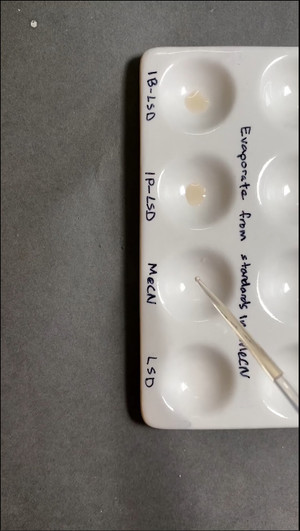
Further, DrugsData’s lab did side-by-side comparison in a ceramic well plate of lab standards for 1B-LSD, 1P-LSD, and LSD-25. The third of four wells is the ‘blank’ labeled MeCN (acetonitrile) which was the solvent used to dissolve each of the ergoloid standards (1B-LSD, 1P-LSD, LSD-25). Ehrlich reagent was applied to each, demonstrating that neither 1B-LSD nor 1P-LSD turn purple with Ehrlich, where LSD-25 does.

So the mystery of the the unexpected Ehlrich reaction for this 1P-LSD blotter is resolved, but the reason why someone added tryptamine to 1P-LSD blotter is still open. We all guess the goal was to be able to sell the 1P-LSD blotter as LSD-25, and that adding tryptamine to the 1P-LSD will result in reagent reactions consistent with LSD-25.

This is the first time Erowid has seen this type of adulteration of non-LSD ergoloids with the chemical tryptamine.

The image below is a link to a video of the reagent test:

Then, a photo of lab-grade tryptamine reacted with Ehrlich. A strong purple color:

“Intractable Byproduct” in 5-MeO-DMT Samples

Erowid’s DrugsData project recently tested two samples of 5-MeO-DMT that both contained an unidentified chemical. The first was dd10559, published Jun 08, 2021 and the second was dd10808, published July 19, 2021. Both samples were sold as 5-MeO-DMT and were reportedly sourced from the Netherlands to California. The unidentified chemical in the two samples appeared to be the same substance.

In June, one of our EEN experts (Eddee) proposed a possible identification for the chemical in the first sample, and we began consulting others in our network. Once we received the second sample, with apparently the same unidentified chemical, an outside expert weighed in with a slightly different proposed identification. We examined these more closely and with Eddee’s help, we think we’ve finalized our current opinion on the identity of the chemical dd10559-unid1 and dd10808-unid1:

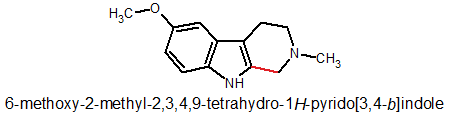
6-methoxy-2-methyl-2,3,4,9-tetrahydro-1H-pyrido[3,4-b]indole

This chemical is likely an unwanted byproduct resulting from imperfect synthesis of 5-MeO-DMT. Borax, one of Erowid’s main chemistry experts, proposed the name “N-methyl-Pinoline”, and Eddee proposed “N-methyl-5-Methoxytryptoline”.

Another expert pointed out that PubChem’s synonym list for this chemical includes 2-Methyl-6-methoxy-1,2,3,4-tetrahydro-beta-carboline (CAS# 6582-80-5), and cites the Japan Chemical Substance Dictionary for the CAS#. Isomer Design, a longtime supporter of the DrugsData project, refers to it as 6-MeO-2-Me-THβC.

We do not believe it has any common trivial name, and are currently settling on the name “N-methyl-Pinoline”. Its structure:

There were no published GC/MS graphs for this chemical. The identification is based on analysis of the fragmentation pattern, and on a 2020 paper, Synthesis and Characterization of 5‑MeO-DMT Succinate for Clinical Use, by Sherwood et al. Because of this paper, we originally considered calling this chemical “5-MeO-DMT Synthesis Byproduct A”, to parallel names given to unwanted synthesis products in other drugs.

The other proposed identification was the very similar compound 2,3,4,5-Tetrahydro-8-methoxy-2-methyl-1H-pyrido[4,3-b]indole (CAS# 41505-84-4).

The two proposed identified chemical structures have the same number of elements and chemical formula: C13 H16 N2 O ( C13H16N2O ). The only difference is which order the carbons are coming off the indole ring relative to the amine nitrogen.

This very technical image shows a comparison of the two chemicals, with our proposed ID in the upper panel and CAS 41505-84-4 in the bottom:

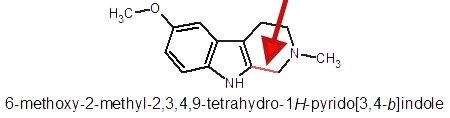
Now look again at the drawing of our identification and note the red line showing the bond between the indole ring and the methyl (carbon) coming off the nitrogen.

Finally, take a look at the structure of 5-MeO-DMT:

Imagine that the red line in the structure of N-methyl-Pinoline was broken where it connects to main rings. That substance, with that connection free, is 5-MeO-DMT. 5-MeO-DMT just happens to also have the same chemical formula: C13H18N2O.

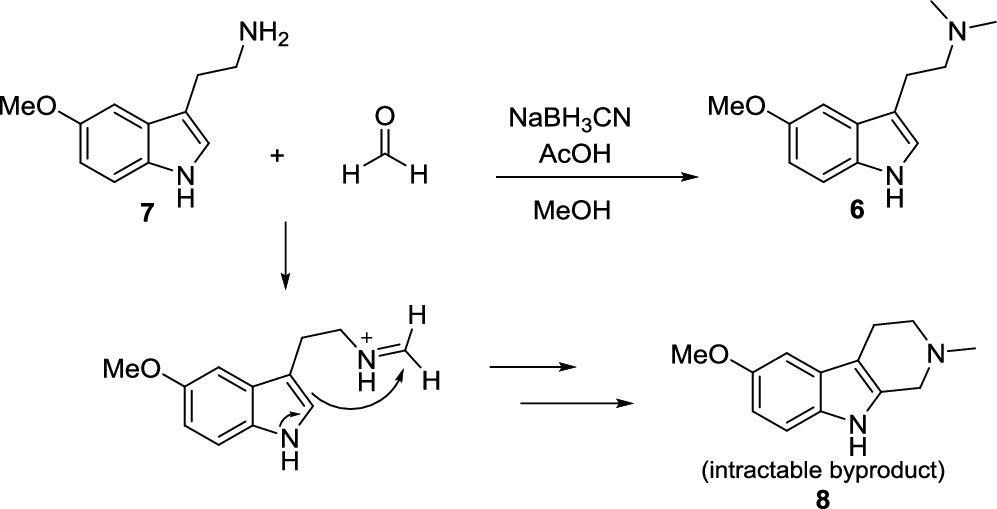
Quoting from the Sherwood et al. 2020 paper: “Several small-scale attempts were initially evaluated with reaction monitoring by liquid chromatography-mass spectrometry (LCMS). Though product formation was evident, the reaction was plagued by challenges that would likely multiply at larger scales. The Pictet−Spengler reaction to the corresponding tryptoline (8) was difficult to suppress and removal of this structurally similar and possibly biologically active byproduct was challenging. Further optimization to Route 1 may be possible, but ultimately, the reaction was not recommended for further development.”

Their Scheme 1 Graphic shows what they label the “intractable byproduct”, which is the chemical we are proposing as the identification of the impurity in these two 5-MeO-DMT samples.

Thanks to everyone who participated in this: the submitter of the samples, Eddee, our anonymous experts, Borax, Sylvia, and the authors Sherwood AM, Claveau R, Lancelotta R, Kaylo KW, and Lenoch K for their excellent 2020 paper, which nailed down the reason for this unwanted contaminant in these synthetic 5-MeO-DMT samples.

Name Change from Levamisole to Tetramisole/Levamisole

Erowid’s DrugsData lab has recently changed from reporting simply “levamisole” to instead reporting “tetramisole/levamisole”. Tetramisole is the “real” primary name for this substance, a chemical that has two stereoisomers/enantiomers. For those unfamiliar, left (“lev”) and right (“dex”) isomers are only different in the same way that left- and right-handed gloves are different. They are also referred to as the “S-enantiomer” (lev) and the “R-enantiomer” (dex) of tetramisole. (Tetramisole refers to the “racemic” or mix of the S-enantiomer and R-enantiomer of the chemical.)

Many (though certainly not all) chemicals have this type of physical isomerism. An update in 2020 to the SWGDrug library that our lab uses as one of its sources changed the way it reports the name of the substance upon match. Neither the chief chemist at our lab nor any of our team remembers ever seeing the name “tetramisole” before December 2020. The technical distinction and update merits some further explanation.

The technical language can be pretty confusing. In some cases, the FDA allows commercial pharmaceuticals to use a shorthand, where they prepend “es” or “ar” (or “lev” and “dex”) to the front of a pharmaceutical name to denote an enantiomer-specific product. Examples include “armodafinil”, “eszopiclone”, and “escitalopram”.

Erowid’s DrugsData lab, using GC/MS testing, has no ability to isolate, separate, or identify which enantiomer is present, yet we’ve previously reported “levamisole” (the left or S-enantiomer) since first identifying this substance in cocaine samples in 2009 (see DrugsData Levamisole Results). Our lab’s techniques can’t distinguish the stereoisomer composition of any substance we analyze, e.g. a specific chemical identified in a single sample could be a 50/50 mix of R-enantiomer & S-enantiomer; 100% R-enantiomer and 0% S-enantiomer; 0% R-enantiomer and 100% S-enantiomer; or any ratio combination of the different physical isomers. This would be true for any lab using GC/MS for its testing process.

While DrugsData has been reporting “levamisole” since 2009, the question of enantiomers had not come up before. However, the “lev-” syllable should have been a giveaway. Sorry we didn’t identify this issue earlier!
In the last few years, research appears to indicate that most of the “levamisole” mixed with cocaine is actually the racemic tetramisole. In 2019, Madry et al. seemed to nail this issue down through analysis of hair samples from 627 cocaine users. The authors write: “Samples mainly contained racemic tetramisole (87.5%), only one sample contained levamisole only and two samples contained non-racemic [tetramisole].”

All of that, combined with our inability to test which spatial isomer we have in the samples we analyze, means that we’re going to switch to using “tetramisole” as the primary name for this substance, with “levamisole” being included so as to help avoid confusion due to the switch.

Reference:
Madry MM, Kraemer T, Baumgartner MR. “Cocaine adulteration with the anthelminthic tetramisole (levamisole/dexamisole): Long-term monitoring of its intake by chiral LC-MS/MS analysis of cocaine-positive hair samples”. Drug Test Anal. 2019 Mar;11(3):472-478. doi: 10.1002/dta.2505. Epub 2018 Oct 17. PMID: 30239147. Erowid Ref9448

You’ve Won! Or have you? Is RaffleWinner#33 Performance Art, Prank, or Fraud?

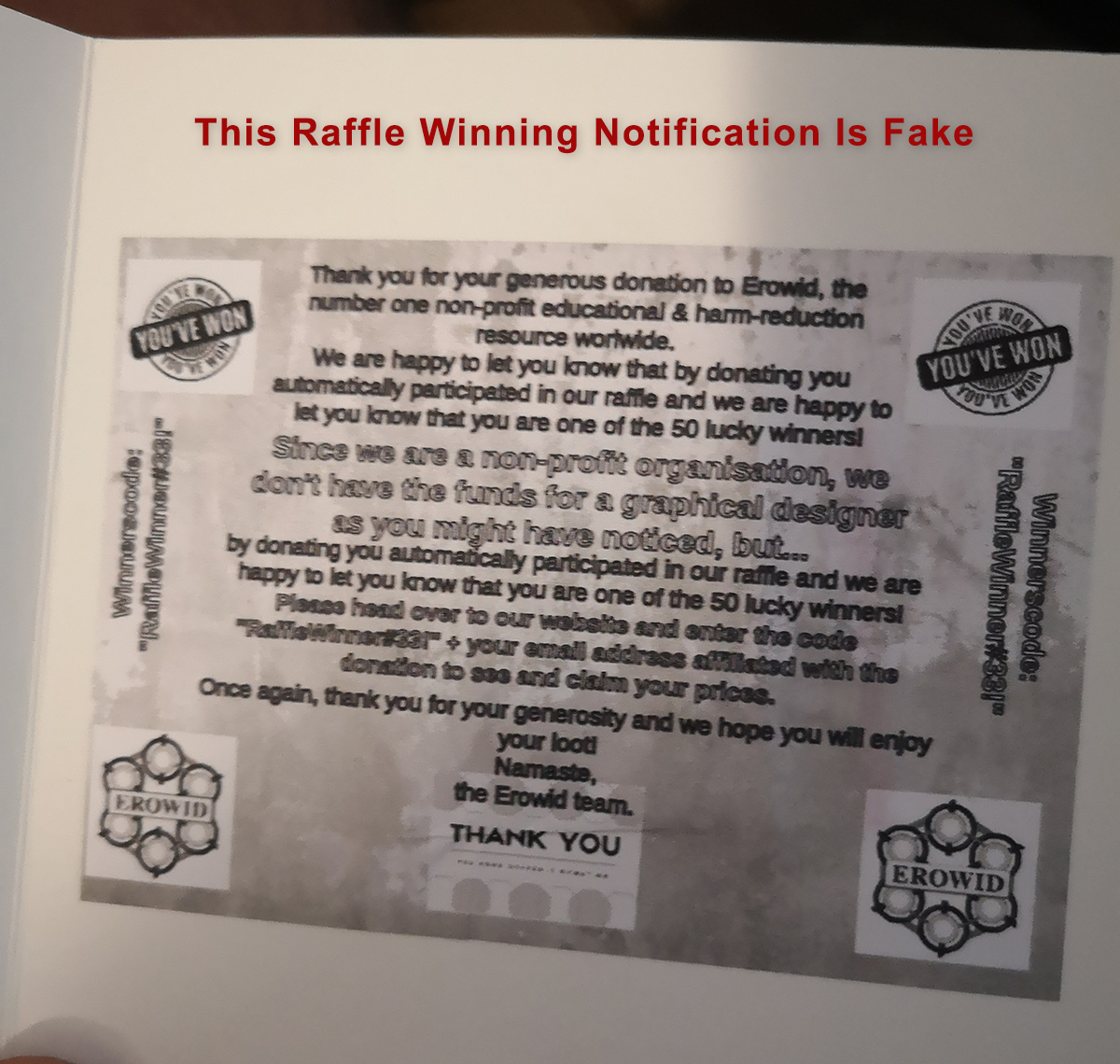
There’s a puzzling fraud that’s been going on using the Erowid name. Beginning in 2018 and continuing through 2020, several people have emailed Erowid trying to claim a prize they ‘won’ through an alleged Erowid raffle ticket. Yet Erowid hasn’t participated in nor offered a raffle of any sort in more than a decade. These raffle tickets were not issued by Erowid Center and there is no prize to be claimed.


Inside of the fake Erowid raffle ticket card.

So far, we have limited details. What we know…

  • The so-called ‘tickets’ appear to be a collage based on a photocopy of an old (actual) Erowid raffle from the Mind States 2008 conference with the addition of a 2009-era Erowid logo.
  • A couple of people have specified that they received it by (snail)mail. One person said it was left “in a card at their door”. (eek!)
  • In at least one case it was pasted inside a greeting card style card with a cover that had “gefeliciteerd” (Dutch for ‘congratulations’) on it.
Cover of one of the fake Erowid
winning raffle tickets.
  • The cards bear a ‘WinnersCode’, referred to as ‘RaffleWinner#33’.
  • One person claims they won “because of a donation”, and the card itself says “thank you for your generous donation to Erowid”
  • These tickets are not related in any way to bona fide donations made to Erowid Center. It has been suggested that it might be a research chemical vendor that is sending them out with purchases, but we haven’t been able to verify that (or which vendor). Erowid definitely isn’t involved in whatever transactions happened prior to the arrival of these cards.

    We’d love any help in tracking down what’s going on so we can try to reduce confusion!

    Comments:

    Swan Nov 2, 2020: I don’t know if you already know this info, but NamasteLSD is sending these with whatever you buy from him, im sure its just a prank.

    RobbyRob : Nov 13, 2020 : Hi Guys, maybe it is a bit late or not interessing anymore, but i got one of you “Winner tickets” also and i can verify that (at least partially) a vendor is using them. Best Greetings

    Evolving the Approach to Reagents and LSD Gel Tabs

    Drug checking is a complex and evolving area of research. In EcstasyData’s effort to show accurate findings to the public, we’re working with the unique conditions of each sample. Most recently, the lab has innovated in its handling of LSD gel tabs.

    There’s LSD, and then there’s gel tab LSD

    Since 2014, the year EcstasyData’s lab developed its procedure for a practical and time-efficient way to identify LSD using GC/MS, gel tabs have been infrequently submitted for analysis. The majority of LSD samples submitted to our lab use blotter paper as the carrier (the lab requires that all samples be dry, no liquid samples are accepted without prior arrangement), though it is Erowid Center’s opinion that most of the LSD currently in distribution is in liquid/solution form.

    Prior to 2017, the rare gel tab sample would get refused by the lab’s main chemist, who at the time did not feel confident that these samples could be adequately analyzed for the presence of LSD.

    Besides analyzing each sample using GC/MS, which is the analytical method EcstasyData uses to detect the presence of chemicals, the lab also tests samples with reagents. Reagent testing adds descriptive data that adds to the collective knowledge base for drug checking. (Reagent testing can’t positively identify chemicals.)

    It turns out that gelatin as a medium makes reagent testing more complicated; the pH conditions required to dissolve the gel affect the reagent even when dried. For this reason, gel tabs do not react normally to field reagents such as Marquis or Ehrlich.

    De-weirding reagent colors

    Between 2017 and November 2018, five gel tab samples were analyzed by EcstasyData, with GC/MS showing that four of them were LSD. The Ehrlich reagent reactions for these four samples were atypical. LSD normally reacts to Ehrlich reagent by turning purple, but when Ehrlich was applied directly to the dry (or even wet) gelatin in these cases, the results were mixed, turning brown or brown-purple, or other atypical reactions.

    The lab began working with the special needs of these samples, and in November 2018, they developed a sample-preparation procedure that allows Ehrlich reagent to show a typical positive (rule-in) response to LSD in gel tabs.

    New process for gelatin

    We are publishing Erowid Center / DDL’s new procedure that is being used to process dry-gelatin-tab dose units, for the historical record, and so that others can duplicate it and critique it.

    The following is the procedure that was used to produce the photo shown for Sample 6813, the first sample treated in this way:

    1. Gel medium placed in small amount of water.
    2. Basify gel-water mixture with NaOH.
    3. Gel medium fully dissolves.
    4. Solvent (ethyl acetate) added to gel-water mixture.
    5. Solvent separated off and dropped onto ceramic well plate.
    6. Unheated evaporation of solvent until dry.
    7. Drop field reagents into wells, photograph.

    This is the process that the lab will use to prep future gel tab samples for reagents. It will be interesting to see how other samples respond to it, and whether further tinkering with the process will be required.

    Shulgin Archiving: Absurd Item: Kids Shooting Peanut Butter (1969)

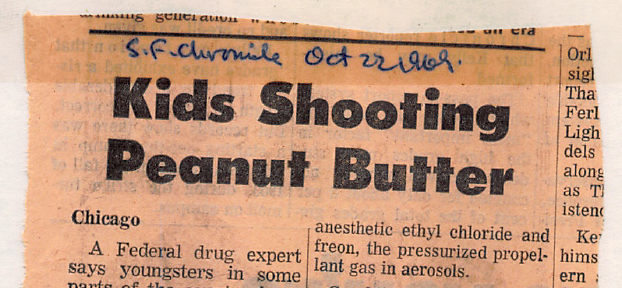
    An absurd news piece that Sasha collected and studiously filed in the wall of filing cabinets behind his desk. Scanned and pointed out as ludicrous by Trout:

    Kids Shooting Peanut Butter News Headline

    Authored by the Associated Press and published in the San Francisco Chronicle in 1969, the “Kids Shooting Peanut Butter” article claims that IV use of peanut butter and mayonnaise is a new trend. It reports that there are “several documented cases” of deaths, though no documentation is provided.

    Similar articles were published in other newspapers and the story has been repeated for decades in books and online. Although we were able to find the transcribed text of this article on various websites, we did not find any scans or other direct documentation of the fact that something this stupidly wrong was published as factual news by major publications. Amusingly, the meme is repeated in Richard Nixon’s public papers in October 1969: “In certain regions, they [kids] are so crazy and insane as to inject into their bloodstream peanut butter, because somebody said that peanut butter gives you a high, and they die from that. Mayonnaise they are inserting into their bodies”. [Public Papers of the Presidents of the United States: Richard M. Nixon, 1969, pg 851.]

    The short AP article makes several errors indicating that the authors and editors had little or no expertise in the area they wrote about. It cites the information to Ernest A. Carabillo Jr. from the Federal Bureau of Narcotics. Unfortunately, it is not uncommon for members of law enforcement agencies to be as confused as the news people who repeat the errors they make. Or perhaps the unnamed reporter misunderstood Mr. Carabillo. Who knows!

    We’ve been unable to find any scientific papers or real documentation that this was a trend, or led to any deaths, or was in fact ever tried by anyone. There are zero references in PubMed about this topic between 1960 and 1975. One guess as to the source of this rumor is that “peanut butter” and “mayonnaise” might have been used as slang terms for other drugs. We speculate that ‘peanut butter’ might have been used as slang somewhere to mean tar-type heroin. An Erowid team member says he personally heard “peanut butter” being used to refer to brown colored methamphetamine in the early 1980s. Some drug slang dictionaries list “mayo” as a slang term for heroin or cocaine. An Erowid

    The story is a good example of false and essentially baseless Drug War hysteria. Sadly, this type of egregious error continues to plague drug news, for example the well-loved Face-Eating Zombie Drug meme from 2012-2018.

    Shulgin Geek Note: The news article was clipped, then taped to paper either by Sasha or Nina to make it more stable when filing. In the upper corner of the paper, “Newspaper – drugs” is written in long-hand pen in Sasha’s handwriting.

    Kids Shooting Peanut Butter

    A Federal drug expert says youngsters in some parts of the country have taken to injecting peanut butter and mayonnaise into their veins as a substitute for narcotics.

    In several documented cases the result has been death, Ernest A. Carabillo Jr., a lawyer-pharmacist in the Federal Bureau of Narcotics, told newsmen Monday.

    Carabillo said the information that peanut butter and mayonnaise would send users “on a little trip” was contained in an underground recipe book purporting to outline “culinary escapes from reality.”

    Other recent fads, he said, include the use of paragoric (sic) cleaning fluid, the local anesthetic ethyl chloride and freon, the pressurized propellant gas in aerosols.

    Carabillo said users of narcotic substances confused the bizarre and toxic reactions with the so-called “high” provided by such drugs as heroin or marijuana. He cited the smoking of dried banana skins, a fad of a couple of years ago, as an example.

    Frank Gulich, a narcotics bureau official stationed in Chicago, said the underground “cook books” usually sell for about $1 and often give the formulas for preparing drugs such as LSD.

    Drug users, Gulich said, are “always looking for new drugs that won’t be a violation of the law.”

    [Associated Press]

    Revision History:
    1.0 Published Sep 28, 2018
    1.1 Added note that Erowid staff member personally knew people who used term ‘peanut butter’ to refer to brown methamphetamine: He wrote “I’ve never heard heroin called peanut butter but it has been fairly commonly used as slang for crude impure meth that has not yet been recrystallized — or at least I’ve heard that name being used by tweakers since sometime in the early 1980s. Even the people who commented on using it believed it was bad to be using. Go figure.”