





















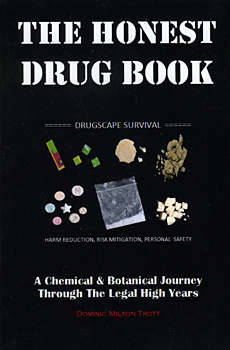

Reading The Honest Drug Book is a journey through one psychonaut’s comprehensively self-chronicled experience reports, with the additions of a safety manual, sociocultural observations, and various additional commentaries. [ read more ]
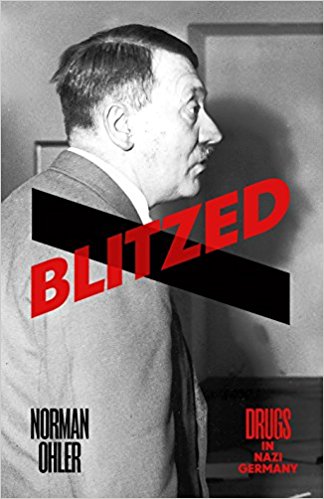
Blitzed examines the role that various drugs played in the Third Reich by telling three main stories: the popularization of methamphetamine pills under the name Pervitin and their widespread use by the Germany military and civilians; Hitler’s use of narcotics and other drugs during the war; and the story of Hitler’s personal doctor Theodor Morell and his unorthodox prescriptions for “Patient A”, or as Ohler dubs him, “High Hitler.” [ read more ]
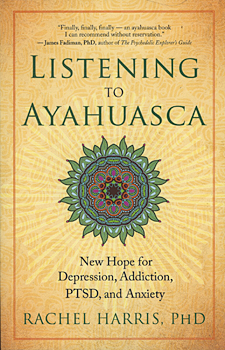

Listening to Ayahuasca: New Hope for Depression, Addiction, PTSD, and Anxiety offers something immeasurably valuable in the field of psychedelic discourse: a sane, responsible, well-informed voice in a chorus replete with fevered egos and third-hand hearsay. [ read more ]

To be clear, I am casting no aspersions as to the extent of Gorman’s genuine expertise with the technique. I respect that he learned it straight from the source, and have no reason to doubt his ability to administer sapo skillfully to himself or others. What I do feel compelled to question is his ability to make meaningful statements about why or how the relevant phenomena function the way they do. This review may seem surprisingly harsh so far, but I’m going to argue such harshness is fair. [ read more ]
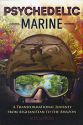

...an adeptly written autobiography about a British Marine’s return to the armed services and a subsequent episode of further self-discovery in the Amazon jungles. Now, let’s face it, does the world need yet another book on self-discovery and the ayahuasca experience in South America? To his credit, the author delivers a definitely novel perspective on one man’s journey. He is an engaging writer, and expertly immerses the reader in the moment. [ read more ]
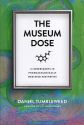
Tumbleweed reports on experiences with 4-Aco-DMT, psilocybin-containing mushrooms, 2C-E, 2-CI, 2-CT-2, 4-HO-MPT, 4-HO-MiPT, 5-MeO-MiPT, TMA-2, 4-HO-DiPT, 4-AcO-DET, and 4-HO-MET. Holy alphabetamine, Batman! Each chapter begins with an art event destination and dosage of the substance that he has taken, and this gentleman proves truly eloquent in conveying the impressions that he receives. [ read more ]
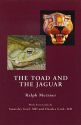
The Toad and the Jaguar is an instant gold standard on current 5-MeO-DMT information. Metzner is to be congratulated on this relatively short but information-dense work, which ties in practical usage, all the possible red flags, and multiple angles of approach to the subject matter. [ read more ]
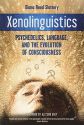
The book is both a consideration of general topics in psychedelic-influenced language studies, as well as an account of the author’s own “outrageous twelve year adventure” of largely solitary psychedelic exploration, inspired in large part by her experiments with Glide, a visual language system she developed in the course of her researches. Slattery’s personal journey is both remarkable and inspirational. [ read more ]
What stands out in the pharmacology and toxicology studies presented in Novel Psychoactive Substances is more the negative space of what isn’t there than the positive space of what is. [ read more ]
In Sacred Knowledge, Richards collates this rich background and distills his years of thinking about psychedelics’ psychotherapeutic and spiritual uses into a book that is readable for educated general readers, intellectually firm enough for scholars, and flavored by his personal experiences. [ read more ]