











Psychoactive Amanita
Basics
DESCRIPTION #
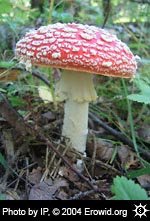
The most common psychoactive amanita mushrooms are the striking fly-agaric (Amanita muscaria) and the panther mushroom (A. pantherina). Both contain the ibotenic acid and muscimol, which produce inebriating effects. Amanita intoxication is quite different from that caused by psychedelic psilocybin mushrooms, which are primarily found in the Psilocybe genus. The effects of amanitas are sometimes considered unpleasant, and are often accompanied by nausea, chills, and other negative side effects.
Amanita muscaria mushrooms have been used in Siberian shamanism for centuries, or perhaps as long as thousands of years. Some authors have speculated that the mushroom could be associated with other historical and cultural phenomena such as the mysterious magical plant "Soma” described in early Hindu scriptures.
Note: Some of the deadliest mushrooms known are in the Amanita genus - do not eat wild mushrooms unless you know what you are doing.
Amanita muscaria mushrooms have been used in Siberian shamanism for centuries, or perhaps as long as thousands of years. Some authors have speculated that the mushroom could be associated with other historical and cultural phenomena such as the mysterious magical plant "Soma” described in early Hindu scriptures.
Note: Some of the deadliest mushrooms known are in the Amanita genus - do not eat wild mushrooms unless you know what you are doing.
Amanita muscaria: Recreational doses range from 3-10 grams of dry mushroom material depending on the strength of the specimen. Fresh mushrooms are considerably heavier. One medium-size cap of an Amanita muscaria is sometimes considered a moderate dose, but potency varies widely, depending on the season in which they are picked and significant regional variations.
Amanita pantherina: In North America the average potency of the A. pantherina is greater than that of the A. muscaria. Data is limited, but Ott reports that approximately one-half cup of sauteed material was a strong dose. [Ott J. Pharmacotheon. Natural Products Co. 1996. pg. 339]
Amanita pantherina: In North America the average potency of the A. pantherina is greater than that of the A. muscaria. Data is limited, but Ott reports that approximately one-half cup of sauteed material was a strong dose. [Ott J. Pharmacotheon. Natural Products Co. 1996. pg. 339]
Price #
Dried Amanita muscaria averages around $20-$30 per ounce on ethnobotanical vendor web sites. Psychoactive amanitas are rarely found in underground markets.
Amanita mushrooms and their active ingredients are uncontrolled in the United States and in most countries. If sold for consumption as a food or drug, sales are regulated by the FDA in the US.
The primary effects of amanitas come from ibotenic acid and muscimol. Muscimol affects the GABA system, while ibotenic acid simulates glutamate in the brain. When baked or dried, ibotenic acid transforms into the more-potent muscimol through decarboxylation.
The alkaloid muscarine was believed to be the primary psychoactive agent in A. muscaria for nearly a century, but it usually occurs in amounts that are too small to have an effect. Muscarine contributes to some of the negative side effects such as increased sweating and salivating.
The alkaloid muscarine was believed to be the primary psychoactive agent in A. muscaria for nearly a century, but it usually occurs in amounts that are too small to have an effect. Muscarine contributes to some of the negative side effects such as increased sweating and salivating.
Pharmacology #
Pharmacology Summary Needed.
Production #
Psychoactive amanitas grow wild across the United States and throughout the northern hemisphere. They are sometimes sold by ethnobotanical vendors or at head shops, but remain relatively uncommon. A. muscaria has a mycorrhizal (symbiotic) relationship with coniferous trees. Attempts to cultivate A. muscaria separate from coniferous tress have been largeley unsuccessful.
Amanita muscaria mushrooms have a long history of shamanic use in some parts of Siberia. possibly dating back thousands of years. The earliest-known documented account of Siberian mushroom use dates to 1658 when a Polish prisoner-of-war wrote "They eat certain fungi in the shape of fly-agarics, and thus they become drunk worse than on vodka, and for them that's the very best banquet."
Controversial theories have been advanced about other possible historical uses of psychoactive amanitas. Most famously, R. Gordon Wasson argued in his book Soma that the A. muscaria was an entheogenic sacrament described by early Hindus in the Rig Veda.
Controversial theories have been advanced about other possible historical uses of psychoactive amanitas. Most famously, R. Gordon Wasson argued in his book Soma that the A. muscaria was an entheogenic sacrament described by early Hindus in the Rig Veda.
Terminology / Slang #
The Substance:
Fly-agaric (A. muscaria); Panther Mushroom (A. pantherina).
The Experience:
No common terms known.
The potency and effects of amanitas vary widely among individuals and among mushroom specimens. Strong nausea and/or vomiting are common, particularly in the first few hours. Some users report euphoria and a sociable feeling of inebriation with some similarities to alocohol intoxication. Users may experience mild visual distortions, loss of balance, and sedation. Some report feeling a sense of internal clarity, while others feel disoriented or confused.
PROBLEMS #
There are a handful of deaths attributed to A. muscaria, but this appears to be extremely uncommon. A. muscaria and A. pantherina are frequently described as "toxic" in mushroom field guides, but this appears to refers to the putative undesirability of their psychoactive effects.
Psychoactive amanitas are not cultivated, and must be gathered in the wild. While the Amanita muscaria is distinctive in appearance, possessing a striking red cap, it is possible to confuse it for other species such as A. regalis or A. caesarea, which are non-psychoactive. Other mushrooms in the Amanita genus are deadly poisonous: the Destroying Angel (A. virosa) and Death Cap (A. phalloides) are two of the deadliest mushrooms known. The deadly amanitas found in North America have white or greenish caps. Wild mushroom gathering is not safe if you do not know what you're doing.
Many people experience nausea and/or vomiting during amanitas experiences, especially during the first few hours. Drying or cooking amanitas prior to consumption appears to reduce nausea. Other common negative effects include muscle twitching and increased salivation or sweating.
The mental effects of amanitas are sometimes described as disturbing or disorienting. There are reports of individuals harming themselves under their influence.
Psychoactive amanitas are not cultivated, and must be gathered in the wild. While the Amanita muscaria is distinctive in appearance, possessing a striking red cap, it is possible to confuse it for other species such as A. regalis or A. caesarea, which are non-psychoactive. Other mushrooms in the Amanita genus are deadly poisonous: the Destroying Angel (A. virosa) and Death Cap (A. phalloides) are two of the deadliest mushrooms known. The deadly amanitas found in North America have white or greenish caps. Wild mushroom gathering is not safe if you do not know what you're doing.
Many people experience nausea and/or vomiting during amanitas experiences, especially during the first few hours. Drying or cooking amanitas prior to consumption appears to reduce nausea. Other common negative effects include muscle twitching and increased salivation or sweating.
The mental effects of amanitas are sometimes described as disturbing or disorienting. There are reports of individuals harming themselves under their influence.
Contraindications #
- Do not operate heavy machinery. Do Not Drive.
Addiction Potential #
Psychoactive Amanitas are neither physically addicting nor likely to cause psychological dependence.
Long Term Health Problems #
Long Term Health Problems Summary Needed.
Risk of Death #
Risk of Death Summary Needed.
CAUTION & DISCLAIMER #
Erowid Basics pages are summaries of data gathered from site visitors, government documents, books, websites, and other resources. We do our best to keep this information correct and up-to-date, but the field is complex and constantly changing. Information should always be verified through multiple sources.