



















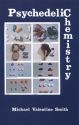

Psychedelic Chemistry has been a long standing favorite, a must for every clandestine chemist’s bookshelf for decades. It was first published in the seventies, with the most recent edition appearing in 1981. While a lot has transpired in psychoactive chemistry since then, with PIHKAL and TIHKAL taking notable preeminence among such books, Michael Valentine Smith’s Psychedelic Chemistry nevertheless towers over chemical claptrap rag publication such as Basic Drug Manufacturers Handbook. It’s an absolute must have, a necessary companion piece to even the forementioned PIHKAL & TIHKAL .
In days of yore, Psychedelic Chemistry was the bible of synthesis. Your humble reviewer religiously followed Valentine’s preparations with success, as no doubt many others did. It was the authoritative source for information and even today stands up to contemporary standards. The simple reason is this, to date, no other book contains the original citations to the syntheses described therein. No other work gives the chemist the original references to the actual chemical journals, such as the Journal of the American Chemical Society, the Journal of Medicinal Chemistry, Beilstein, Organic Synthesis – all of which are the actual published articles as reported by chemical researchers. This allows you to track down the original sources for the methods used and get the necessary details, at least for most of the preps depending on which journal and how long ago – yes, even chemists get sloppy or won’t divulge all their secrets and/or details. But like any other decent chemical cookbook, it is always assumed the reader is a trained, degreed chemist, experienced in synthetic methods, chemical handling, hazards, disposal, etc. You could kill, hurt or maim yourself and others if you play around without the proper training, equipment, facilities, reagents, etc.
That said, Valentine’s work includes many favorites, including tryptamines (DMT, DET, pscilocin, etc.), mescaline and psychoactive amphetamines such as MDA, MDMA, TMA and so on. But what sets it apart are the exotics, such as the beta carbolines, muscimole and isoxazoles, as well as “miscellaneous psychedelics”– if you need to know what those are, you shouldn’t be reading this anyway! It even contains cocaine preps, which almost no one can do, so don’t get excited – otherwise coca wouldn’t be the national cash crop for so many third world nations.
Beyond chemistry, Valentine discusses such topics as underground labs, the role of the DEA in lab busts, how to avoid a bust, etc. In my opinion, he doesn’t go nearly far enough in those matters; one could write a book on those subjects alone, but at least it’s more than any other cookbook offers. It even has a few neat pictures, though most of the DEA lab bust pictures are crusty old photos the DEA has flaunted for quite some time.
Whether you having a passing interest in psychedelics, you’re a practitioner of the craft or a want-to-be, this book is a definitive classic that’s worth the money. (Hey Michael, a new edition would be well received!)
Fatal error: Uncaught TypeError: count(): Argument #1 ($value) must be of type Countable|array, null given in /www/library/review/review.php:699 Stack trace: #0 {main} thrown in /www/library/review/review.php on line 699