










DXM
Basics
DESCRIPTION #
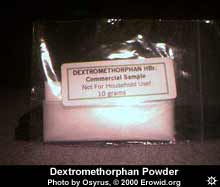
Dextromethorphan is a semisynthetic opiate derivative which is legally available over-the-counter in the United States. It is most commonly found in cough suppressants, especially those with "DM" or "Tuss" in their names. It is almost always used orally, although pure DXM powder is occasionally snorted. The effects of DXM generally fall into the category of dissociatives, along with ketamine, PCP, and nitrous.
[ Main DXM Vault ]
As with many psychoactive substances, dosages of DXM vary greatly, depending on the individual and the desired level of effects. Recreational doses range from 100 mg to 1200 mg or more.
Price #
Price Summary Needed.
DXM is legal to buy, sell, or possess in the United States although it is increasingly common for stores to require that buyers be over 18 years old. If sold for human consumption, it is regulated by the FDA.
Dextromethorphan hydrobromide (C18H25NO) is a semisynthetic derivative of morphine, a chemical found in the opium produced by opium poppies.
Pharmacology #
DXM is partially converted by first-pass metabolism into the active compound dextrorphan, which exerts cough-suppressing and dissociative effects through non-competitive antagonism of NMDA receptors. It is non-analgesic and does not cause sedation or respiratory depression. It is readily absorbed and has a half life is around four hours.
Production #
Production Summary Needed.
DXM was approved for use as a cough suppressant in 1958 and soon became widely available in pill form as a non-narcotic alternative to opiate-based cough suppressants. Cough syrups replaced the pill form in the late 1970s to discourage recreational use.
Terminology / Slang #
The Substance:
DXM; Dextromethorphan; Robo; Tussin.
The Experience:
Robo-tripping; Tussing; Dexing.
The DXM experience varies by dose. Different recreational dose ranges are sometimes described in terms of plateaus of effects. Low doses produce a mild stimulant effect. Moderate doses generally produce intoxicating effects that are sometimes compared to alcohol or cannabis use. High doses are dissociative in the sense of causing a feeling of separation from one's body, and are sometimes compared to the effects of other dissociatives such as PCP or ketamine.
Onset #
DXM takes 20 minutes to 1 hour to take effect, with higher doses generally taking longer. Peak effects of recreational doses begin 1 1/2 to 3 hours after onset.
Duration #
Effects of low doses generally last 4-6 hours, with large doses lasting 6 hours or more.
Visual Effects #
Visuals Summary Needed.
PROBLEMS #
DXM causes physical and psychological effects that may be frightening or unpleasant. Nausea, vomiting, and diarrhea are relatively common. Psychological effects can include profound disorientation, depression, a feeling of personal disintegration, or a feeling of "unreality" and disconnection that may persist for days. Chronic use may cause depression, psychological dependency, and possibly brain damage. Large doses may be associated with psychotic breaks.
In addition to the risks of DXM itself, many DXM-containing products contain other active ingredients that can be dangerous. Common additives include acetaminophen (Tylenol), which can cause fatal liver-damage in large doses. Products containing Chlorpheniramine Maleate such as Coricidin Cough and Cold should especially be avoided. See DXM Health for more information.
In addition to the risks of DXM itself, many DXM-containing products contain other active ingredients that can be dangerous. Common additives include acetaminophen (Tylenol), which can cause fatal liver-damage in large doses. Products containing Chlorpheniramine Maleate such as Coricidin Cough and Cold should especially be avoided. See DXM Health for more information.
Contraindications #
- Do not operate heavy machinery. Do Not Drive.
- Do not take while pregnant. Dissociatives can seriously affect fetal brain development.
- Many DXM-containing products (such as Coricidin Cough and Cold) also contain other active ingredients which can be dangerous or fatal in high doses. See Guide to DXM in Nonpresescription Drugs for more information.
- Avoid using DXM in combination with alcohol.
- Do not take DXM if you have recently taken an MAOI. MAOIs are most commonly found in the prescription anti-depressants Nardil (phenelzine), Parnate (tranylcypromine), Marplan (isocarboxazid), Eldepryl (l-deprenyl), and Aurorex or Manerix (moclobemide). Ayahuasca also contains MAOIs (harmine and harmaline). DXM and MAOIs are a potentially dangerous combination. Check with your doctor if you are not sure whether your prescription medication is an MAOI.
- Do not take DXM if you have recently taken an SSRI such as fluoxetine (Prozac), paroxetine (Paxil), or sertraline (Zoloft).
- DXM use in combination with other OTC cold remedies can increase risk of adverse reaction.
Addiction Potential #
Dextromethorphan is believed to be physically non-addictive, but some heavy users report an uncommon psychological addiction. Regular use produces tolerance.
Long Term Health Problems #
There has been concern that DXM, like some other dissociatives, causes vacuoles (small holes) in the brain - a syndrome called Olney's Lesions. However, there is some evidence that these concerns are unfounded.
Risk of Death #
Risk of Death Summary Needed.
CAUTION & DISCLAIMER #
Erowid Basics pages are summaries of data gathered from site visitors, government documents, books, websites, and other resources. We do our best to keep this information correct and up-to-date, but the field is complex and constantly changing. Information should always be verified through multiple sources.