















Hand-Made Glass Molecules
Special Membership Gift
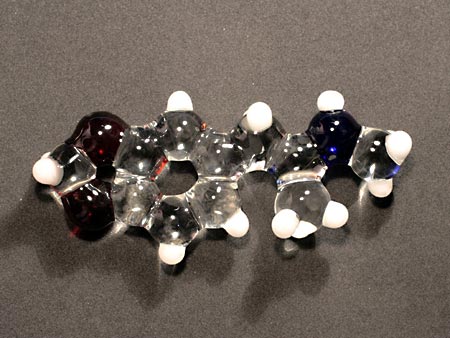
 We are pleased to be able to offer beautiful glass molecules as membership gifts. They are hand-crafted by a visionary artists, as a thank you for those who contribute to Erowid Center. The small works of art range from 3-9 inches long with each atom of the molecule .45-.95 inches in diameter.
The molecules are made of borosilicate glass as 3D representations of 2D molecular structures (so they can lie flat on a table). Different elements--carbon, oxygen, nitrogen, etc--are represented by different color glass. Contributors can choose the molecular structure of psychoactive chemicals such as caffeine, DMT, ketamine, LSD, MDMA, mescaline, serotonin, or THC.
Basic glass molecules begin at the $150 level
Complex glass molecules begin at the $250 level
Visit our glass molecule availability page.
Each of these pieces is hand crafted and is made of borosilicate glass, a very hard and temperature resistant material similar to the brand name Pyrex glass. Although they are quite sturdy, sharp blows, drops onto hard surfaces, or extremely rapid heating and cooling can cause cracking or breakage.
 Oxygen tanks |
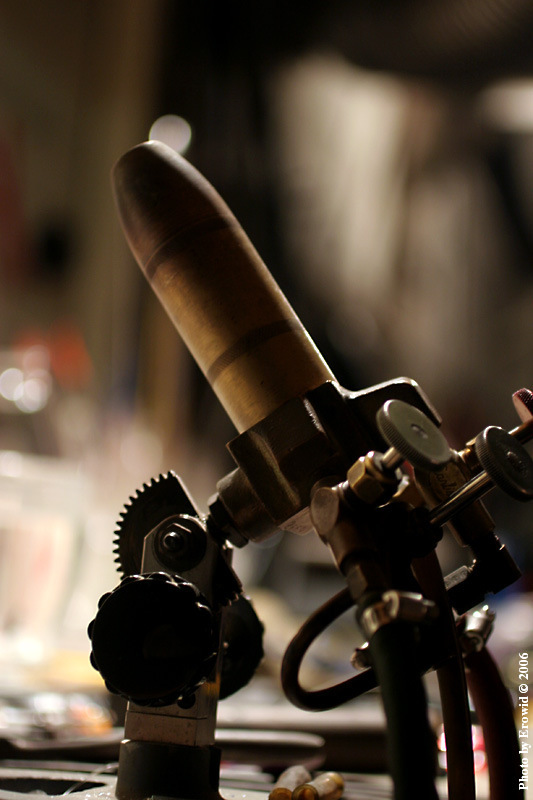 Torch |
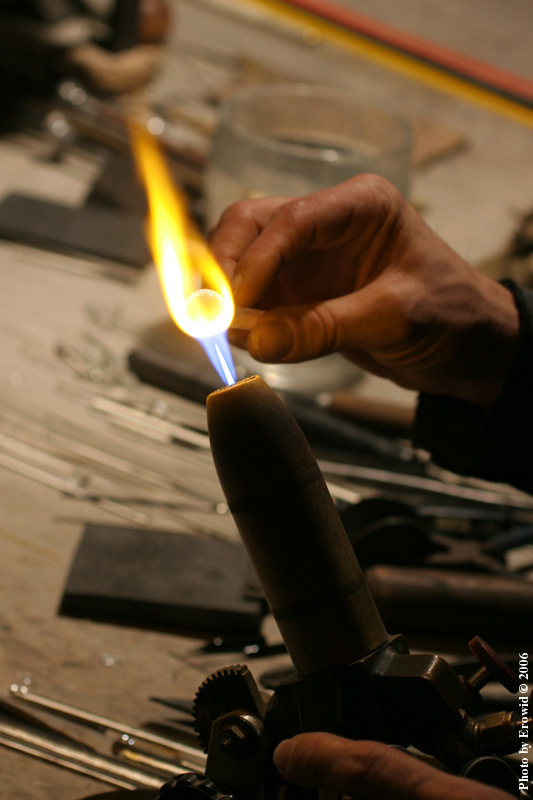 Making a carbon-atom marble |
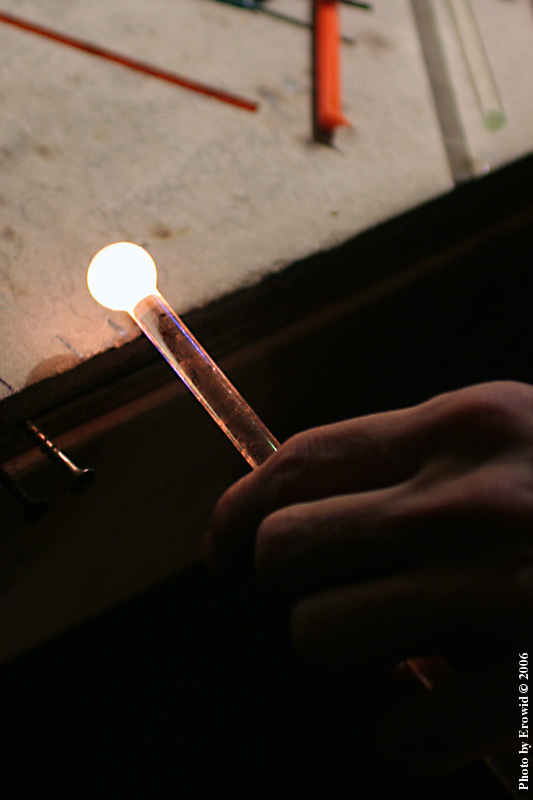 Smoothing marble |
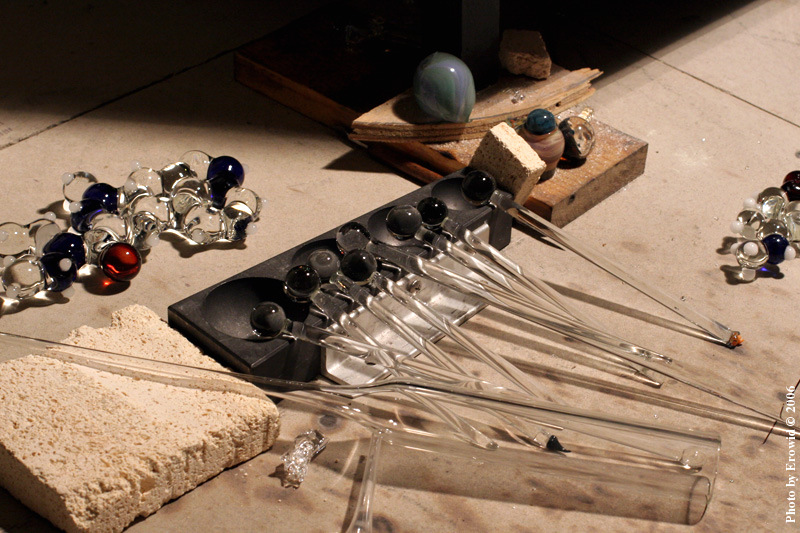 Atoms ready to work with | |
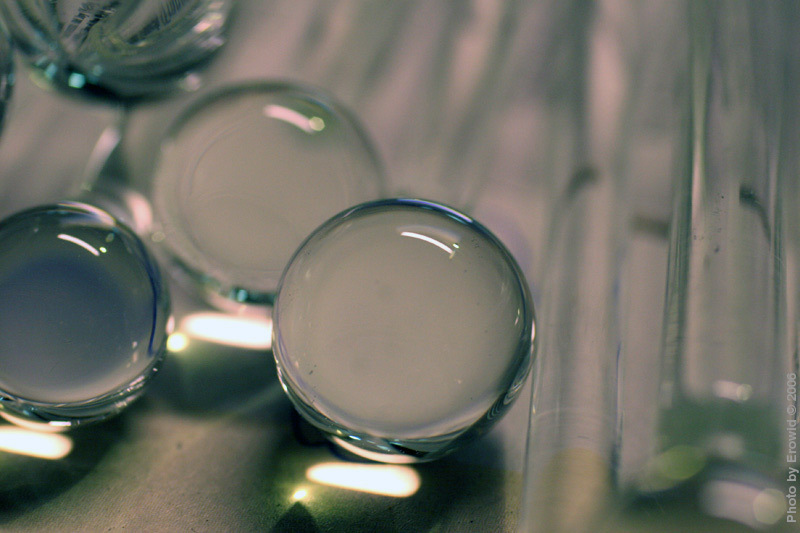 Clear carbon atom marbles, each attached to punty | |
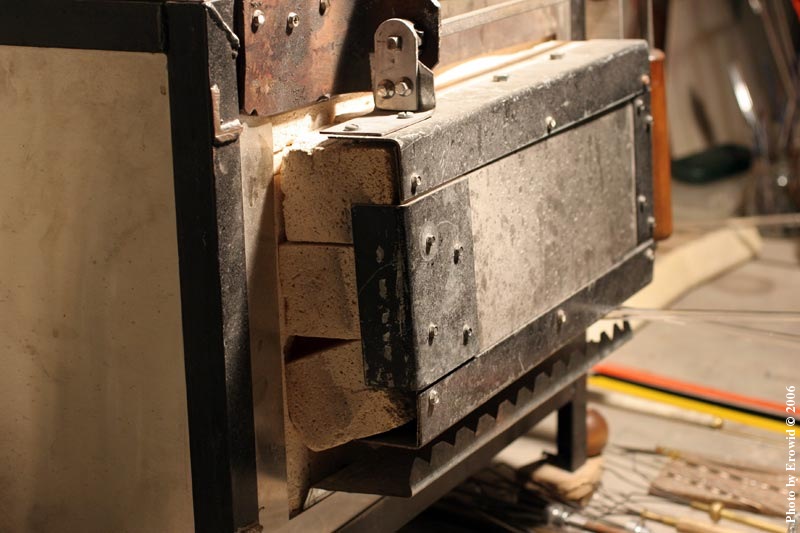 Bench-top kiln | |
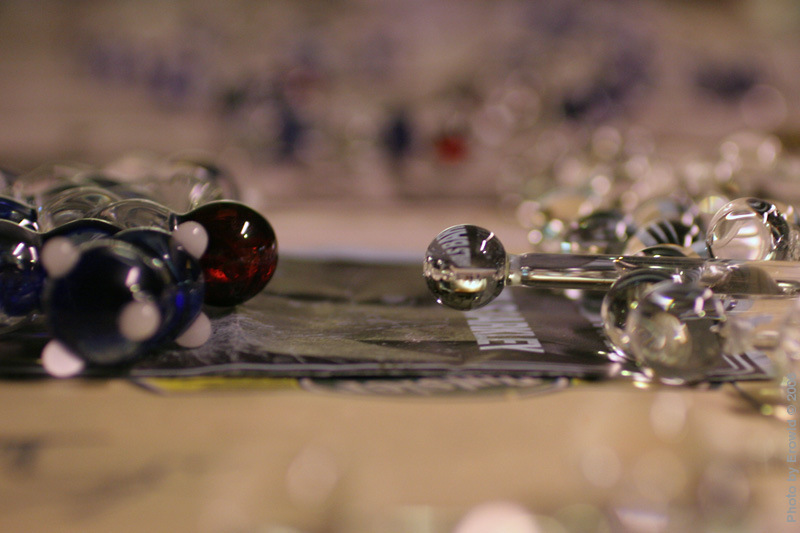 Finished molecule next to prepared atoms | |
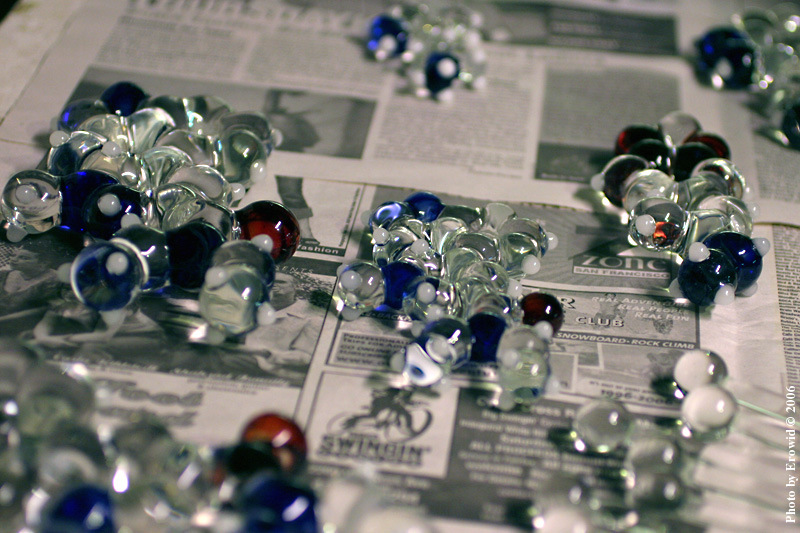 Finished molecules | |