










Absinthe
Basics
DESCRIPTION #
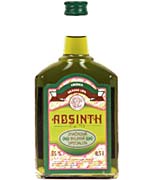
Absinthe is a green liquor, made by soaking wormwood (Artemisia absinthium) and other herbs in grain alcohol. Its psychoactive effects may be the result of both the alcohol and the presence of thujone, the primary active ingredient in wormwood. Whether or not thujone is psychoactive in the concentrations found in commercial absinthe (typically less than 10 mg/liter) is a matter of debate. The drink was popular in Europe and America in the 19th century before many countries outlawed it due to concerns about the health effects of thujone. In the late 1980s absinthe began to reappear in many European countries.
Because of the bitter taste of Absinthe, it is traditionally served poured over a perforated spoon full of sugar and then diluted with water. Another traditional method includes dipping the spoonful of sugar in the absinthe then lighting it on fire, the melting sugar drips into the Absinthe, lighting it on fire, only to be put out by adding water.
Because of the bitter taste of Absinthe, it is traditionally served poured over a perforated spoon full of sugar and then diluted with water. Another traditional method includes dipping the spoonful of sugar in the absinthe then lighting it on fire, the melting sugar drips into the Absinthe, lighting it on fire, only to be put out by adding water.
Dose #
Dose Summary Needed.
Price #
Absinthe containing thujone is difficult to find for sale inside the United States, but is available from suppliers in other countries, many of whom are willing to ship into the U.S. Prices depend on the brand and the thujone content, and can range from $10 a bottle to over $200 per bottle.
As of 2007, the de facto position of the FDA and the Alcohol and Tobacco Tax and Trade Bureau is to allow the sale of wormwood-infused alcoholic beverages that contain less than 10 mg/L thujone in the finished product, which they consider to meet the "thujone free" requirement. The sale of absinthe has become increasingly common in Europe over the last several years, and many countries have adopted the thujone levels established by the EU.
Pharmacology #
Pharmacology Summary Needed.
Production #
Production Summary Needed.
Elixirs resembling absinthe have existed for thousands of years. Pythagoras and Hippocrates may have both recommended wormwood and wormwood tinctures for a variety of ailments. Legend has it that the modern recipe for Absinthe was developed in 1792 by a French doctor named Pierre Ordinaire. A few years later, it made its way into the hands of Major Dubied and his nephew Henri-Louis Pernod, who developed several distilleries and were the first to produce modern Absinthe on a large scale. Absinthe sale was prohibited in many countries in the late nineteenth and early twentieth centuries amid fears that it was neurotoxic. Beginning in the late twentieth century, several countries began allowing the sale of absinthe-style liquors again, and it is undergoing something of a resurgence of popularity.
Terminology / Slang #
The Substance:
Absinthe; Green Fairy; Green Goddess; La Feé Verte.
The Experience:
No common terms known.
EFFECTS #
Effects Summary Needed.
PROBLEMS #
Problems Summary Needed.
CAUTION & DISCLAIMER #
Erowid Basics pages are summaries of data gathered from site visitors, government documents, books, websites, and other resources. We do our best to keep this information correct and up-to-date, but the field is complex and constantly changing. Information should always be verified through multiple sources.